
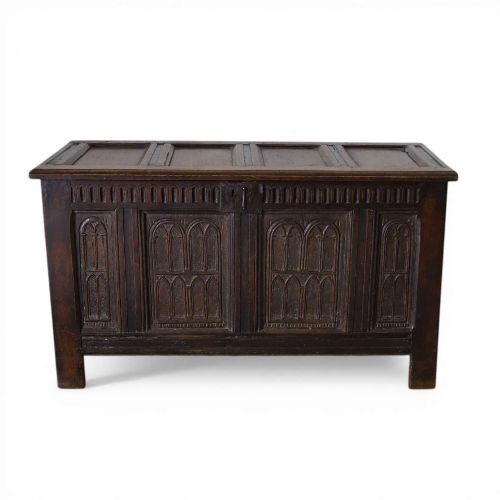

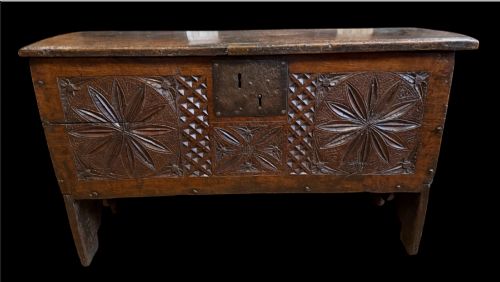


Gothic Oak Trunk
A gothic oak trunk is a heavy timber storage piece built with medieval design language, offering robust construction and dark patinated surfaces that ground a room.
Gothic Oak Trunk
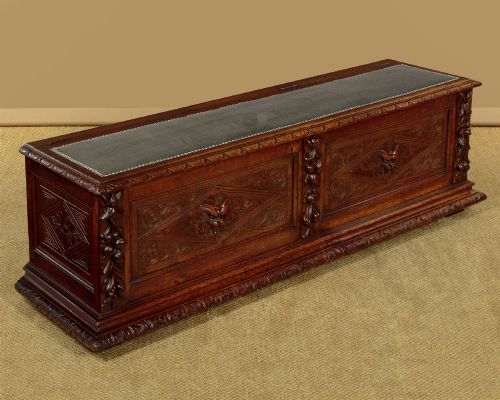
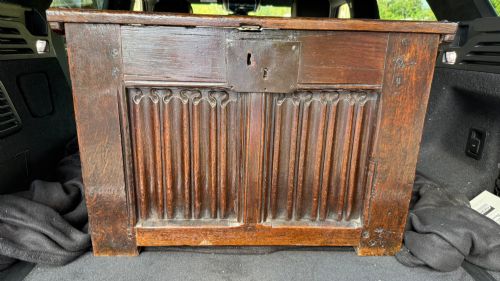
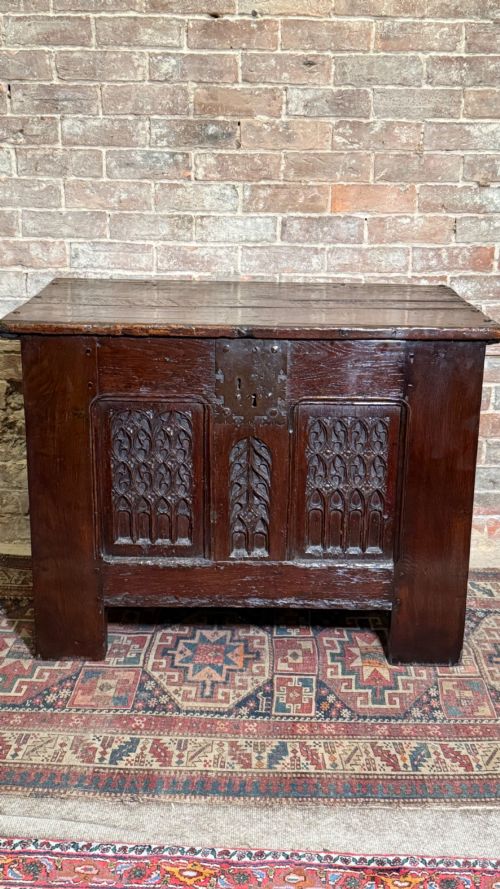
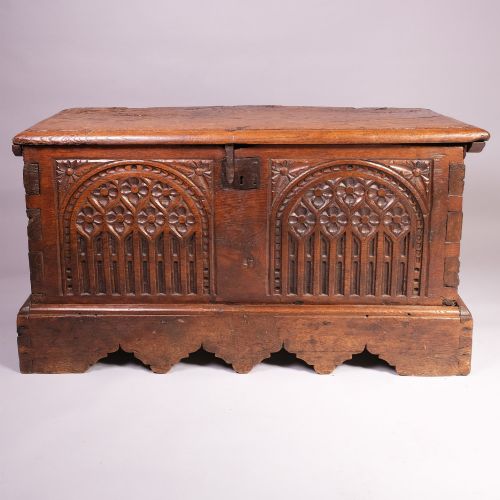
A gothic oak trunk represents a heavy timber storage box or coffer, often constructed with thick panels and plank walls intended for secure domestic or ecclesiastical storage. These pieces frequently feature architectural tracery, linenfold carving, or iron strapwork derived from medieval church and manor house design.
The versions met most commonly span the sixteenth century through to nineteenth century revivals, alongside occasional Arts and Crafts interpretations. Buyers encounter forms ranging from plain plank constructions to deeply carved cathedral chests with hinged lids.
How they were made
Makers utilised solid oak, elm, pollard oak, and chestnut, often pairing heavy timber boards with hand-forged wrought iron strapwork and brass reinforcement for structural strength. Timbers were split or sawn by hand, leaving tool marks across internal surfaces.
Construction techniques relied on heavy pegged mortise and tenon joints, dug-out hollowed logs, or simple butt joints secured with iron bindings. Surfaces were finished with chip carving, linenfold panels, painted decoration, or left bare to develop natural patination over centuries.
Listings feature periods spanning from pre-sixteenth century medieval examples up to twentieth century Arts and Crafts interpretations.
What varies in quality
Quality separates by the integrity of the original timber and the depth of the hand-carved detail, distinguishing authentic early period joinery from later revival work. Pieces retaining their original wrought iron hinges, locks, and untouched surface patination command greater regard.
The sophistication of the gothic tracery or architectural moulding dictates the refinement of the piece, with provincial plank coffers sitting at the simpler end and ecclesiastical cathedral chests at the higher end.
Jack Grimble
The Gothic Oak Trunk Glossary
- Coffer
- A heavy wooden chest traditionally used for storing valuables, church vestments, or documents. These storage boxes form the core of early trunk and chest furniture.
- Linenfold
- A carved wooden panel motif imitating folded vertical parchment or linen cloth. This decorative style appears frequently on sixteenth century furniture.
- Wrought iron
- Iron beaten and shaped by hand into hinges, straps, and corner brackets. It reinforces the structural frame of early storage chests.
- Plank coffer
- A primitive storage chest constructed from heavy vertical or horizontal timber planks joined without complex framing. These represent early domestic storage forms.
- Tracery
- Architectural stone window pattern work translated into wood carving. It defines the gothic aesthetic on panels and friezes.
Gothic Oak Trunk: Frequently Asked Questions
What is a gothic oak trunk?
A gothic oak trunk is a heavy storage chest built from timber and decorated with medieval architectural motifs like tracery or linenfold panels. These pieces served as secure storage for household goods, valuables, or church vestments.
Most examples date from the sixteenth century or nineteenth century revival periods, offering sturdy construction and deep patinated wood surfaces.
How were gothic oak trunks used?
Historically, these trunks functioned as secure storage for textiles, silver, documents, and other household valuables. Their heavy construction and iron locks provided protection against theft and fire in domestic and ecclesiastical settings.
Today, they serve primarily as coffee tables, end-of-bed storage benches, or statement decorative pieces in traditional and modern interiors.
How do I tell an early trunk from a revival?
Early trunks display hand-tool marks, pegged joinery, and natural wear patterns formed over centuries of use. The timber dries, shrinks, and develops a distinct dark patina that modern reproductions struggle to replicate.
Revival pieces, particularly from the nineteenth century, often exhibit cleaner mechanical saw marks, different fastener types, and stylised carving that lacks the spontaneous asymmetry of genuine early work.
Where should I place a trunk at home?
These trunks anchor large living spaces, hallways, or bedroom ends where their heavy presence balances seating and soft furnishings. Keeping them away from direct heat sources protects the old oak from drying and splitting.
Allowing sufficient clearance around the piece highlights its carved panels and wrought iron hardware without crowding the room.