
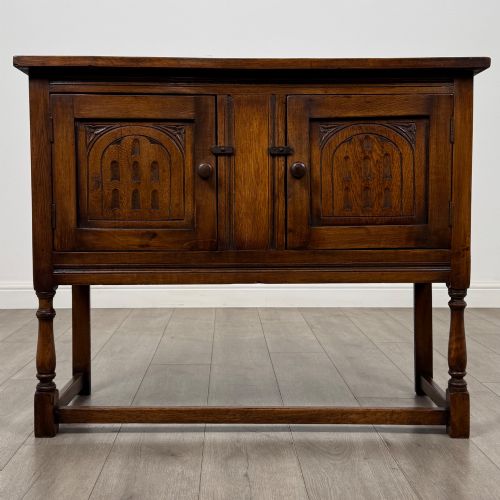
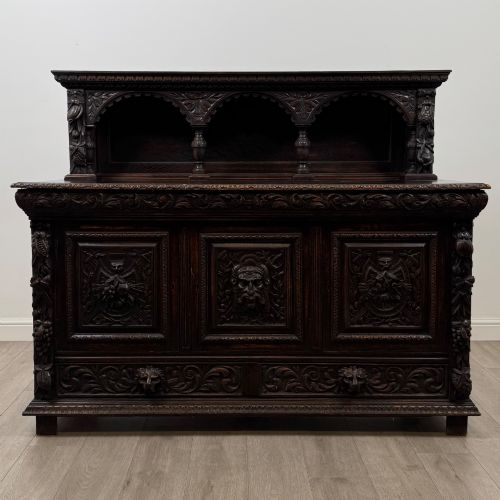
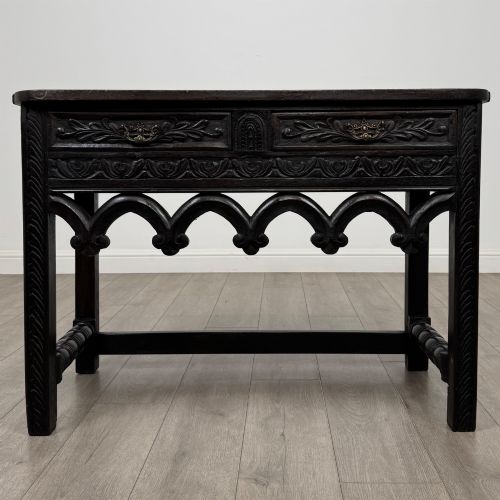
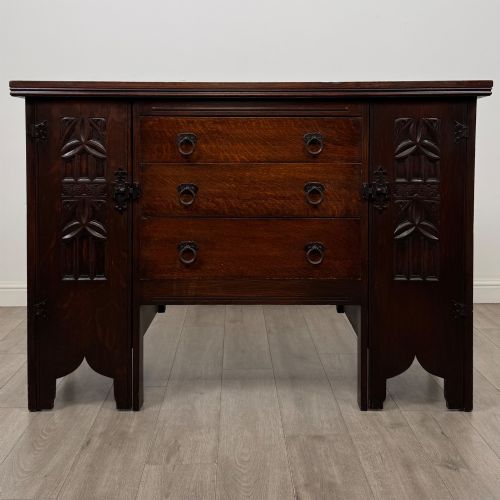

Gothic Oak Server
These gothic oak server pieces bring dark timber architecture and pointed arch details directly into a dining room or hall.
Gothic Oak Server
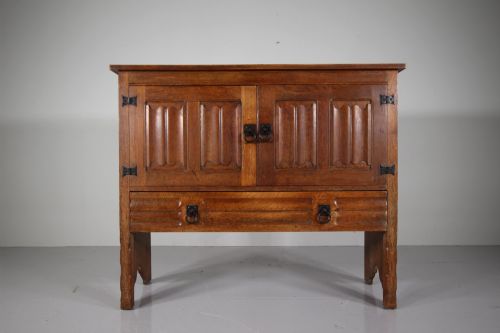
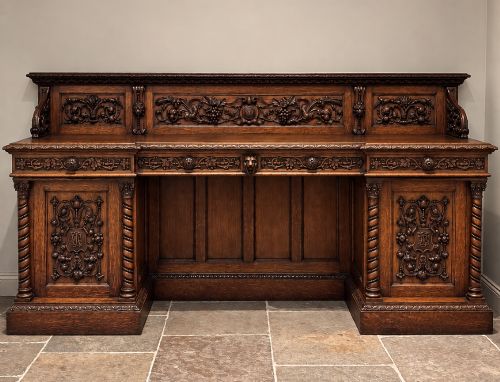
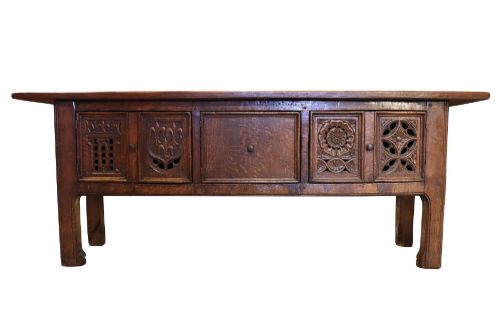
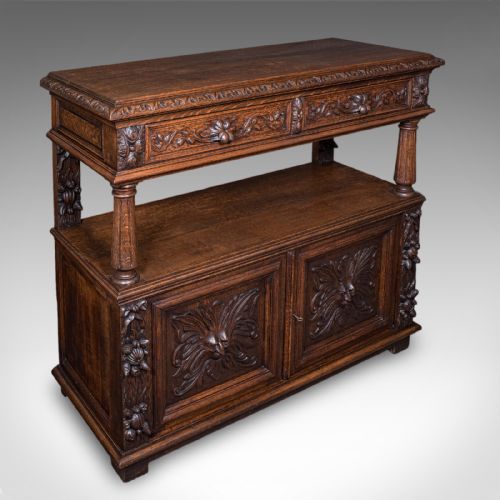
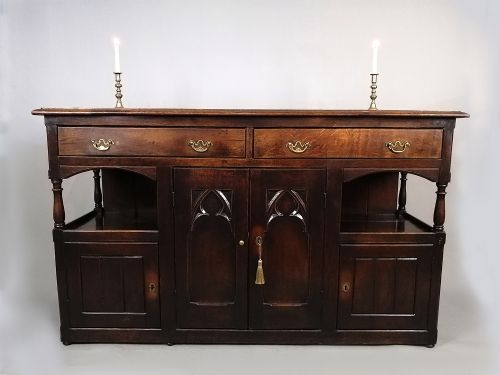
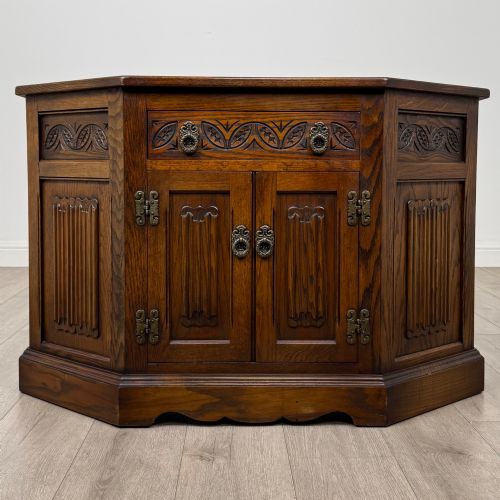
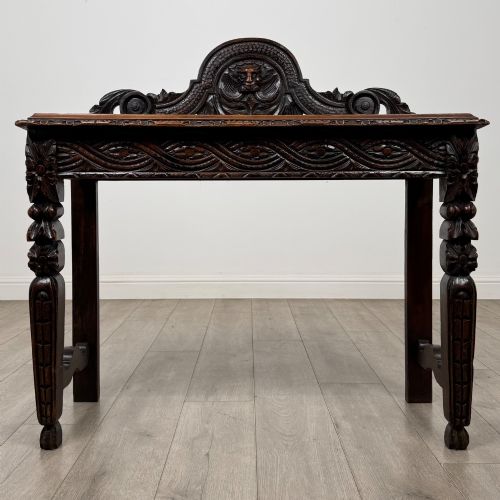
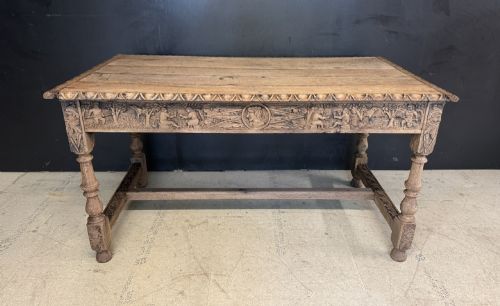
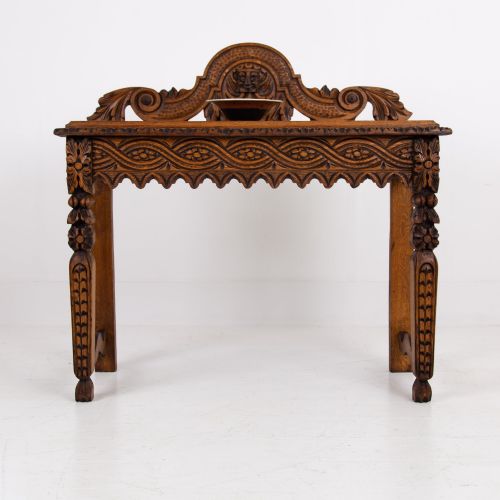
A gothic oak server represents a heavy timber storage form built with medieval architectural motifs such as pointed arches, linenfold panels, and carved green man masks. These items appear primarily as nineteenth-century sideboard bases, serving tables, and buffets produced during the Victorian and Edwardian revivals.
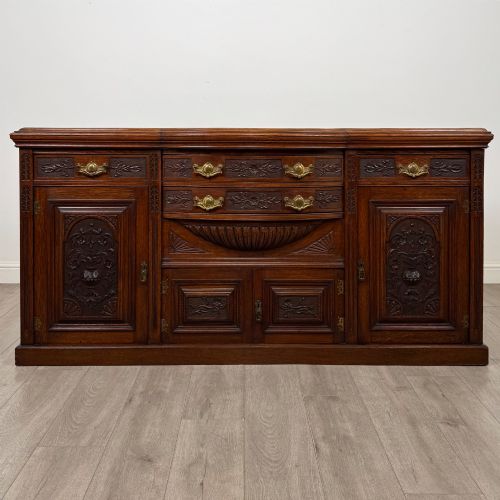
The pieces on this page span several decades from around eighteen hundred through the early twentieth century, incorporating styles like Gothic Revival, Jacobean Revival, and Arts and Crafts. Sideboards and dresser bases dominate the selection, offering substantial surface space and deep enclosed storage beneath.
Buyers look for these heavy timber items to anchor a room with architectural presence and functional surface area. The most common forms merge traditional storage cabinets with exaggerated carved ornament derived from medieval stone tracery.
How they were made
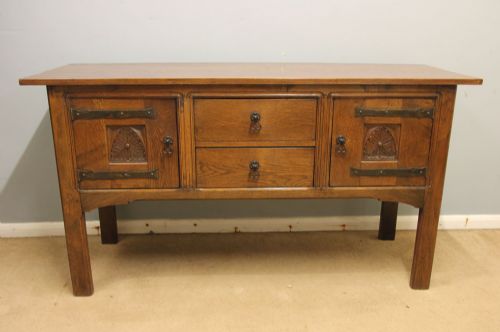
Carpenters built these servers using solid domestic timber, predominantly oak complemented by occasional walnut boards, fitted with iron or brass hinges, handles, and lock escutcheons. Joinery relied on heavy mortise and tenon frames designed to support thick timber tops and heavy carved doors.
Carvers applied deep relief work by hand directly into the dense wood, rendering foliage, tracery, and grotesque masks across drawer fronts and cupboard doors. Bevelled glass panels and mirrored backs appear in later nineteenth-century examples, adding reflective depth to the dark timber structures.
Several pieces include watchful green man faces peering out from the carved foliage.
What varies in quality
The depth and crispness of the hand-carved ornamentation separate standard production items from exceptional workshop pieces. Crisp undercutting in foliage and expressive detailing in figurative masks indicate a cabinetmaker of higher skill.
Timber selection and structural stability dictate the longevity of these heavy pieces. Well-seasoned oak boards that retain tight joints and smooth drawer operation demonstrate superior initial construction and careful subsequent upkeep.
Leonard Wyburd·Phillips Bristol
The Gothic Oak Server Glossary
- Gothic Revival
- An architectural and decorative style drawing inspiration from medieval forms, pointed arches, and ecclesiastical ornamentation. This aesthetic dominates nineteenth-century furniture design.
- Linenfold
- A style of wood carving used on paneling that resembles vertical folds of fabric. It appears frequently on cupboard doors and cabinet sides.
- Dresser Base
- The lower section of a traditional dresser, functioning as a sideboard or serving table with cupboards and drawers beneath a flat top. These forms provide substantial surface area.
- Green Man
- A sculptural motif consisting of a human face surrounded by or disgorging foliage and vines. It symbolises rebirth and appears commonly in medieval and revival wood carving.
- Buffet
- A sideboard or serving table designed for holding food and tableware during meals. The form often incorporates heavy underframes and tier storage.
Gothic Oak Server: Frequently Asked Questions
What is a gothic oak server?
A gothic oak server is a heavy timber sideboard or serving table decorated with medieval architectural motifs like pointed arches and tracery.
These pieces provide surface space and enclosed storage while bringing dark wood character to an interior.
How were these servers used?
Historically, these items served dining rooms as serving surfaces for food and storage cupboards for tableware and linens.
Today, they function as sideboards, hall tables, or media credenzas in domestic spaces.
How do I date a piece?
Dating relies on combining construction methods, hardware types, and specific revival styles recorded in the inventory.
Nineteenth-century examples often feature heavier hand-carved relief work, while later Edwardian items introduce simplified forms.
What materials are used?
Solid oak forms the primary structural material for these servers, supplemented by walnut in specific revival pieces.
Hardware typically consists of cast brass or iron, and some Victorian examples incorporate bevelled glass and mirrored backs.