
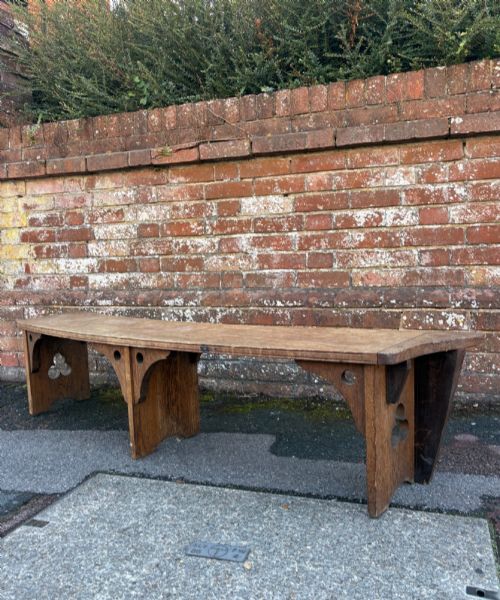
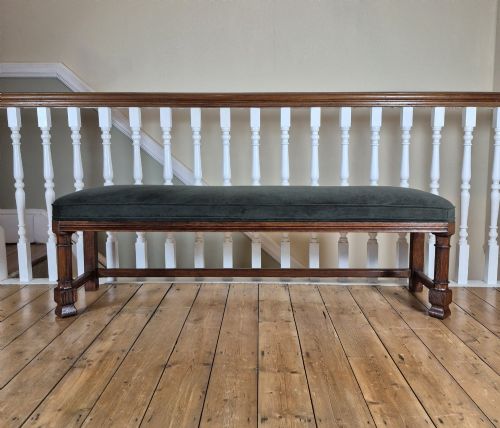
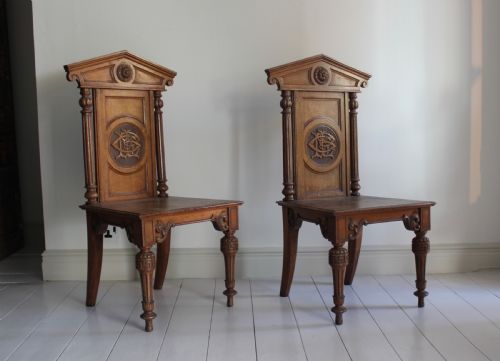
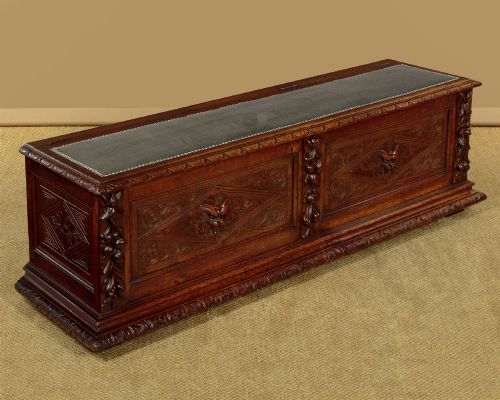
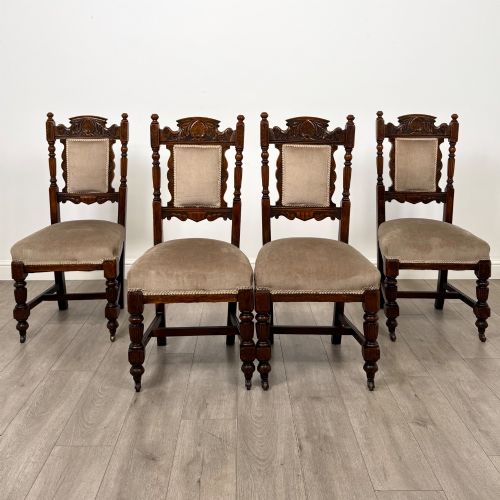
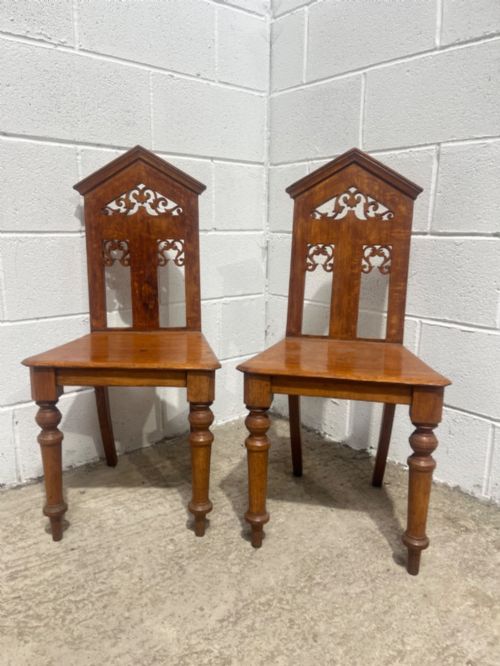
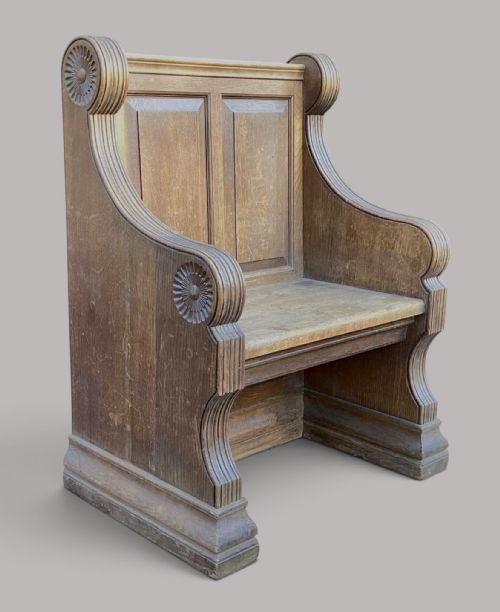
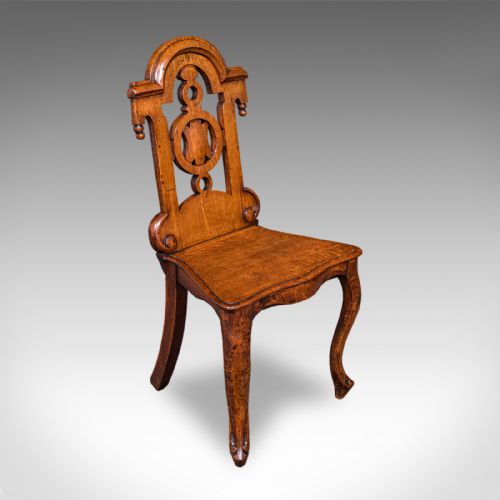
Gothic Oak Hall Seat
A gothic oak hall seat brings imposing architectural presence and dark timber character to an entrance hall.
Gothic Oak Hall Seat
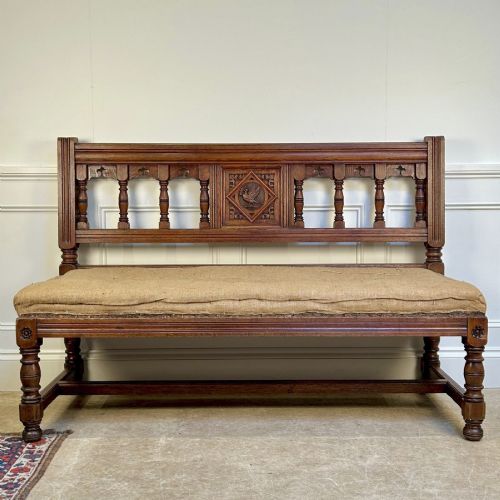
When you search for a gothic oak hall seat, you encounter robust seating designed for entrance spaces, corridors, and reception rooms. The pieces recorded in these archives span the nineteenth century into the Edwardian era, taking forms from single hall chairs and armchairs to long settles, benches, and hinged box pews.
You are most likely to meet Victorian and late nineteenth-century interpretations on this page, often built in the Gothic Revival or Arts and Crafts manner. These designs draw heavily on medieval ecclesiastical and baronial architecture, featuring tall panelled backs, architectural crests, and sturdy timber construction.
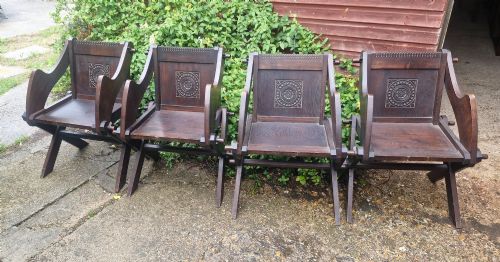
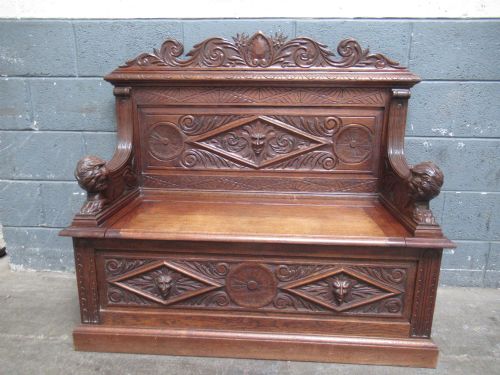
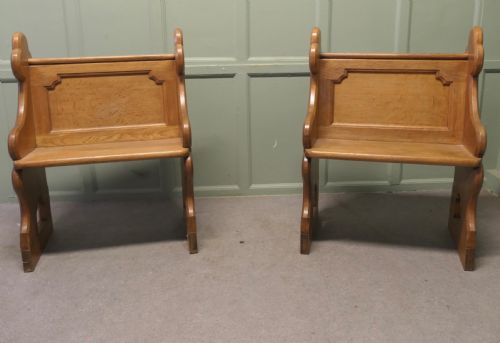
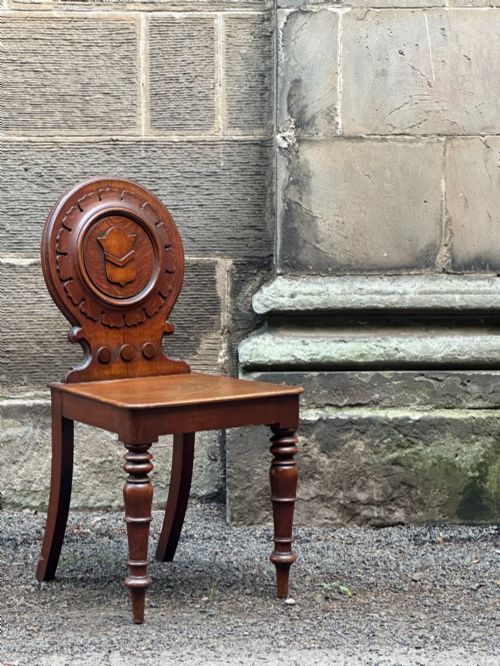
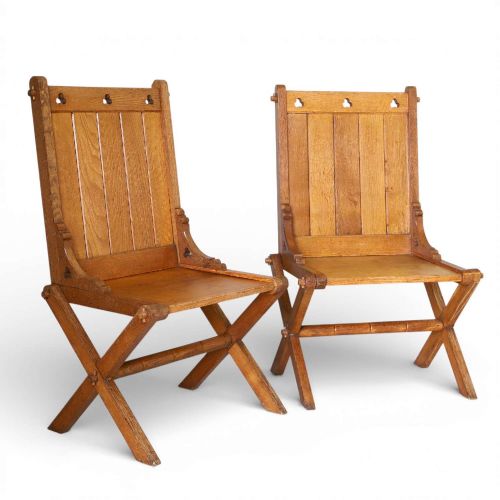
Many examples incorporate specific regional and stylistic sub-types, such as Glastonbury chairs, church pews, and window seats with lift-up lids. The vocabulary of the style includes trefoil carvings, heraldic shields, linenfold panelling, and occasionally carved grotesque faces like the Green Man.
Materials and methods of construction
The primary material across nearly every recorded piece is solid oak, selected for its strength, dense grain, and ability to take deep carved relief. Joinery relies on traditional mortise and tenon frames, panelled construction, and heavy pegging to ensure longevity in high-traffic hallways.
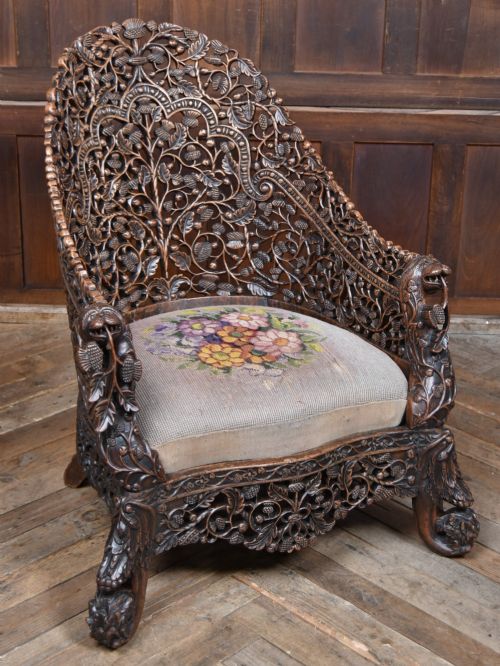
Secondary materials appear selectively to provide contrast or comfort, including brass fittings, carved burr elm accents, and upholstery in leather, velvet, tapestry, or rush. Decorative details are worked directly into the timber through chip carving, piercing, and architectural moulding rather than applied veneer.
Listings feature oak combined with materials such as brass, leather, velvet, tapestry, and rush across the nineteenth and early twentieth centuries.
Distinctions in quality
Quality in a gothic oak hall seat rests on the crispness and depth of the timber carving, the selection of figured or quarter-sawn oak, and the architectural ambition of the design. Pieces originating from documented cabinet-makers or institutions display superior proportion and hand-finished detailing that elevate them above standard commercial production.
Structural integrity also separates the finest examples, seen in the thickness of the seat boards, the tightness of the joinery, and the retention of original iron or brass hardware. Altered or later-assembled pieces show less harmonious proportions and standardised machine cutting compared to the vigorous hand-worked execution of genuine period pieces.
Gillows·Pugin
The Gothic Oak Hall Seat Glossary
- Gothic Revival
- An architectural and decorative movement reviving medieval forms, pointed arches, and tracery. This style dominated church building and domestic furniture throughout the nineteenth century.
- Settle
- A wooden bench with a high panelled back, solid armrests, and frequently a storage compartment beneath the seat. Historically used in drafts halls to keep occupants warm near the hearth.
- Trefoil
- A three-lobed decorative shape resembling clover leaves, frequently pierced through the backrests or supports of Gothic furniture. It is a defining geometric motif of ecclesiastical design.
- Glastonbury chair
- A type of low-seated armchair with sloped armrests and an X-frame base, derived from an ancient relic chair. They are typically constructed from pegged oak with carved inscriptions or religious symbols.
- Linenfold
- A style of wood carving that imitates folded linen cloth, commonly used to decorate vertical panels on nineteenth-century revival furniture.
Gothic Oak Hall Seat: Frequently Asked Questions
Where were these seats placed originally?
These pieces were designed primarily for grand entrance halls, reception rooms, and ecclesiastical settings like chapels or vestries. Their imposing silhouettes served to impress visitors upon arrival and provide durable seating for guests waiting to be received.
In domestic contexts, long benches and settles were often positioned near hearths or along wide corridors to block drafts and offer practical boot storage beneath hinged lids.
How do I distinguish Victorian Gothic from earlier pieces?
Nineteenth-century revival furniture often employs machine-assisted joinery alongside hand carving, whereas genuine medieval or seventeenth-century work displays entirely hand- cleft timber and adzed surfaces. Tool marks, wood shrinkage patterns, and assembly methods help date the construction accurately.
Stylistic proportions also provide clues, as Victorian makers frequently exaggerated medieval motifs for dramatic architectural effect in domestic halls.
Are these seats comfortable for daily use?
Most historic hall seats prioritize architectural presence and upright posture over modern lounging comfort. Their straight wooden backs and firm timber or lightly padded seats reflect their original purpose as transient seating in hallways.
Adding a bespoke loose cushion can make upholstered or plain wooden variants more hospitable for prolonged sitting in a modern study or living room.
What is a monks bench?
A monks bench is a convertible furniture form featuring a hinged back that flips forward onto the arms to transform the seat into a small table. This multifunctionality made them popular in Victorian interpretations of earlier vernacular furniture.
They offer compact utility while retaining the dark oak patina and carved panels characteristic of the Gothic revival aesthetic.