

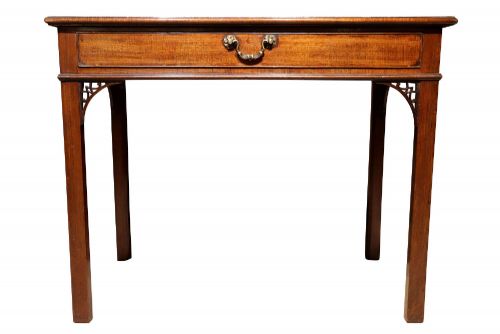
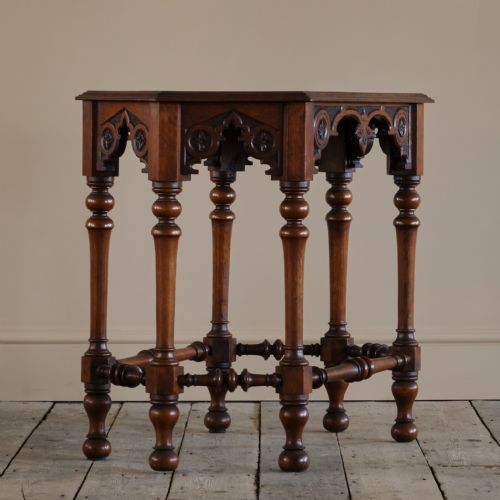

Gothic Hall Table
A gothic hall table brings architectural presence into an entryway, offering sturdy surfaces shaped by nineteenth-century revival movements.
Gothic Hall Table
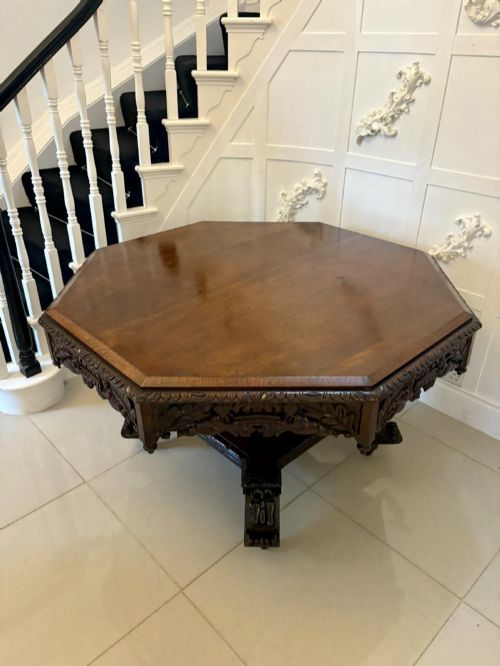
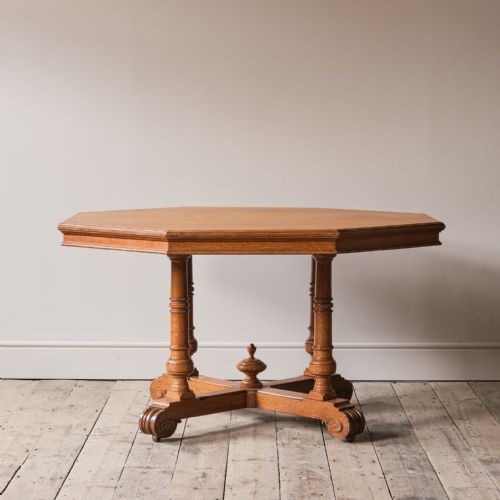
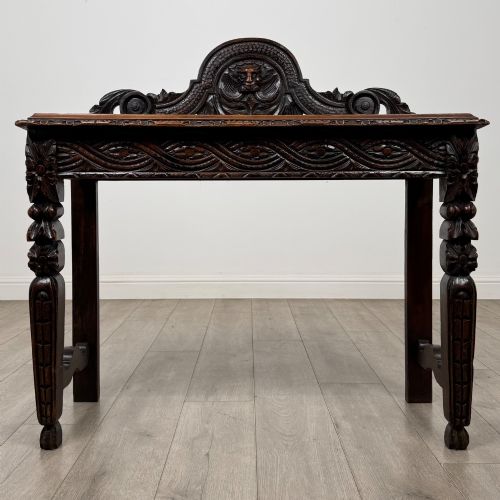
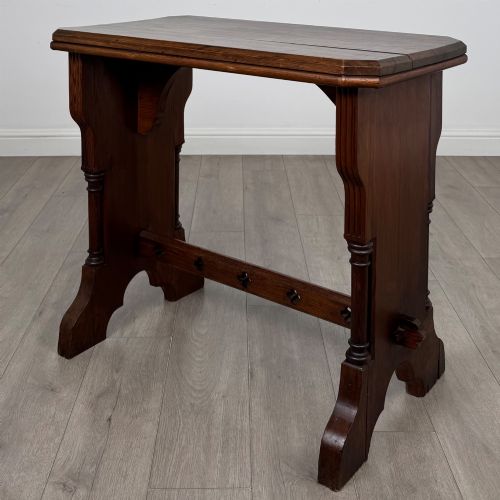
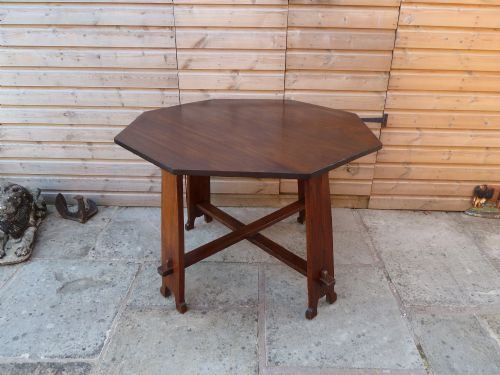
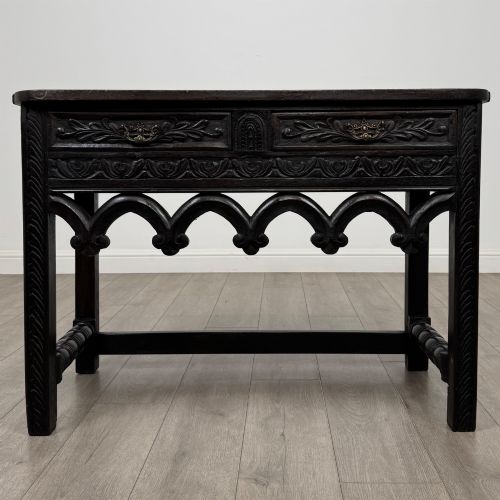
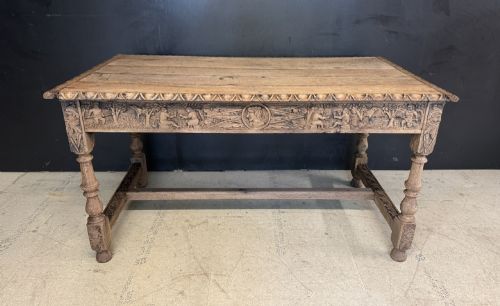
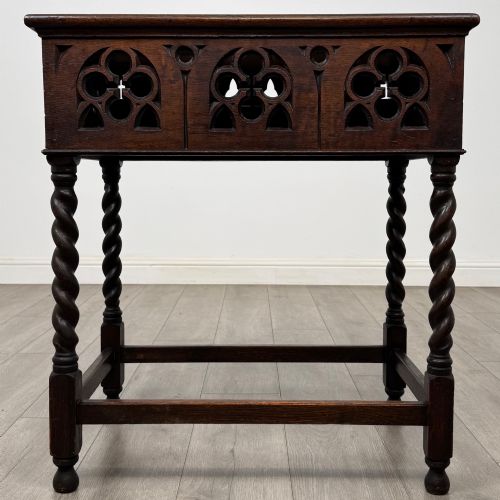
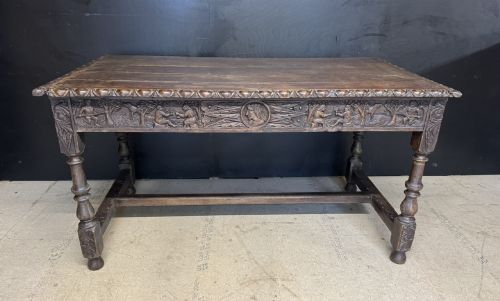
A gothic hall table is typically encountered as a heavy, architectural piece from the nineteenth century, bridging Victorian domestic design and medieval ecclesiastical aesthetics. These forms appear as narrow console tables, side tables, and freestanding centre tables designed for entrance spaces and reception rooms. The pieces recorded here span from the 1860s through to the early twentieth century, reflecting sustained interest in Gothic Revival and Arts and Crafts ideals.
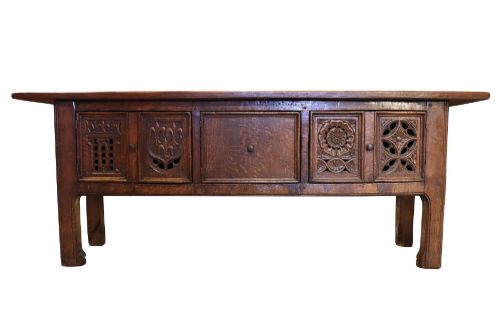
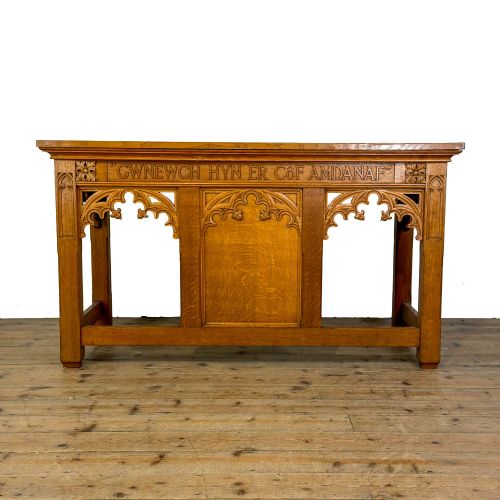
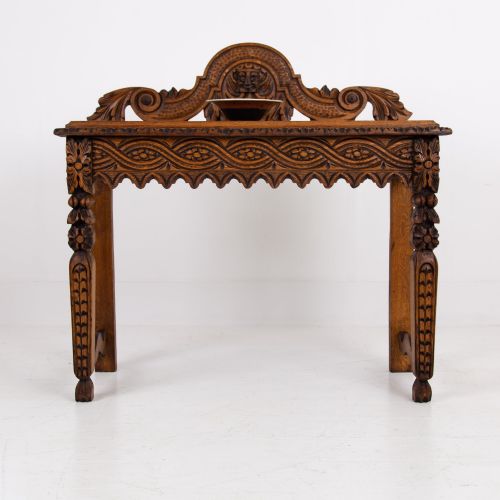
Makers and workshops of the period adapted medieval tracery, pointed arches, and deep relief carving for domestic hallways. The standard forms range from simple country oak side tables to elaborate carved creations featuring green men, linenfold panels, and structural brackets. Buyers searching for a gothic hall table will find numerous examples executed in solid oak, alongside occasional variants in pitch pine and walnut.
Materials and construction
Solid timber forms the foundation of these pieces, with oak dominating the record alongside pitch pine, walnut, and mahogany. Carpenters utilised traditional joinery, securing heavy tops to carved friezes and sturdy legs with mortise and tenon joints. Brass hardware occasionally appears in handles and drawer fittings.
Surface ornamentation relies heavily on hand carving, manifesting as geometric diaperwork, tracery, and figural motifs such as green men. Certain library and centre tables incorporate inset leather tops, whilst others display ebonised finishes or painted surfaces executed in the Gothic taste.
Keep a sharp eye out for hidden green men peering through the oak foliage of nineteenth-century friezes.
Distinctions in craftsmanship
The division between standard production and exceptional work rests upon the depth and ambition of the carving. Superior pieces exhibit crisply chiselled details, well-proportioned narrow frames, and select timbers with notable grain patterns like fiddleback mahogany or figured oak.
Construction integrity also defines the tier of a piece, separating straightforward utilitarian church or country furniture from architect-designed hall tables displaying refined Gothic Reform or Arts and Crafts proportions.
The Gothic Hall Table Glossary
- Gothic Revival
- An architectural and decorative style drawing inspiration from medieval design, featuring pointed arches, trefoils, and heavy structural elements. This aesthetic dominated much of nineteenth-century furniture production.
- Green Man
- A sculptural motif depicting a human face disgorged from foliage, frequently encountered carved into the oak friezes of Victorian furniture. It symbolises rebirth and spring.
- Console Table
- A table designed to be fixed against a wall or freestanding with narrow proportions, historically utilised in hallways and reception rooms. These pieces often feature decorative front legs and flat backs.
- Linenfold
- A style of relief carving imitating folded parchment or linen, commonly used on panelled doors and cupboard fronts of revival furniture. It adds texture to otherwise plain wooden surfaces.
- Reformed Gothic
- A sub-movement of the Gothic Revival dating from the mid-nineteenth century that emphasised structural honesty and simplified medieval forms over excessive ornamentation. Such pieces often display rectilinear frames and ebonised details.
Gothic Hall Table: Frequently Asked Questions
Where should I place a gothic hall table?
These pieces suit entrance halls, narrow corridors, and reception rooms where their architectural silhouettes can be appreciated without crowding the floor space. Their shallow depth allows them to function effectively as serving surfaces or display areas.
Pairing the table with a mirror or brass umbrella stand echoes the traditional Victorian arrangement of a domestic hallway.
What woods were commonly used for these tables?
Oak is the predominant timber found in these designs, selected for its strength and suitability for deep relief carving. Pitch pine and walnut also appear frequently, particularly in country and ecclesiastical examples.
Mahogany is occasionally utilised in finer console and side tables influenced by earlier Georgian or later revival aesthetics.
How do I identify the period of a gothic hall table?
Dating relies on examining construction techniques, hardware, and stylistic shifts between early Victorian Gothic Revival and later Arts and Crafts iterations. Pieces from the 1860s often display strict architectural proportions, whereas later examples incorporate vernacular or rustic motifs.
Secondary woods, drawer linings, and the crispness of the hand-carved details offer further clues to the decade of manufacture.
Were these tables originally made for churches?
Many surviving examples originated in ecclesiastical settings, rectories, or large country houses influenced by the Gothic taste. Church altar tables, vestry desks, and lecterns frequently share dimensions and joinery with domestic hall furniture.
This ecclesiastical crossover accounts for the robust construction and religious motifs seen on various pieces.