
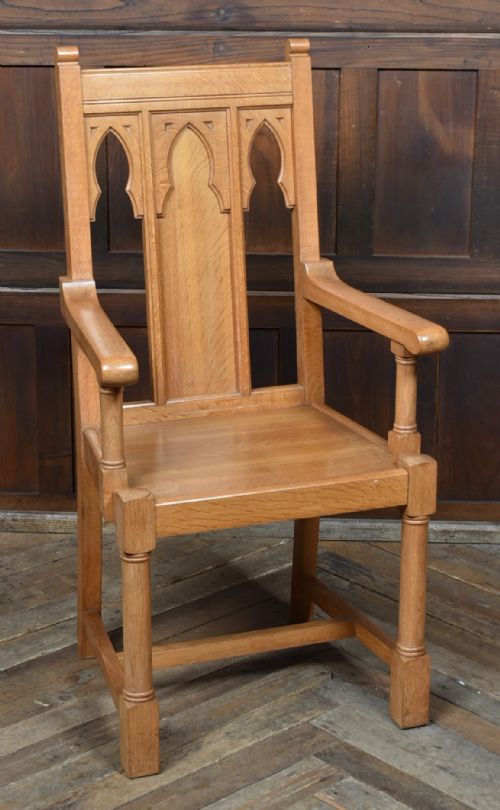


Gothic Hall Armchairs
Gothic hall armchairs bring commanding presence and architectural depth to a room, drawing on centuries of medieval design traditions.
Gothic Hall Armchairs
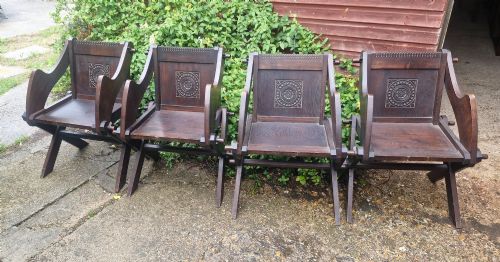
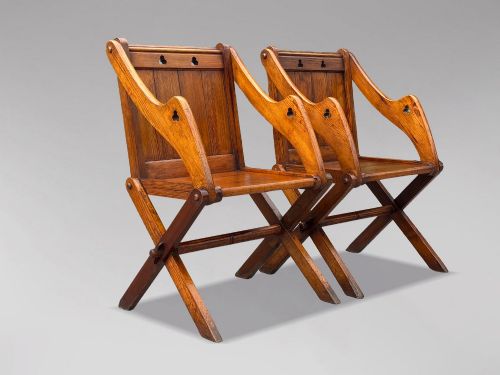
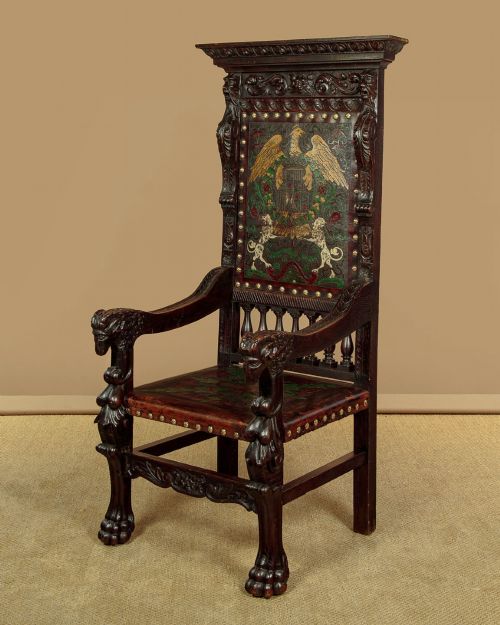
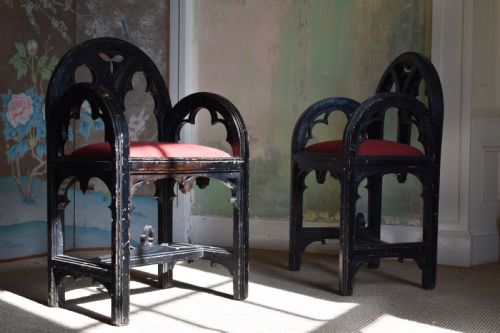
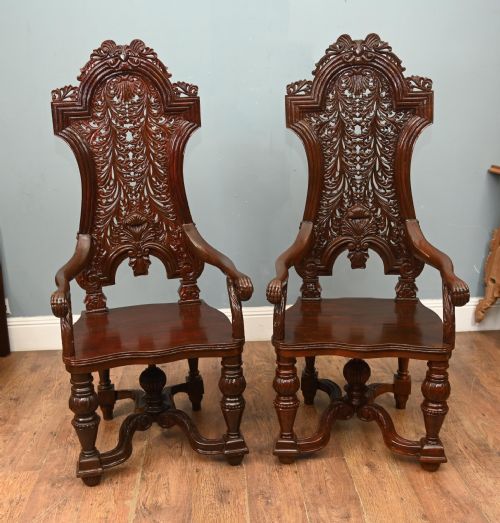
Gothic hall armchairs stand as substantial seating options derived from ecclesiastical and medieval precedents, often manifesting as heavy throne chairs or characteristic X-frame Glastonbury designs. When searching for gothic hall armchairs, a buyer encounters pieces primarily shaped during the nineteenth century under the influence of various revivals.
The selections on this page demonstrate a strong preference for oak construction, complemented by pitch pine, walnut, and fruitwood. Makers drew upon Gothic Revival, Jacobean Revival, and Renaissance Revival vocabularies to produce imposing seats intended for hallways, chapels, and grand reception spaces.
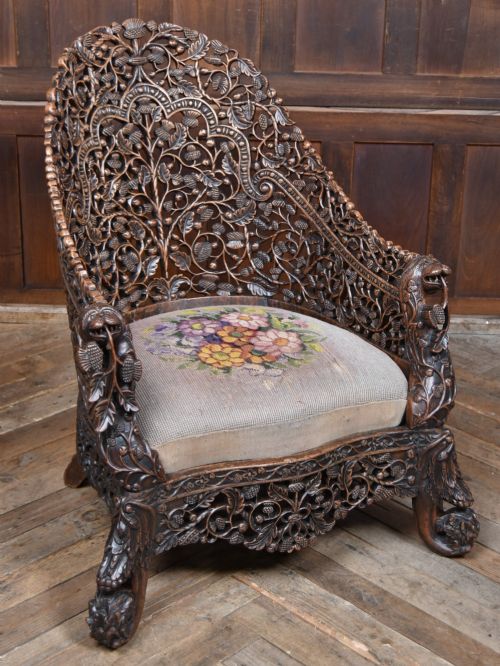
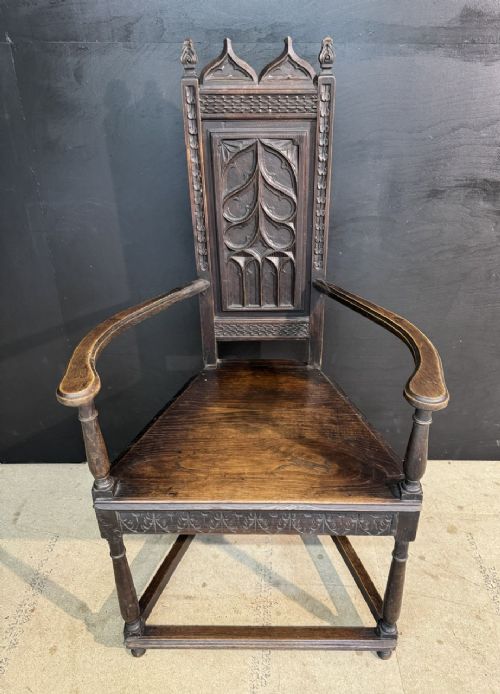
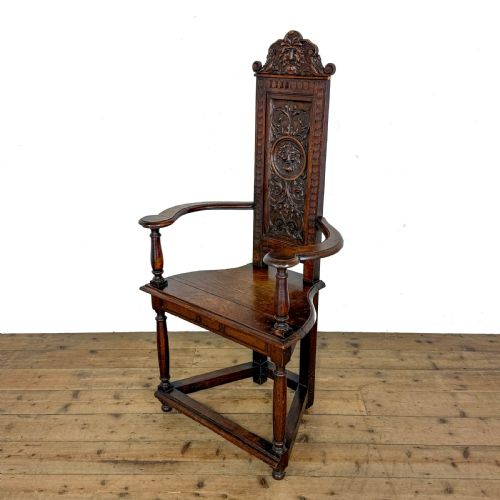
Forms range from strict architectural wainscot chairs to expansive throne chairs decorated with green man carvings or intricate thistle motifs. Buyers most frequently meet nineteenth-century Victorian interpretations alongside later Edwardian and early twentieth-century examples.
Materials and construction
Craftsmen built these armchairs predominantly from solid English and Welsh oak, alongside pitch pine and walnut, utilising traditional joinery methods suited to heavy daily use. Timbers were carved by hand, yielding deep relief panels, architectural tracery, and sculptural elements such as green man faces.
Upholstery and detailing involved durable materials including leather panels, painted leather, buttoned leather, and textiles. Brass elements occasionally provided structural or decorative hardware, while painted wood finishes appeared on specific revival pieces.
Watch for the sudden appearance of a green man peering out from the carved oak foliage of a Victorian throne.
Evaluating quality
Quality rests upon the crispness of the hand-carved detail and the proportion of the architectural framework. Pieces displaying deeply undercut foliage, balanced symmetry, and substantial timber sections indicate superior workshop execution.
The integrity of the structural joints and the quality of secondary materials, such as heavy-gauge leather panels or original upholstery textiles, distinguish standard production items from exceptional throne chairs.
The Gothic Hall Armchairs Glossary
- Wainscot chair
- An early form of wooden armchair constructed from panelled timber with solid sides and a high back. This type provides a heavy, architectural silhouette rooted in sixteenth and seventeenth-century traditions.
- Throne chair
- A large, imposing armchair featuring an elevated back and substantial armrests designed to dominate a hall or dais. These seats frequently incorporate elaborate linenfold panelling or figural carvings.
- Green man
- A sculptural architectural ornament depicting a human face disgorged from foliage or surrounded by leaves. It appears frequently as a decorative motif on nineteenth-century revival woodwork.
- Curule
- An ancient X-shape structural form adopted by Renaissance Revival designers for folding chairs and armchairs. The crossed legs create a distinct curule silhouette reminiscent of classical seats.
Gothic Hall Armchairs: Frequently Asked Questions
Where were gothic hall armchairs originally placed?
These chairs stood in the entrance halls, galleries, and reception rooms of substantial nineteenth-century houses. Their imposing scale signalled status and architectural awareness to arriving visitors.
They also served functional roles in ecclesiastical settings, chapels, and domestic libraries where a serious, historicised interior style was desired.
How do I identify a Glastonbury chair?
A Glastonbury chair is recognised by its intersecting X-frame legs, sloping panel back, and flat armrests that slope downwards. Most examples date from the Victorian Gothic Revival period and use solid oak or pitch pine.
They are constructed to be easily dismantled or folded, though many survive today fixed in their assembled form.
What is a wainscot armchair?
A wainscot armchair is a heavy wooden seat constructed with panelled backboards and solid box-like underframes. Nineteenth-century makers frequently reproduced this early style to evoke a medieval aesthetic.
They feature rigid, upright backs and broad wooden seats designed for use before upholstery became standard.
How do I care for antique oak armchairs?
Maintain the timber by applying a microcrystalline wax polish sparingly to nourish the dry oak surface. Avoid placing these chairs near direct heat sources or in fluctuating humidity to protect the wood and leather panels.
Regular dusting with a soft, dry cloth preserves the hand-carved details without harming the historic finish.