



Wooden Gothic Armchairs
Wooden gothic armchairs bring heavy architectural presence into a room through pointed arches, tracery and solid timbers.
Wooden Gothic Armchairs
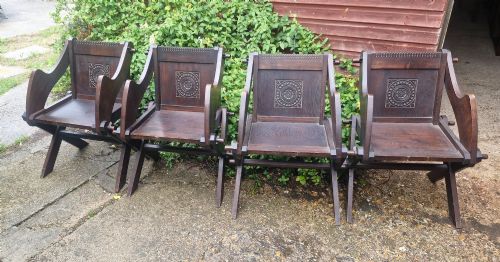
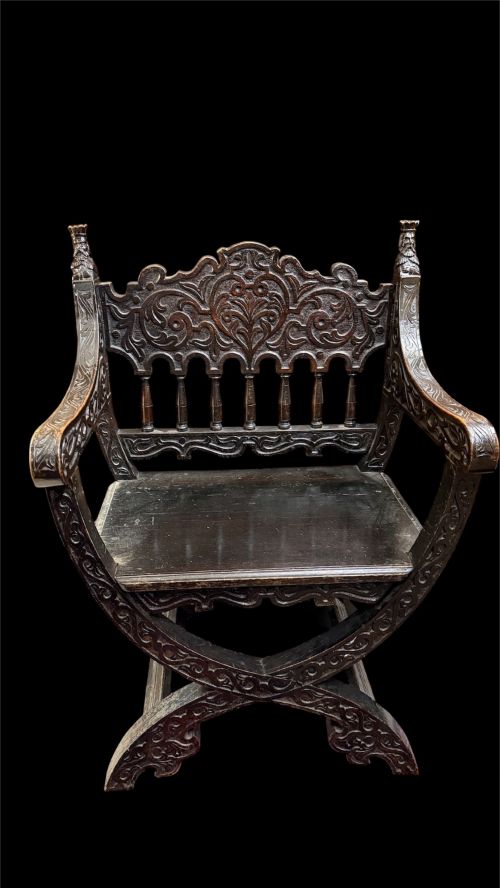
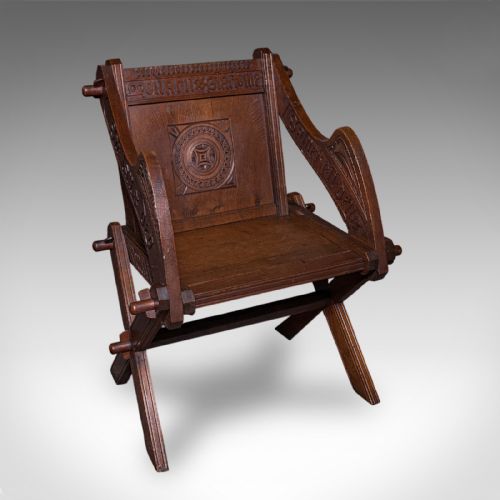
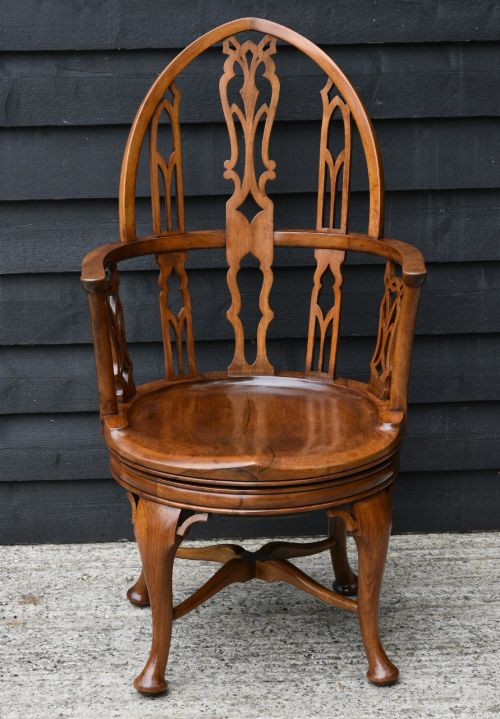
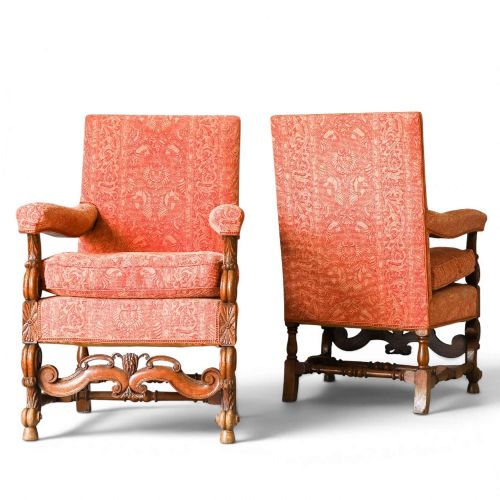
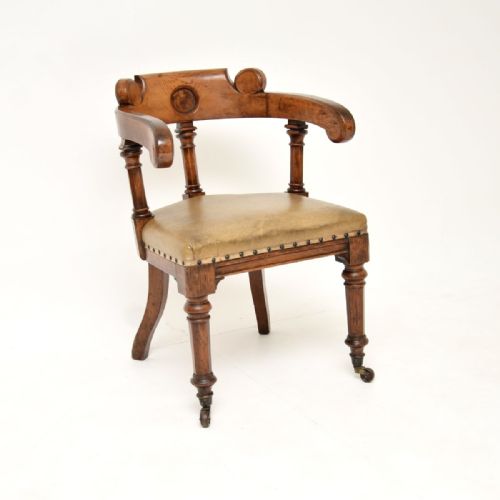
Wooden gothic armchairs draw upon medieval design traditions, appearing frequently in Victorian revivals across the nineteenth and early twentieth centuries. These seats span forms from Glastonbury chairs and wainscot chairs to throne seats and revolving desk chairs.
The versions most commonly met on this page date from the nineteenth century and lean heavily into Gothic Revival, Jacobean Revival and Renaissance Revival styles. Makers constructed them primarily for libraries, halls and ecclesiastical interiors using robust native timbers.
How they were made
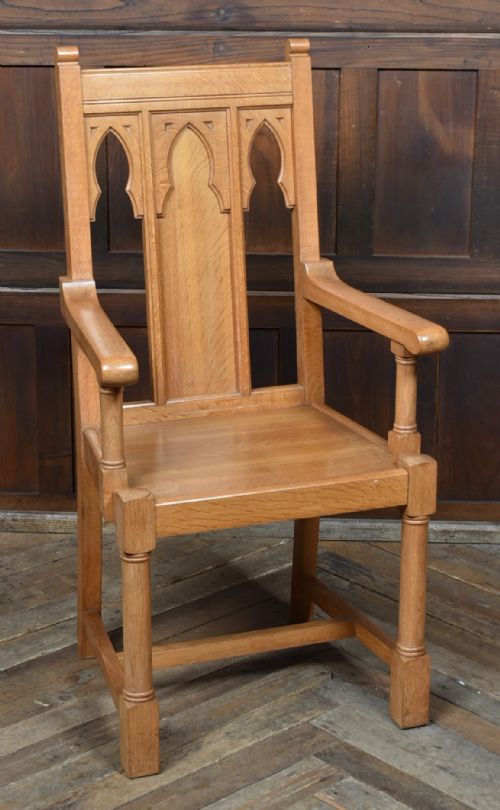
Joiners and cabinet makers built these chairs using solid timbers such as oak, pitch pine, walnut and yew, often enhancing the structure with turned spindles and pegged joints. Surface enrichment relied on deep hand carving, relief panels and occasional inlays rather than applied veneers.
Upholstered elements, where present, utilised leather or woven fabric secured with brass studs, while other examples left the carved wooden seat exposed. Painted finishes and ebonising also appeared on specific revival pieces to mimic older medieval surfaces.
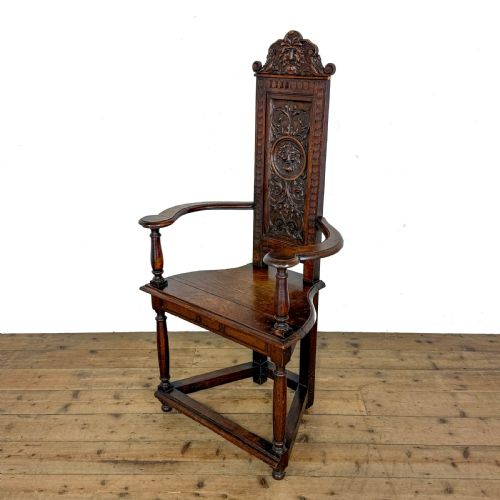
Stare long enough into a Green Man carved oak throne chair and the foliage sprouting from his mouth starts to look suspiciously like your own cabbage patch.
What varies in quality
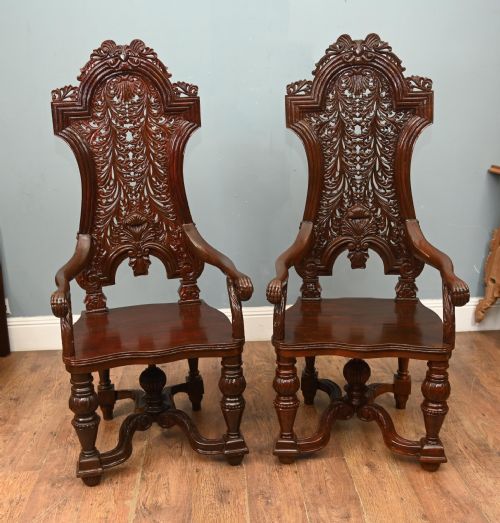
The depth and crispness of the hand carving separate standard production pieces from exceptional seating, particularly in complex motifs like Green Man masks and linenfold panels. Structural integrity depends on the tightness of the original joinery and the selection of quarter-sawn oak or dense walnut.
Proportion and scale dictate the visual success of the piece, with heavier throne chairs requiring balanced timber thickness to avoid appearing clumsy. The quality of secondary woods and the precision of turned elements further distinguish finer workshop output.
Collier and Plucknett·Ben Gilling·Allsop Worksop
The Wooden Gothic Armchairs Glossary
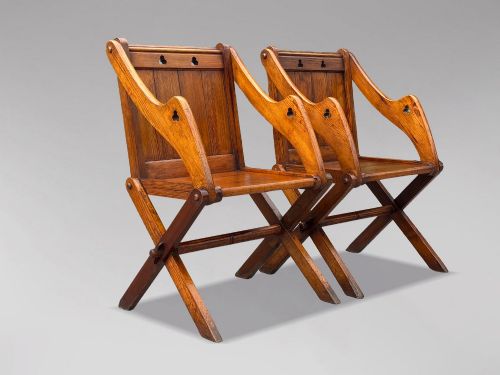
- Glastonbury chair
- A type of folding X-framed chair with a sloping back and broad armrests, popular during the Gothic Revival. This form traces its design roots back to the late medieval Glastonbury Abbey.
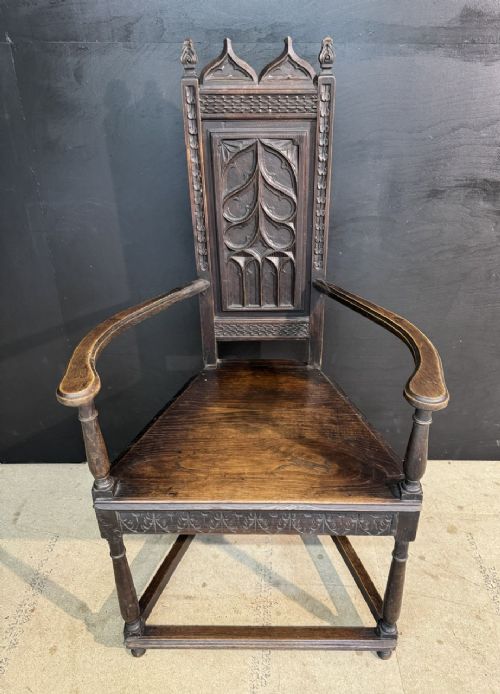
- Wainscot chair
- A heavy wooden armchair constructed with panelled backboards and turned legs, originating in the sixteenth and seventeenth centuries. Revival versions replicate this sturdy box-like construction.
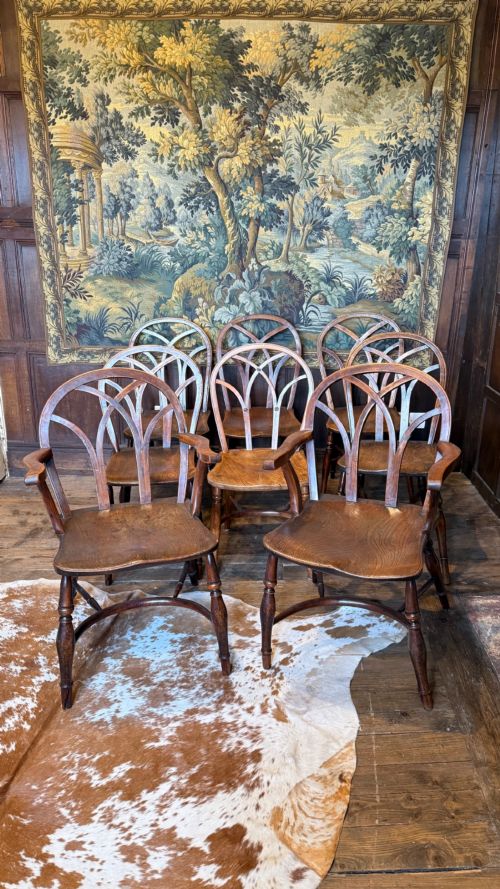
- Turner's chair
- An armchair built entirely from turned wooden spindles and posts fitted together without flat panels, sometimes called an Old Saxon chair. These seats rely on geometric turning patterns for their structural decoration.
- Throne chair
- A large, high-backed armchair featuring architectural canopy work, elaborate carving or padded upholstery intended for ecclesiastical or ceremonial use. They dominate domestic spaces through sheer vertical scale.
- Pitch pine
- A resinous softwood utilised in nineteenth-century ecclesiastical and domestic furniture for its distinct grain pattern and durability. It takes a heavy finish well, fitting the gothic aesthetic.
Wooden Gothic Armchairs: Frequently Asked Questions
Where did people use these chairs?
Owners placed these heavy seats in libraries, entrance halls and studies where their architectural lines complemented wood-panelled walls. Ecclesiastical versions also sat in chapels and large domestic drawing rooms during the revival periods.
Their commanding presence suited spaces designed to display historical awareness and scholarly taste. Today they function effectively as desk chairs, accent pieces or deliberate focal points in minimalist modern rooms.
Are these chairs comfortable for daily sitting?
Most wooden gothic armchairs were built for upright posture rather than relaxed lounging, featuring rigid panel backs and solid wooden seats. Versions fitted with leather panels or upholstered inserts offer a softer sit.
Adding a removable squab cushion softens the wooden base while preserving the visual lines of the frame. Their solid proportions provide sturdy support for daily desk or table use.
How do I tell nineteenth century from older styles?
Nineteenth-century revival pieces display machine-sawn timber components hidden beneath hand-carved surfaces, alongside modern hardware fixings where applicable. The timber patination and secondary woods usually point to Victorian workshop practices rather than seventeenth-century joinery.
Makers often copied older wainscot and turner's designs faithfully but left subtle technical indicators in the construction methods. Examining the underside and joint pins clarifies the true date of manufacture.