
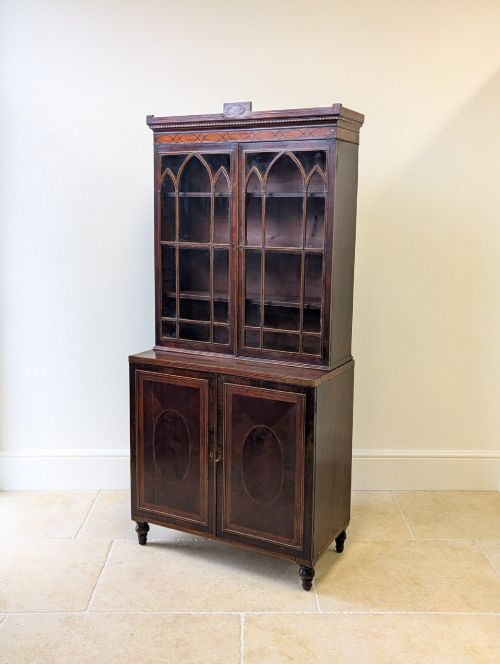


Gothic Glazed Book Cabinet
These gothic glazed book cabinets are timber storage pieces with glass doors built in revival styles, offering library organisation with architectural presence.
Gothic Glazed Book Cabinet
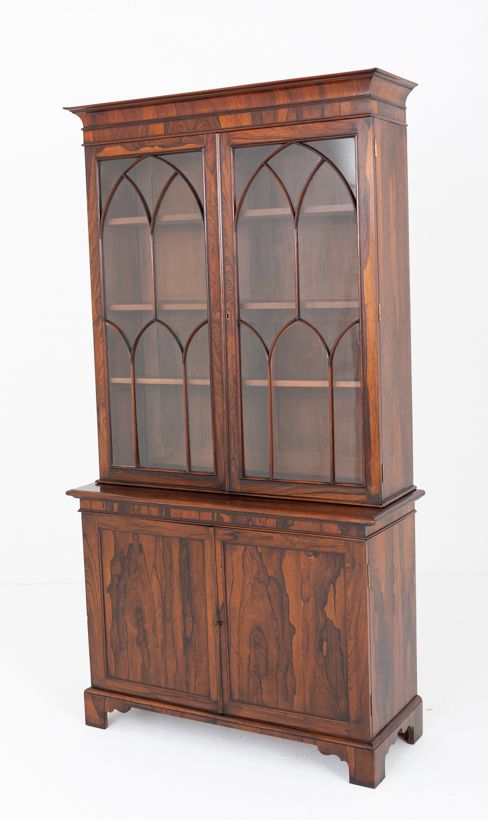
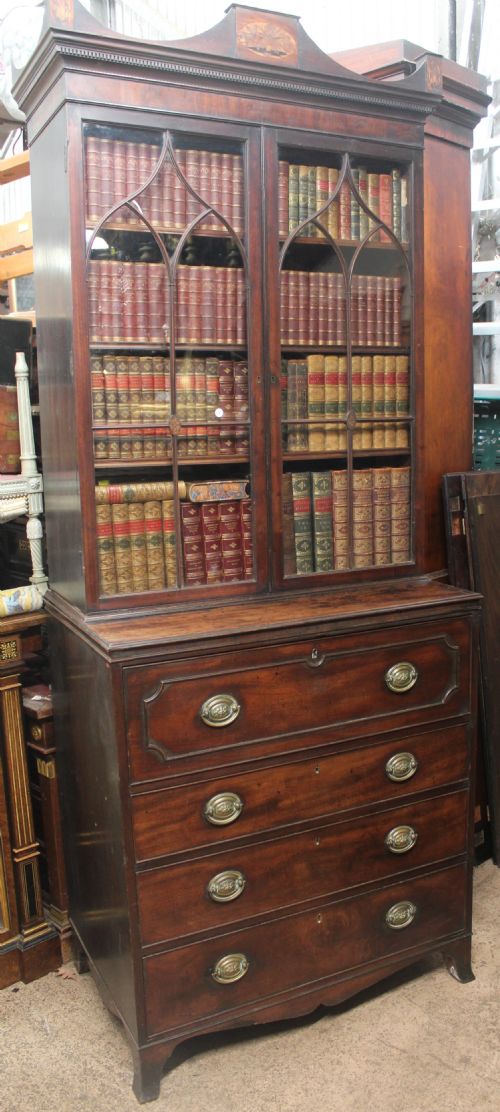
When searching for a gothic glazed book cabinet, buyers encounter timber bookcases and display cabinets spanning the Georgian, Victorian, and Edwardian eras. These pieces combine glazed upper doors with lower cupboard storage, frequently executed in mahogany, oak, or rosewood.
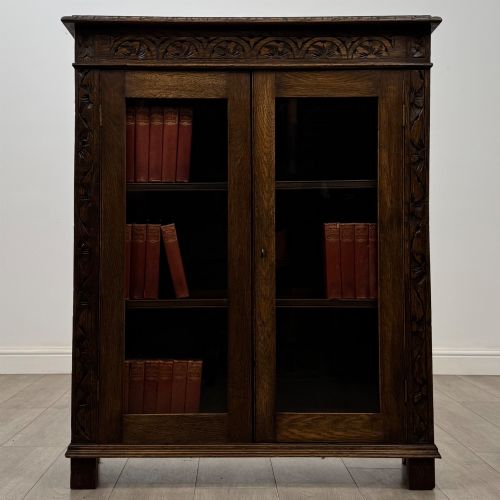
The version most commonly met on this page is the nineteenth-century Victorian or Gothic Revival bookcase, constructed in oak or mahogany. These examples utilise glass panels to display library volumes while maintaining the architectural lines characteristic of the style.
How they were made
Cabinetmakers constructed these pieces primarily using solid timbers such as mahogany, oak, and rosewood, occasionally incorporating pollard oak for distinct grain patterns. Brass fittings secure the doors and shelving interior.
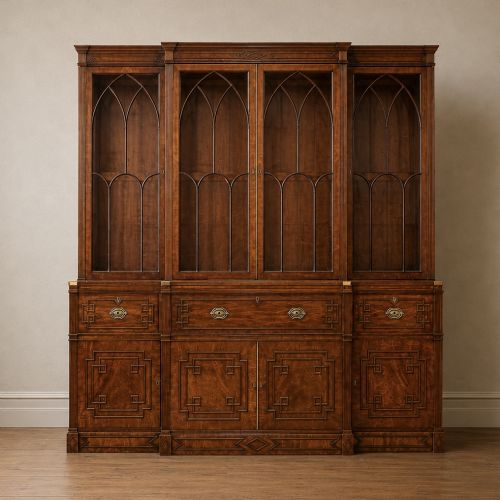
Glazing bars divide the glass panels into geometric or pointed arch patterns typical of Gothic Revival design. Carved ornamentation defines the structural frames, reflecting Georgian and Victorian workshop traditions.
Some nineteenth-century readers kept secret correspondence hidden inside secretaire drawers while browsing their gothic volumes.
What varies in quality
Quality in these cabinets rests upon the selection of timber and the precision of the joinery. Superior examples display carefully matched wood grains and crisp, hand-carved architectural details rather than cast resin ornaments.
The proportion of the glazing bars and the weight of the glass indicate the care taken in construction. Finer pieces demonstrate seamless integration between the glazed upper section and the lower cabinet base.
The Gothic Glazed Book Cabinet Glossary
- Glazed
- Fitted with glass panels to protect books from dust while keeping volumes visible. This feature defines the upper section of library cabinets.
- Gothic Revival
- An architectural and decorative style drawing on medieval forms, featuring pointed arches and trefoils. This style shapes the aesthetic of nineteenth-century bookcases.
- Breakfront
- A piece of furniture whose central section projects forward from the flanking wings. This configuration appears on larger library bookcases.
- Secretaire bookcase
- A cabinet incorporating a pull-down writing drawer fitted with small drawers and pigeonholes. These pieces combine workspace and book storage.
Gothic Glazed Book Cabinet: Frequently Asked Questions
What periods do these bookcases come from?
The pieces span the Georgian, Victorian, and Edwardian eras, with many originating in the nineteenth century. Makers adopted revival styles across these decades.
Dates range from around eighteen hundred through to the early twentieth century, showing shifting preferences in timber and decorative carving.
Which timbers are most common?
Mahogany and oak appear most frequently in the listings, used for both solid construction and decorative veneer work. Rosewood and pollard oak also occur in specific nineteenth-century pieces.
These dense hardwoods provided the structural strength required to support heavy library collections over time.
How were the glass doors used?
The glass doors allowed owners to display leather-bound volumes while protecting valuable books from dust and handling. This arrangement suited formal libraries and drawing rooms.
Glazing bars divided the glass into panes, reinforcing the structure and echoing medieval window tracery.
How do I identify a Gothic Revival piece?
Gothic Revival pieces display architectural motifs such as pointed arches, quatrefoils, and heavy carved mouldings. These elements distinguish them from classical Georgian designs.
Timbers like oak and pollard oak often feature in these cabinets to enhance the medieval aesthetic.