



Gothic Fireplace Firedogs
Gothic fireplace firedogs are substantial hearth furnishings shaped by medieval design, offering both structural support for logs and distinct period character.
Gothic Fireplace Firedogs
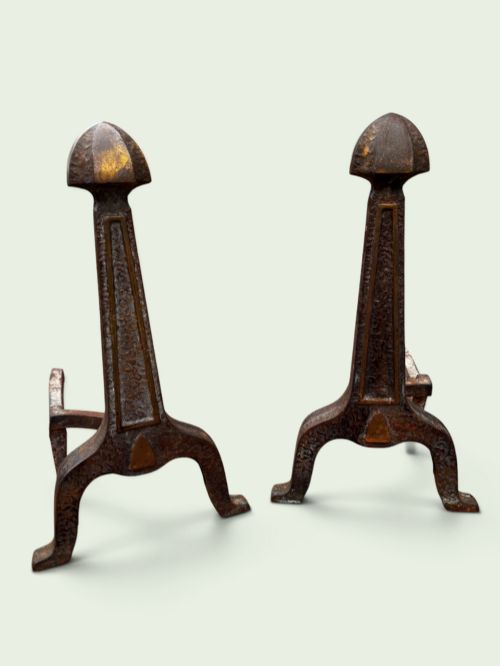
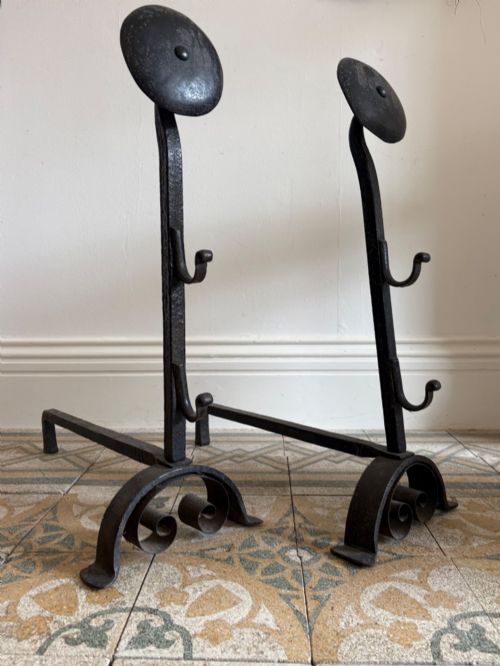
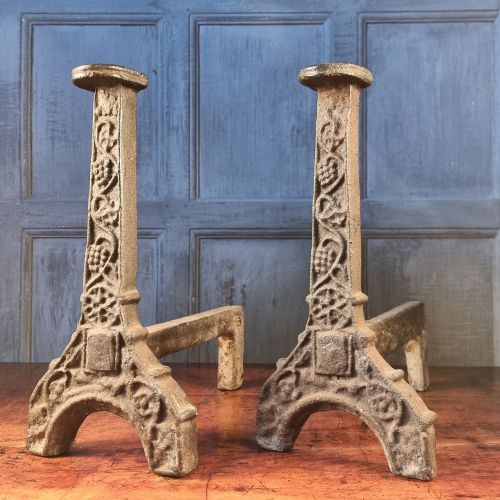
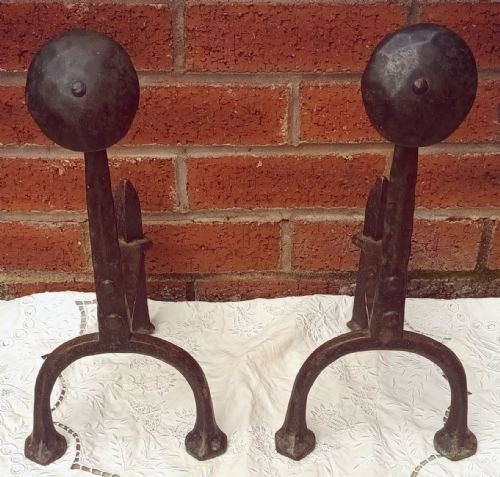
Gothic fireplace firedogs stand as heavy hearth metalwork designed to hold logs aloft for improved air circulation and combustion. When exploring gothic fireplace firedogs on this page, buyers encounter pairings of cast iron, wrought iron, and brass spanning centuries from the sixteenth to the twentieth.
The selection ranges from early sixteenth-century forged iron forms to Victorian Gothic Revival pairs and later Arts and Crafts interpretations. Many examples appear alongside matching fire baskets, grates, or hearth stands.
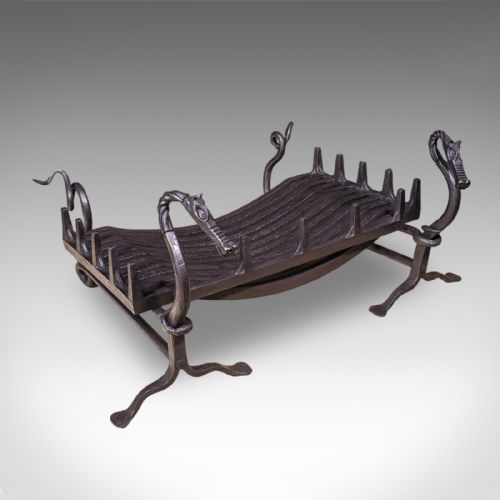
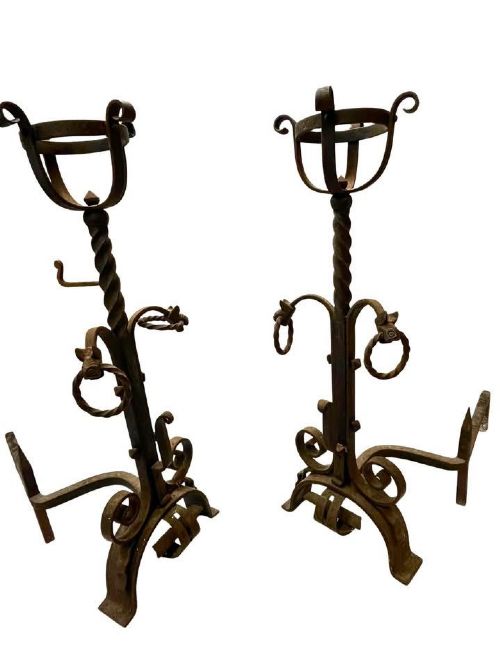
Buyers frequently meet nineteenth-century and Edwardian interpretations that channel medieval motifs through heavy forge-work and structural rivets. Forms vary from simple upright standards to large inglenook grates and pairs functioning alternatively as planters.
How they were made
Makers utilised cast iron for complex decorative motifs and structural mass, pouring molten metal into detailed moulds to achieve heraldic or architectural profiles. Wrought and forged iron provided the backbone for domestic hearth equipment, shaped manually at the anvil while hot.
Brass and steel components entered production during later periods, particularly under Arts and Crafts influence, introducing polished highlights and riveted plates. Blacksmiths joined sections through traditional techniques including riveting, collars, and lap joints without reliance on modern welds.
Some oversized nineteenth-century examples occasionally double as garden planters once retired from the smoky interior.
What varies in quality
Quality rests in the proportional balance of the standards and the integrity of the original forge-work or casting detail. Superior pairs display crisp edges on cast motifs and confident, clean hammer marks on wrought components rather than flat, machine-stamped uniformity.
The weight of the metal and the robustness of the billet dictate durability and historical fidelity. Articulation in design, such as the sculptural presence of dragon motifs or Christopher Dresser-inspired brass work, separates standard utility hardware from exceptional decorative metalwork.
The Gothic Fireplace Firedogs Glossary
- Andirons
- Supports used to hold logs above the hearth floor. They typically feature an upright front standard and a horizontal rear bar.
- Fire Dogs
- An alternative term for andirons, often specifically denoting pieces with animal or architectural finials.
- Gothic Revival
- An architectural and decorative style popular during the nineteenth century that revived medieval Gothic forms, pointed arches, and heavy ironwork.
- Arts and Crafts
- A design movement valuing handcraftsmanship, visible construction methods, and traditional materials over industrial mass production.
- Inglenook
- A large recessed hearth area designed to accommodate seating alongside the fire grate, requiring substantial andirons for deep fireplaces.
Gothic Fireplace Firedogs: Frequently Asked Questions
How do I clean antique firedogs?
Remove loose soot and ash with a soft brush and dry cloth.
Apply a light coat of neutral wax or microcrystalline wax to iron surfaces to protect against moisture without altering the dark patina.
Can these firedogs support real fires?
Most heavy iron and steel pairs are structurally capable of holding logs during a fire.
Verify that the metal shows no deep structural fractures from past heat exposure before lighting an open hearth.
What is the difference between andirons and fire baskets?
Andirons are a pair of separate standards designed to hold logs directly on the hearth floor.
Fire baskets incorporate an integrated metal grate container between the firedogs to hold fuel in a contained basket.
How do I date a pair of iron firedogs?
Examine the manufacturing marks, surface texture, and assembly methods.
Hand-forged tool marks and uneven surfaces typically point to earlier periods, whereas uniform machine casting indicates nineteenth-century or later production.