

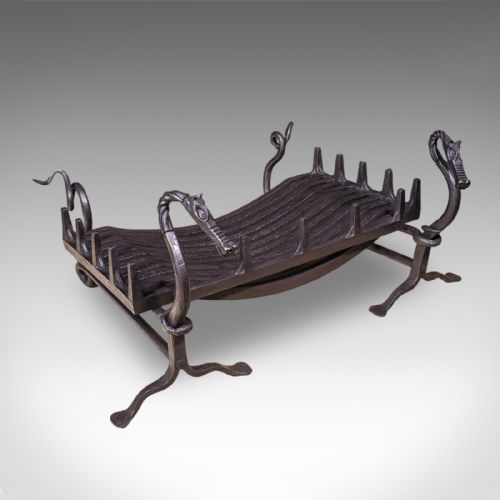


English Iron Andirons
English iron andirons hold logs within open hearths, offering structural support and traditional hearth decoration.
English Iron Andirons
English iron andirons serve as essential hearth furniture designed to elevate firewood for better combustion and air circulation. These firedogs appear frequently in Victorian, Edwardian, and Georgian configurations, often accompanied by matching fire baskets.
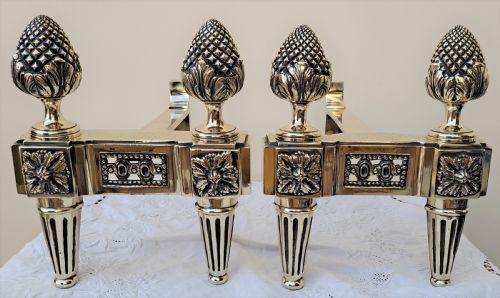
Buyers encounter sturdy utilitarian examples alongside ornate pairs featuring motifs like dragons, lions, or horse whips. The selections span from straightforward nineteenth-century forged iron to elaborate Gothic and Arts and Crafts iterations.
Many pairs integrate with broader fireside sets that include tool rests, grates, and fenders. Their presence defines the visual centre of traditional British fireplaces across various historical periods.
Materials and Construction
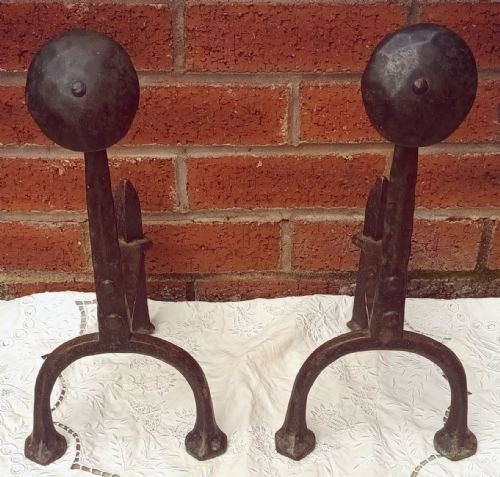
Blacksmiths and foundries utilised wrought iron, cast iron, and polished steel to build durable hearth supports. Wrought iron pieces display hand-forged curves and hammer marks, whereas cast iron versions utilise moulds for detailed decorative motifs.
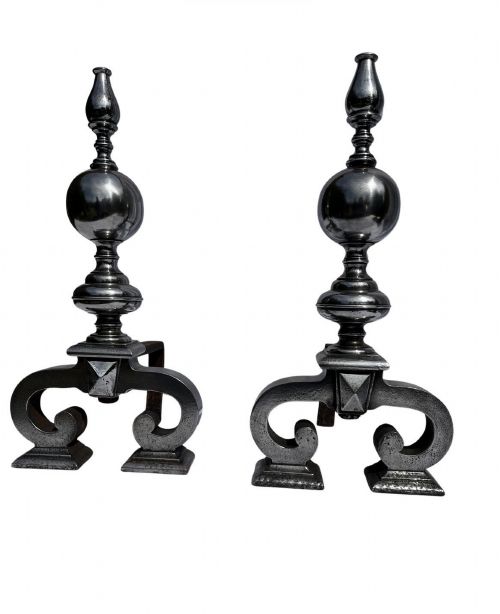
Makers frequently combined iron with brass accents, copper details, and firebrick linings to enhance both durability and appearance. Polished iron and steel finishes provided a brighter reflection within the hearth when illuminated by flames.
Common styles across the archive include Victorian Gothic, Arts and Crafts, Regency, and Edwardian decorative revival forms.
Distinctions in Quality
Substantial weight and material thickness distinguish superior examples from lighter production pieces. Heavier cast and wrought iron withstands intense sustained heat without warping or structural degradation.
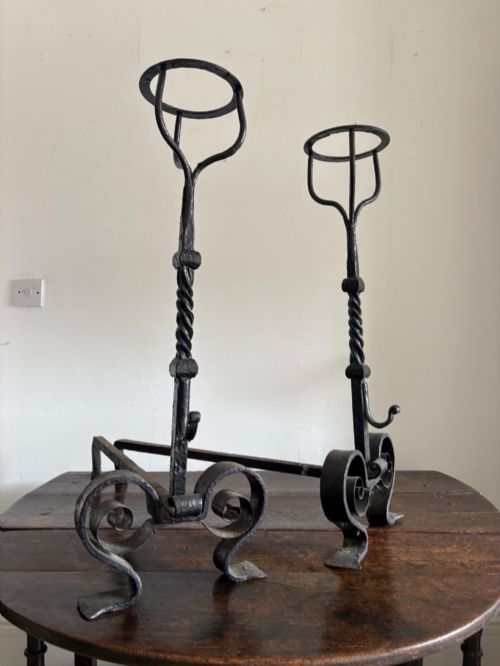
Artistic execution in the surface detailing separates standard utilitarian supports from exceptional decorative works. Fine examples exhibit crisp casting of figural motifs or skilful, balanced forging in the scrollwork and uprights.
The English Iron Andirons Glossary
- Andiron
- A horizontal support raised on legs, with a vertical guard, used to hold logs in an open fireplace. Also known historically as a firedog.
- Fire Basket
- A metal basket designed to hold coal or wood within a hearth, frequently used in conjunction with matching andirons. These units often sit directly between or upon the firedog uprights.
- Wrought Iron
- Iron that has been heated and hammered into shape by hand, resulting in a fibrous texture and high resistance to breaking. This material characterises much of the traditional British metalwork.
- Fire Dog
- An alternative term for an andiron, originating from the animal-like shapes historically given to the upright guards. They support burning fuel off the hearth floor.
- Inglenook
- A large recessed hearth area built into a chimney, typically requiring taller and heavier andirons to manage large logs. These spaces form the architectural focal point of older rooms.
English Iron Andirons: Frequently Asked Questions
How do I use andirons in a fireplace?
Andirons stand in pairs on the hearth floor to hold logs above the base of the fireplace. This elevation allows air to circulate underneath the fuel for a steadier burn.
They also prevent rolling logs from spilling out onto the floorboards. Modern users place them within open hearths either functionally or purely for historical room decoration.
What is the difference between andirons and fire dogs?
There is no functional difference between andirons and fire dogs, as the terms describe the exact same hearth furniture. Fire dog is the older traditional name, while andiron became more common later.
Historical listings use both titles interchangeably for pairs supporting logs. Regional preferences often dictated which term makers and buyers used.
How do I date an iron andiron?
Dating relies on observing the manufacturing techniques, stylistic motifs, and material combinations present on the piece. Victorian examples often show Gothic or Arts and Crafts influences, while Georgian versions frequently incorporate polished brass components.
Earlier sixteenth and seventeenth-century pieces display heavy hand-casting and simpler ball-and-claw or upright geometries. Comparing the surface finish and fastening methods helps narrow the decade of production.
Can andirons support heavy logs?
Substantial wrought or cast iron andirons are structurally engineered to bear heavy loads of burning timber. Their thick uprights and sturdy legs distribute weight safely across the hearth.
Lighter decorative pairs suit smaller hearths or coal-burning baskets rather than large oversized logs. Inspecting the gauge of the metal reveals whether a pair is suited for heavy daily utility.