



Gothic Cast Iron Stick Stand
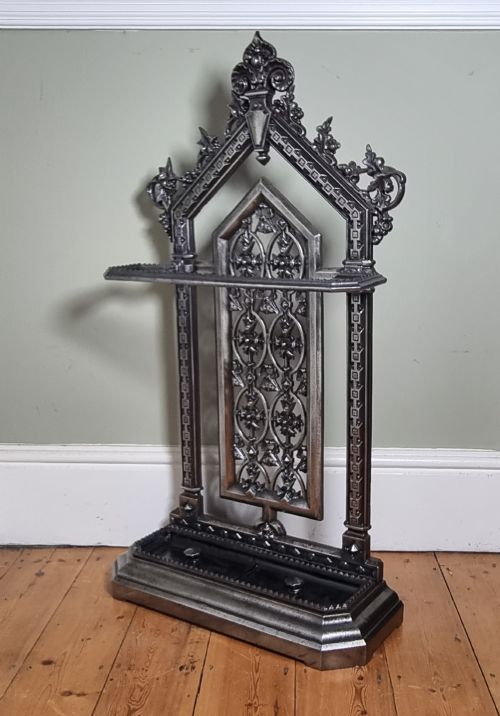
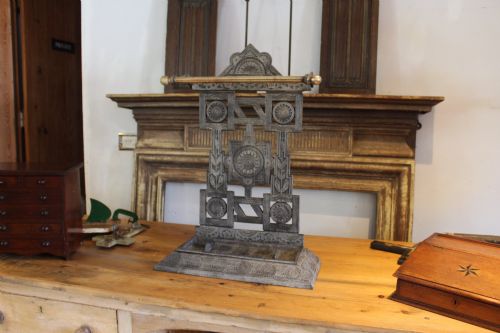
These gothic cast iron stick stand examples are heavy hallway furnishings built to hold wet umbrellas and walking canes with architectural ecclesiastical motifs.
Gothic Cast Iron Stick Stand
A gothic cast iron stick stand serves as a sturdy hallway furnishing designed to hold umbrellas and walking canes in the nineteenth century. Most examples found here date from the Victorian period, displaying the architectural pointed arches and quatrefoils typical of the Gothic Revival style.
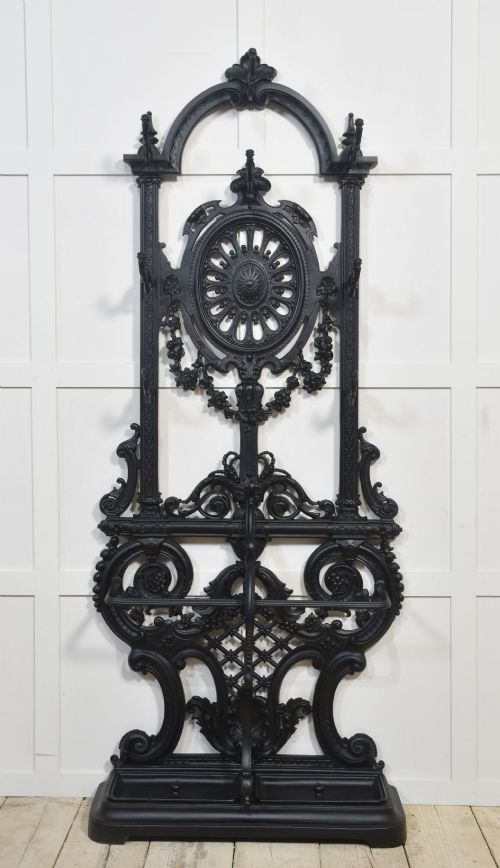
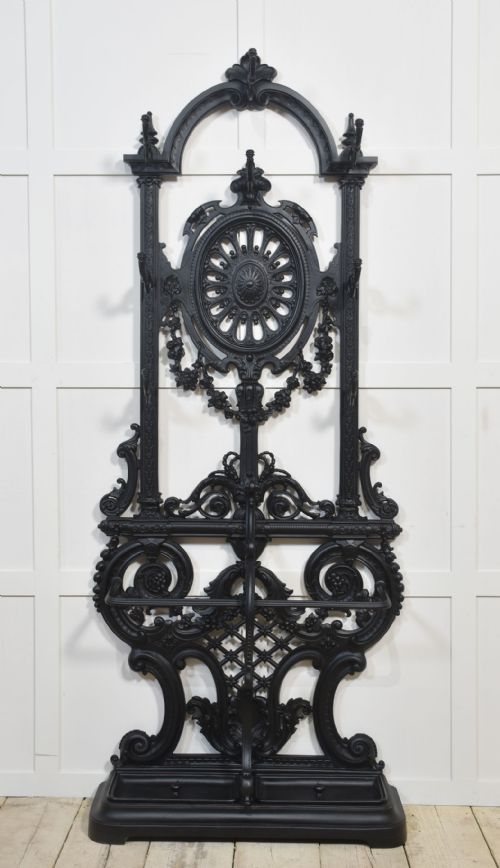
Makers produced these utilitarian objects for grand country houses and urban townhouses alike, frequently incorporating drip pans at the base to catch rainwater. The forms range from compact corner units to large hall stands combining coat hooks, mirrors, and umbrella racks into a single heavy piece.
How they were made
Foundries produced these pieces by pouring molten metal into sand moulds, capturing intricate Gothic tracery and relief decoration with sharp precision. Ironfounders utilised robust pig iron to create heavy frames capable of supporting the dense weight of wet umbrellas without tipping.
Manufacturers integrated supplementary components such as brass rails, removable sheet metal drip pans, and occasionally marble inserts to complete the functional design. Many examples retain traces of early paint finishes applied over the raw cast metal to protect against rust in damp hallways.
Some Victorian hallway stands depicted historical figures like William Wallace holding court beside your dripping brollies.
What varies in quality
The sophistication of the casting separates standard production pieces from high-end foundry work, particularly in the crispness of the Gothic detailing and relief ornaments. Pieces bearing recognisable foundry stamps or named designers demonstrate superior sculptural depth and more complex structural arrangements.
Proportion and scale also dictate quality, as larger country house models with numerous ring dividers or integrated mirror frames require greater technical skill in ironfounding than smaller domestic stands. The presence of original, undamaged drip pans and brass components adds to the integrity of the piece.
Thomas Jeckyll·Coalbrookdale·Falkirk Foundry
The Gothic Cast Iron Stick Stand Glossary
- Gothic Revival
- An architectural and decorative style popular during the nineteenth century that revived medieval forms such as pointed arches, tracery, and quatrefoils. This aesthetic heavily influenced the ornamentation found on heavy iron hallway furniture.
- Drip pan
- A removable metal tray positioned at the base of a stick stand to catch water running off wet umbrellas. These components protect hallway floors and prevent rust accumulation within the iron frame.
- Hall stand
- A larger piece of hallway furniture combining a stick stand with coat hooks, a glove box, and frequently a central mirror. These multi-functional items dominated Victorian entrance halls.
- Foundry stamp
- An impressed mark or raised lettering on the iron surface identifying the manufacturing firm or patent date. These marks provide definitive evidence of origin.
- Aesthetic Movement
- A late nineteenth-century design current that emphasised visual beauty over narrative subject matter. Pieces from this movement often feature more stylised linear patterns rather than strict historical revivalism.
Gothic Cast Iron Stick Stand: Frequently Asked Questions
How do I clean cast iron?
Dust the iron surface regularly with a soft dry brush to remove particles settled within the intricate Gothic crevices. Avoid using water or harsh chemical cleaners that might compromise historic paint layers or encourage rust.
Apply a light coat of neutral microcrystalline wax if the bare metal requires protection against moisture. Buff gently with a lint-free cloth to maintain a stable, matte finish without creating an artificial shine.
Were these stands made for homes?
Foundries manufactured these heavy iron stands primarily for the entrance halls of Victorian townhouses and country estates. Their substantial weight ensured stability when holding multiple heavy walking sticks and dripping umbrellas.
Larger versions often stood in public buildings, clubs, and hotels where foot traffic demanded robust construction. Smaller models suited domestic hallways with limited floor space while retaining the same architectural aesthetic.
How can I identify the maker?
Inspect the reverse or underside of the iron frame for raised lettering, registration numbers, or foundry stamps. Prominent Scottish and English foundries frequently marked their cast iron output with company names or specific pattern numbers.
Compare the decorative motifs and casting quality against known catalogue designs from firms such as Coalbrookdale or Falkirk. Unmarked pieces remain common, often reflecting the output of smaller regional ironfounders producing similar Gothic patterns.
Are original drip pans important?
Original sheet metal or cast iron drip pans complete the functional integrity of a nineteenth-century stick stand. Because these removable trays caught constant moisture, many rusted away and were replaced over time.
Finding a stand with its matching, period-appropriate drip pan is uncommon and enhances the overall completeness of the piece. Replacements are acceptable for daily use, but matching components appeal more strongly to collectors.