
Cast Iron Hallway Stand
These heavy cast iron hallway stand examples combine robust metalwork with practical entryway storage for walking sticks and umbrellas.
Cast Iron Hallway Stand
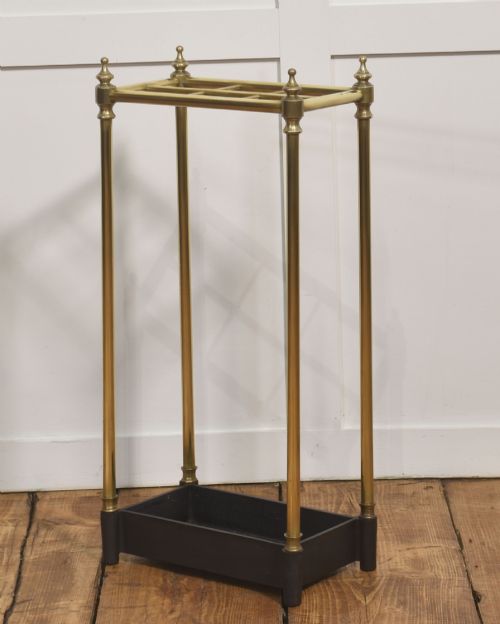
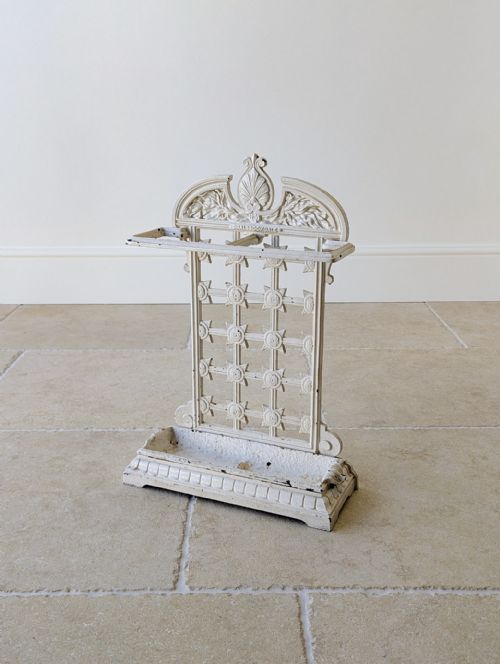
A cast iron hallway stand serves as an entryway furnishing designed to hold umbrellas and walking sticks, appearing primarily in Victorian and Edwardian iterations. Buyers find umbrella stands, stick stands, and combined hall stands engineered for domestic use.
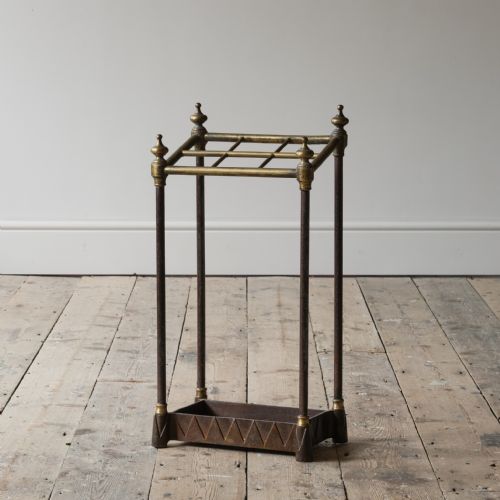
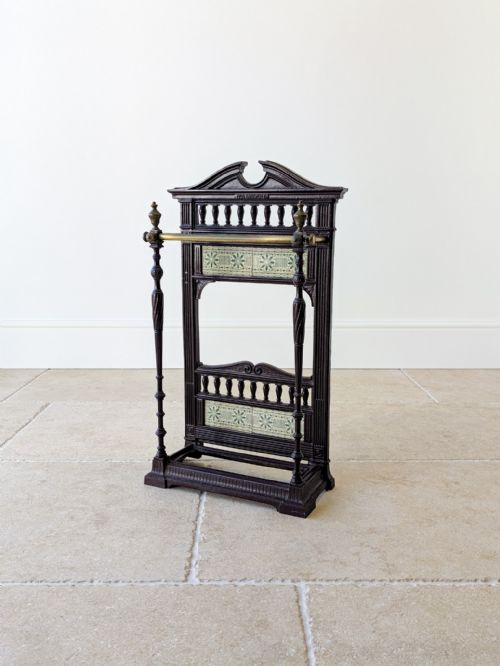
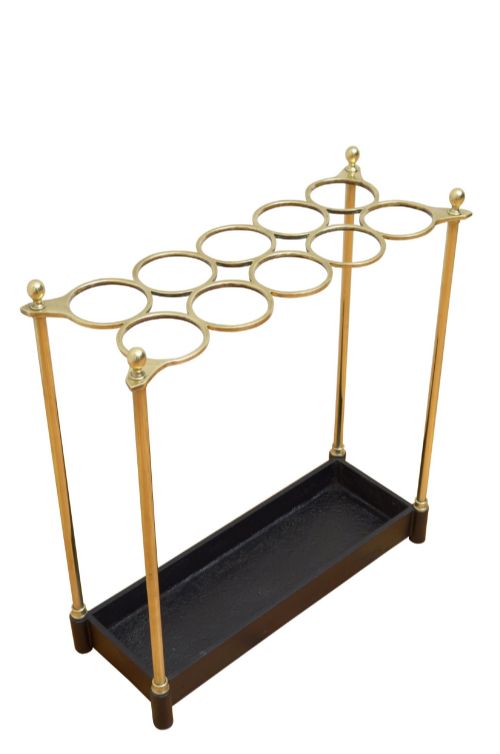
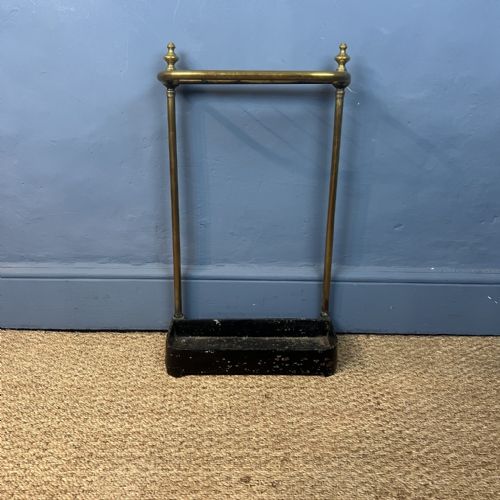
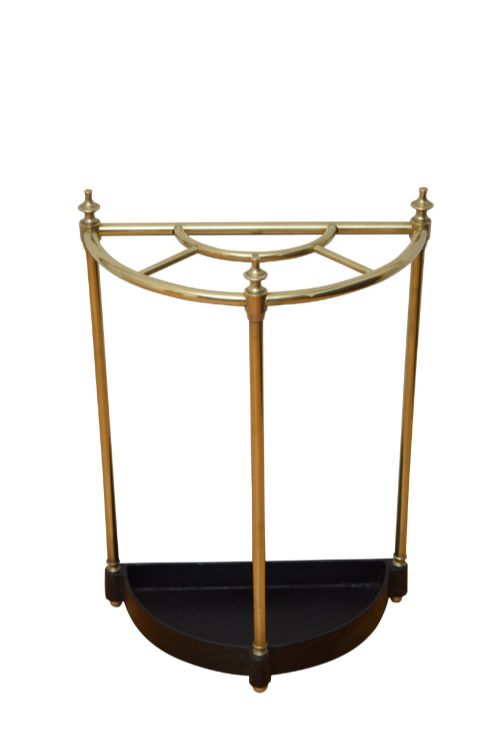
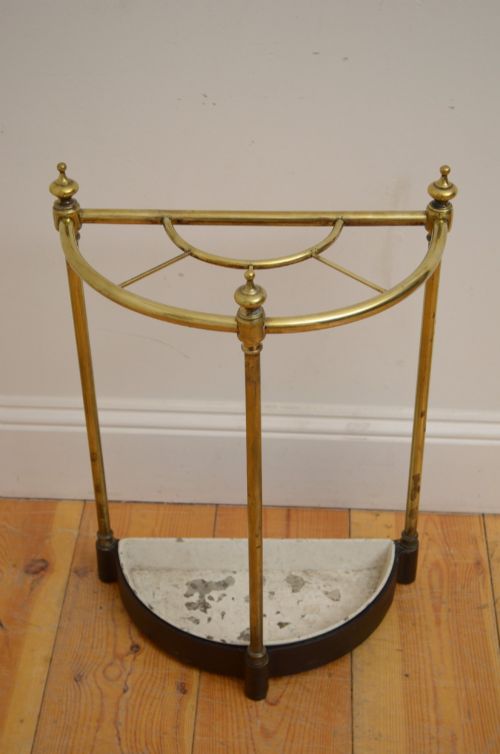
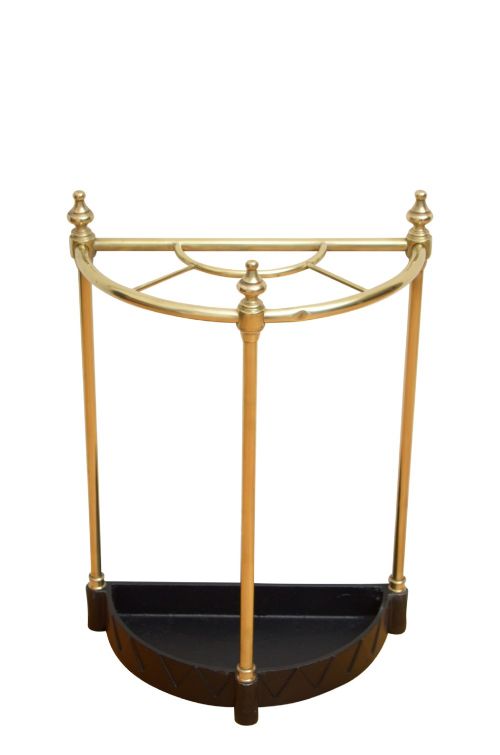
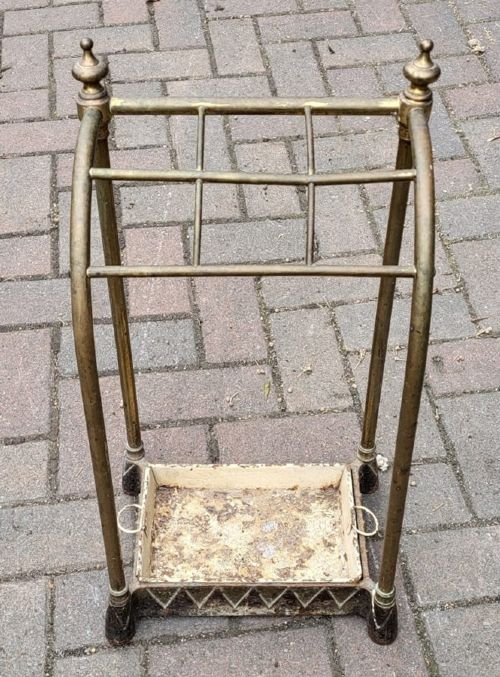
The most common versions on this page utilise cast iron frames, often paired with brass details or ceramic drip trays to catch rainwater from wet weather gear. Many pieces incorporate divisions for multiple walking sticks alongside dedicated umbrella sections.
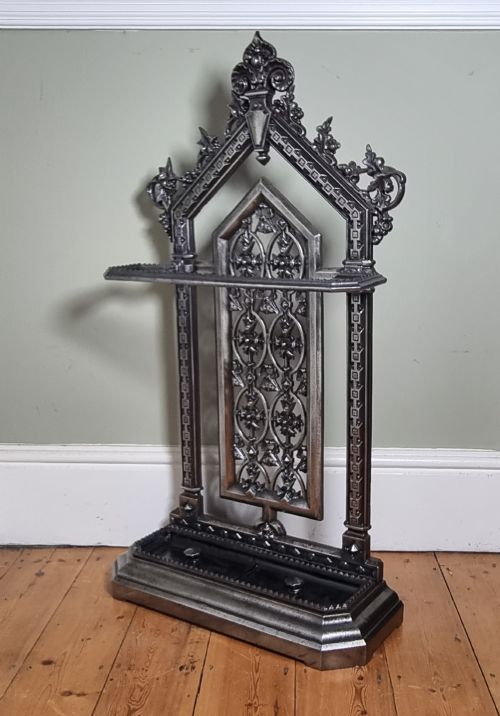
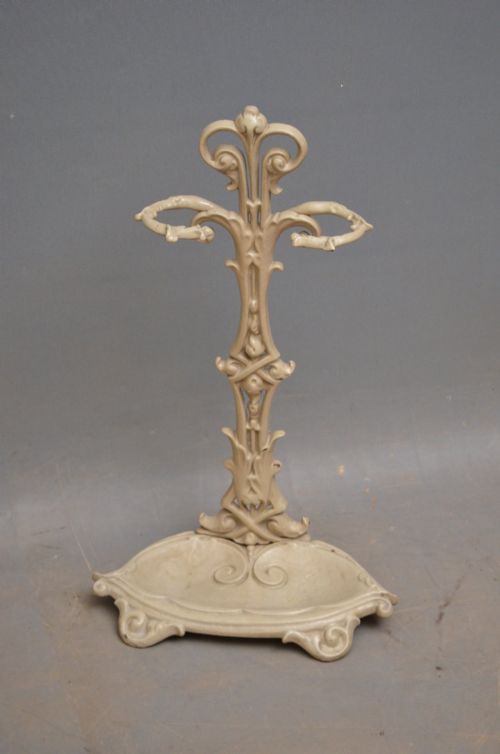
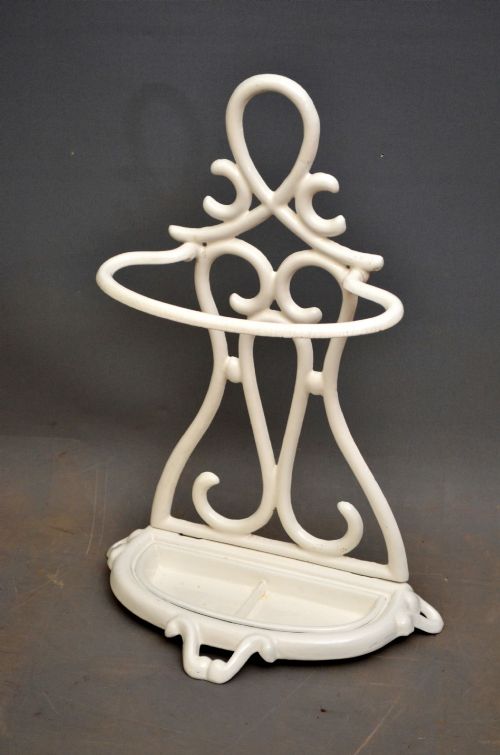
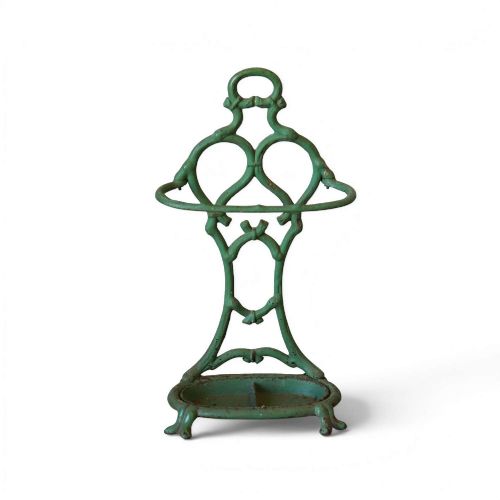
Design influences range from the Aesthetic Movement and Art Nouveau to Art Deco and industrial foundry patterns. French and English foundries dominate the origins seen across the inventory.
How they were made
Foundries utilised sand-casting techniques to produce the intricate openwork patterns and rigid frames characteristic of cast iron hallway stand pieces. Molten iron poured into moulds created durable structures that resisted corrosion through painted, enamelled, or plated finishes.
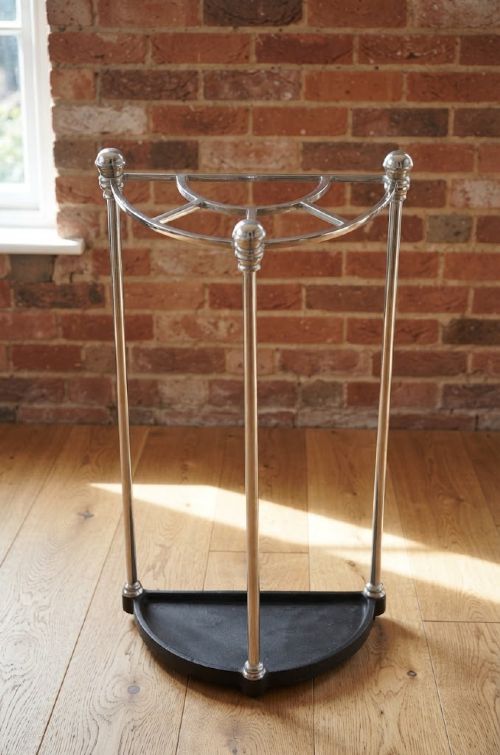
Secondary materials such as brass rails, nickel plating, and copper fixtures provide contrast and structural reinforcement. Ceramic and enamel drip trays insert into the base to protect flooring from moisture.
Listings feature cast iron combined with brass, ceramic, pitch pine, and nickel plating across Victorian and Art Deco periods.
What varies in quality
Casting crispness separates standard foundry output from exceptional artistic commissions, where maker marks and registered design numbers indicate high-tier production. Foundries like Coalbrookdale achieved finer detail in floral and geometric motifs than lesser-known regional works.
The integrity of the original surface finish and the retention of matching removable drip trays determine the desirability of each piece. Altered components or replaced drip pans diminish the historical coherence of the object.
Coalbrookdale·Thomas Jeckyll·Falkirk Ironworks·A. Kenrick & Sons
The Cast Iron Hallway Stand Glossary
- Demi-lune
- Half-moon shape designed to sit flush against an entrance wall. This profile minimises floor space intrusion in narrow passages.
- Faux bois
- Imitation of wood grain rendered in cast iron. Designers utilised this technique to mimic natural bamboo or timber forms.
- Drip tray
- Removable metal, ceramic, or enamel pan positioned at the base. It catches water runoff from wet umbrellas.
- Aesthetic Movement
- Late nineteenth-century design style emphasising visual beauty over narrative content. Pieces from this period often display stylised botanical motifs.
Cast Iron Hallway Stand: Frequently Asked Questions
How do I clean a cast iron hallway stand?
Remove surface dust using a dry brush and wipe metal surfaces with a lightly oiled cloth to protect the finish.
Avoid abrasive cleaners that strip painted or enamelled coatings from the iron.
Were these stands made for homes or public buildings?
Foundry catalogues supplied these items primarily to domestic entrance halls, country houses, and Victorian reception rooms.
Robust construction also suited them for commercial offices and club cloakrooms.
How do I identify a Victorian piece from an Edwardian one?
Victorian examples often feature heavy Gothic revival, naturalistic floral, or Aesthetic Movement designs with dense ornamentation.
Edwardian items tend toward lighter construction, simpler proportions, and early Art Nouveau influences.
Can these stands hold heavy walking canes safely?
Cast iron construction provides substantial weight and rigidity to support heavy wooden or metal walking sticks.
Base divisions and vertical rings keep tall items stable within the frame.