

Gothic Carved Sideboard
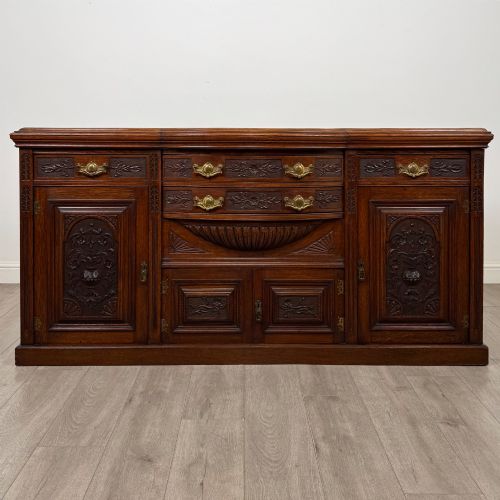
A gothic carved sideboard brings heavy timber and medieval motifs into a dining room or hall.
Gothic Carved Sideboard
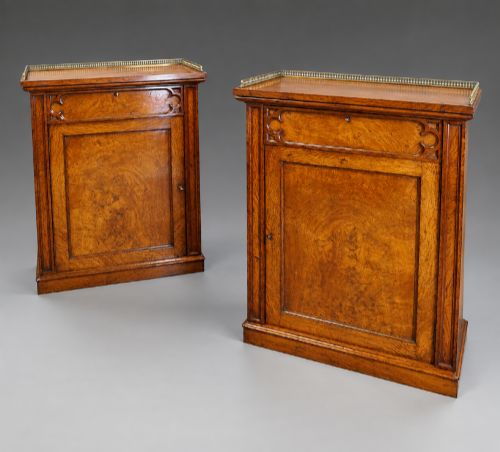
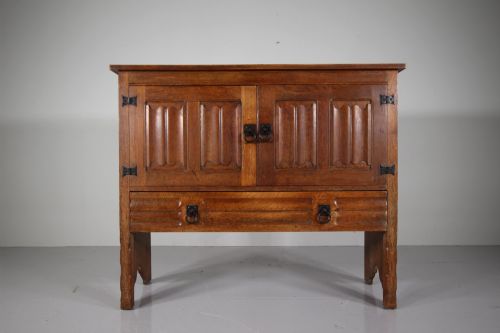
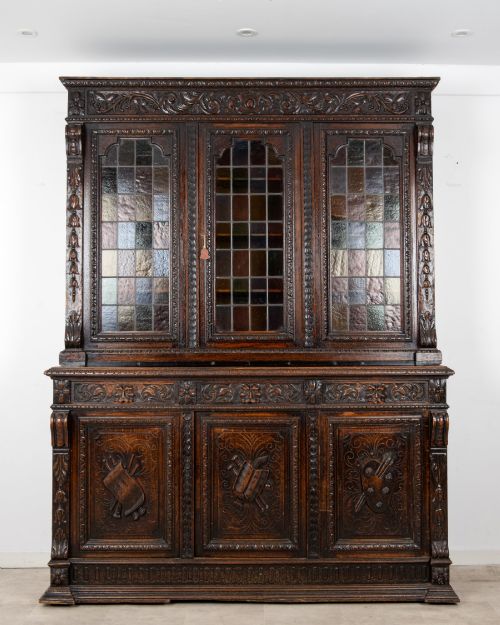
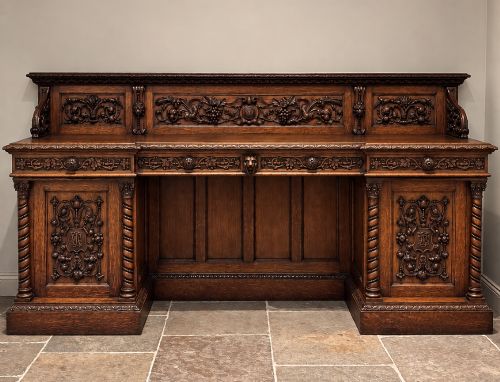
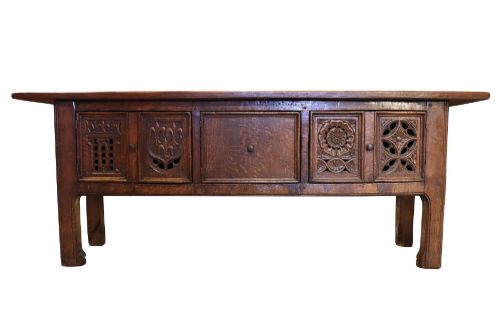
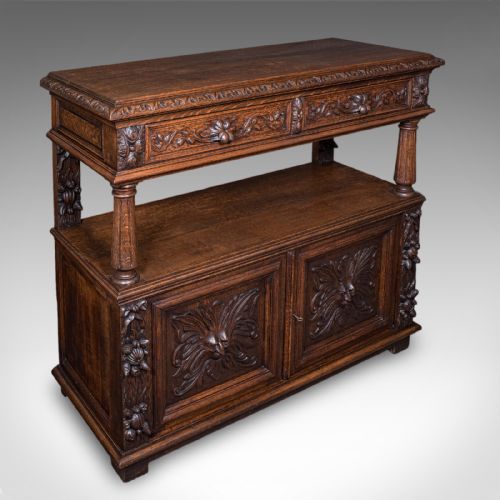
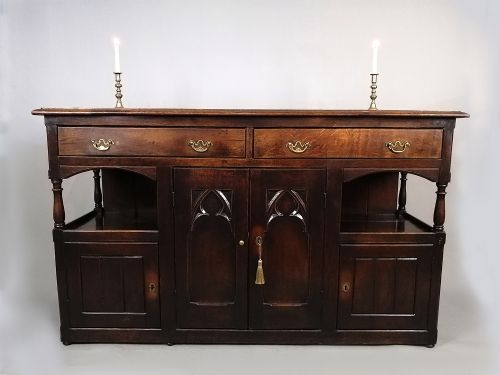
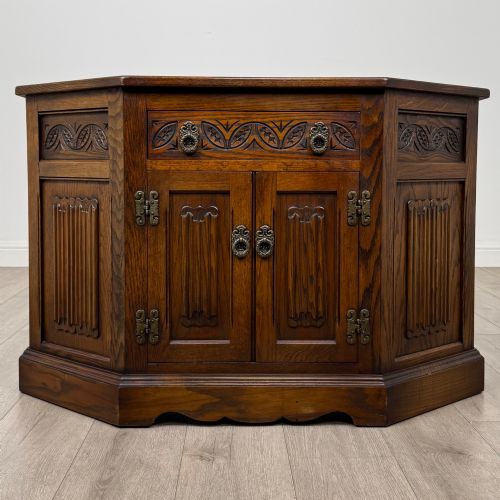
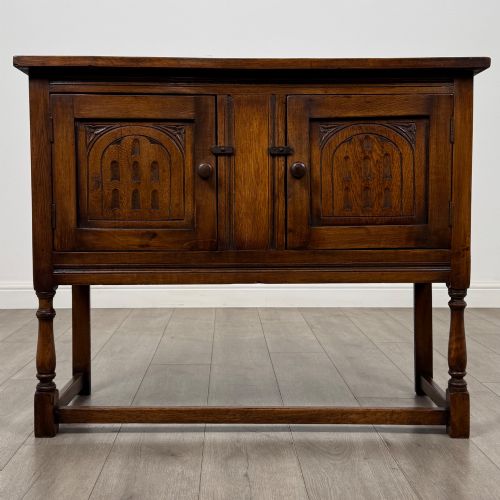
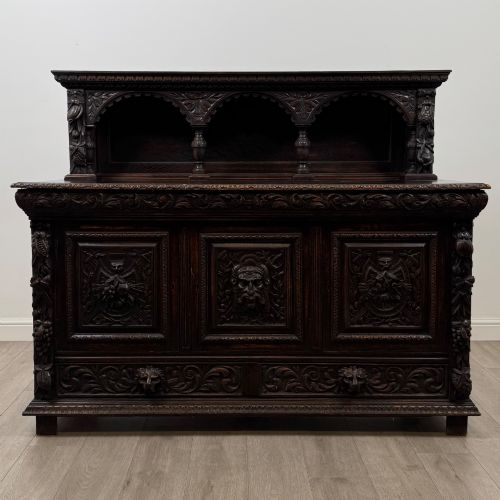
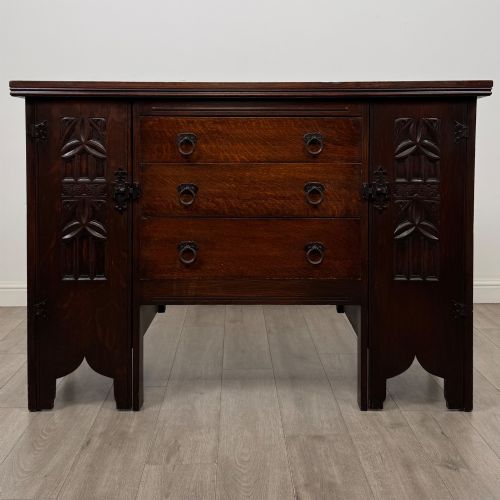
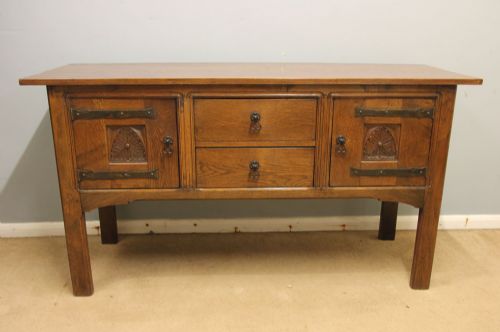
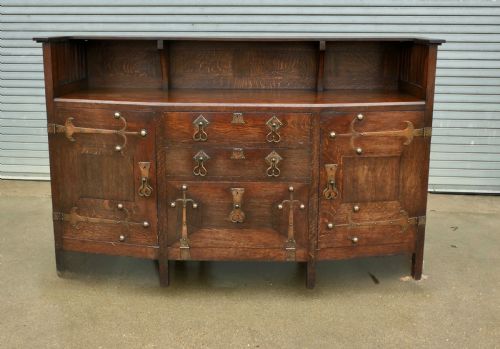
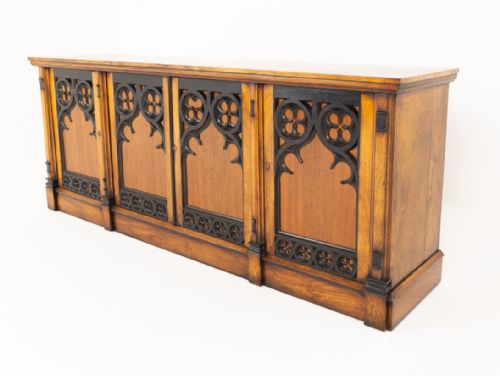
The form spans formal mirror-backed serving units and low dresser bases used for dining storage. Many pieces integrate linenfold panels, pointed arches, and occasionally grotesque masks into the timber framework.
Makers adapted these medieval architectural elements for domestic use throughout the nineteenth century, producing robust cupboards and servers intended for substantial Victorian and Edwardian interiors.
How they were made
Solid oak provides the primary structural timber for these pieces, supplemented occasionally by walnut, padouk, and mahogany. Carpenters joined the heavy framework using traditional mortise and tenon construction to support the massive weight of the timber.
Carvers worked directly onto the solid wood panels to create deep relief mouldings, green man motifs, and geometric tracery. Brass and iron hardware, including strap hinges and drop handles, secured the heavy doors and drawers.
Several pieces conceal watchful green men carved into the oak foliage.
What varies in quality
Timber selection and construction weight dictate the rigidity of the carcass. Dense, figured oak with intact original brass or iron fittings preserves the structural integrity intended by the maker.
Leonard Wyburd·John Moyr Smith·Gillows
The Gothic Carved Sideboard Glossary
- Tracery
- Openwork stonework patterns translated into wooden window-like divisions on cabinet doors. This decorative Gothic element mimics ecclesiastical architecture.
- Linenfold
- A style of wood carving that imitates folded fabric or parchment. Panels decorated this way appear frequently on cupboard doors.
- Green Man
- A sculptural motif showing a human face emerging from or entwined with foliage. Carvers often placed these masks on drawer fronts and stiles.
- Creedence cabinet
- A small cupboard or side table traditionally used for holding communion elements. Victorian revival pieces adopted this ecclesiastical form for domestic storage.
Gothic Carved Sideboard: Frequently Asked Questions
How do I clean a carved oak sideboard?
Dust the deep recesses of the carving regularly with a soft bristle brush to prevent particle buildup. Apply traditional beeswax sparingly to nourish the timber without clouding the dark finish.
Avoid liquid cleaners and silicone sprays, which damage historic wax and attract dirt into the carved crevices over time.
Will a large sideboard fit in a modern dining room?
These substantial timber pieces require significant wall space and adequate clearance for heavy doors to open fully. Measure both the room dimensions and access routes thoroughly before attempting delivery.
Consider pairing the dark wood tone with lighter walls and minimal surrounding furniture to balance the visual weight of the heavy timber.
How do I date a Gothic revival sideboard?
Examine the construction marks, timber preparation, and hardware fixings behind the panels. Machine-sawn timber and Phillips screws indicate later twentieth-century work, whereas hand-planed boards point to the nineteenth century.
Stylistic details like mirror backs and specific revival movements help narrow the manufacturing window between eighteen-fifty and nineteen-hundred.
What is the difference between a sideboard and a dresser base?
A sideboard typically functions as a flat-topped serving console, occasionally featuring a mirror or shelf superstructure. A dresser base generally provides lower storage enclosed by cupboards or drawers without tall upper additions.
Both forms served similar utility in Victorian dining rooms but varied in height and internal compartment layouts.