
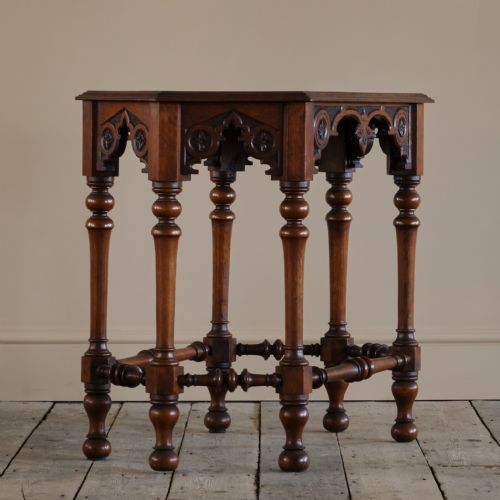
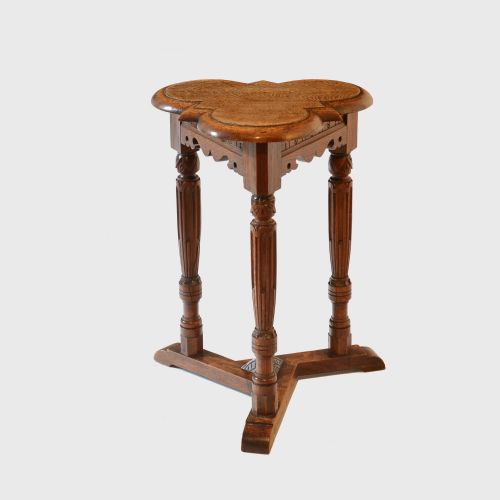


Gothic Carved Plant Table
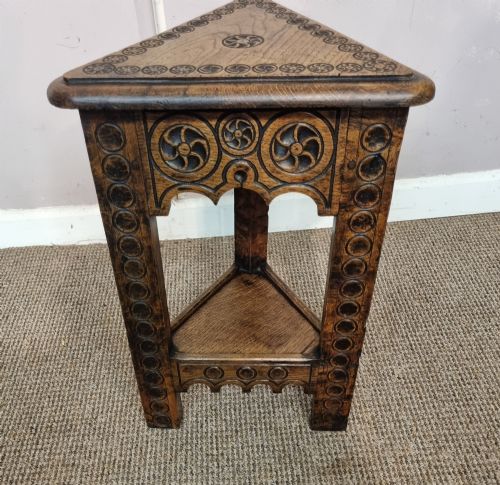
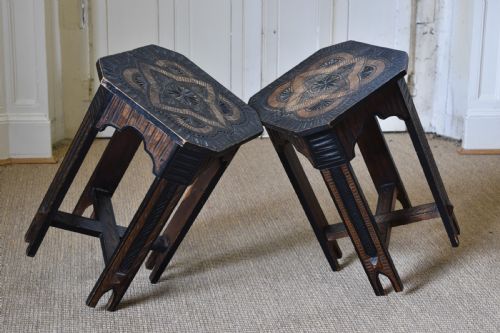
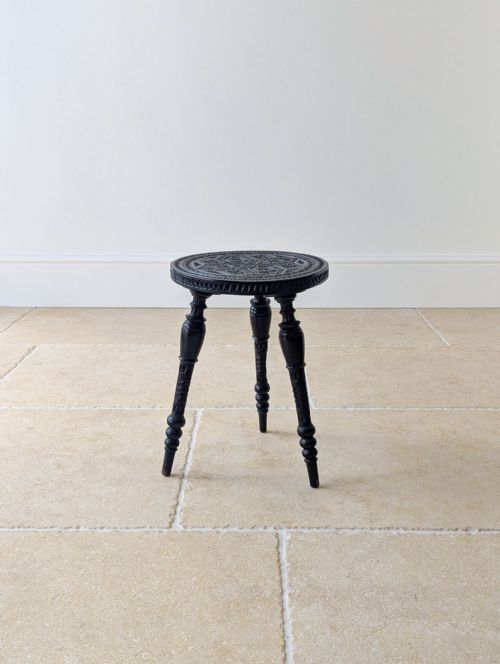
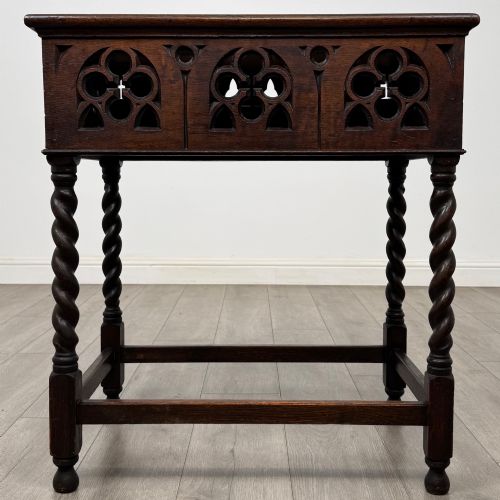
These gothic carved plant tables are timber display pieces combining medieval architectural motifs with domestic utility, bringing dark woods and geometric tracery into Victorian and twentieth-century interiors.
Gothic Carved Plant Table
A gothic carved plant table is a sturdy domestic surface designed to elevate foliage or objects, drawing heavily on medieval revival styles. When searching for a gothic carved plant table, a buyer meets small-scale occasional furniture intended for display rather than heavy dining.
The pieces appearing on this page span the nineteenth century through the nineteen-thirties, taking forms such as triangular lift-top stands, clover leaf designs, side tables, stools, and pedestals. Oak dominates the selection, accompanied by walnut, ebonised hardwood, and solid rosewood.
Stylistic influences range from strict Gothic Revival and Jacobean Revival to Arts and Crafts, Aesthetic Movement, and Anglo-Indian design. Buyers are most likely to encounter compact occasional tables and stands featuring distinctive chip-carved geometric patterns and trefoil motifs.
Materials and construction methods
Carpenters utilised solid timbers, primarily oak and walnut, alongside ebonised wood and rosewood to construct these stands. These heavy woods provided the structural stability needed for small occasional tables and stools supporting decorative plants.
Makers applied chip-carving techniques directly into the timber surfaces, cutting away small chips to form geometric patterns, trefoils, and Celtic motifs. Surfaces were occasionally finished with dark stains or ebonisation to heighten the austere architectural aesthetic.
Several tables take the exact shape of a clover leaf, giving potted ferns a lucky three-lobed platform to sit upon.
Distinctions in quality
Quality rests in the crispness of the chip-carving and the selection of timber, distinguishing simple vernacular work from finer artistic pieces. Dense solid oak or rosewood displays sharper execution in carved trefoils and edges than softer stained woods.
Structural integrity of joints in smaller stands and occasional tables dictates everyday durability. Superior examples exhibit precise joinery that supports the weight of pots without loosening over decades of use.
The Gothic Carved Plant Table Glossary
- Chip carving
- A style of relief carving where small chips are removed from a single piece of wood to create geometric patterns. It appears frequently on nineteenth-century occasional tables and stools.
- Trefoil
- A graphic ornament composed of three overlapping rings or lobes, resembling a clover leaf. This architectural form is common in gothic revival woodwork.
- Ebonised
- Wood treated with a chemical stain or pigment to imitate ebony. This dark finish was popular in Victorian and Aesthetic Movement furniture.
- Jacobean Revival
- A design style mimicking seventeenth-century English furnishings, featuring heavy turned legs and dark oak. Pieces in this mode show sturdy proportions.
- Aesthetic Movement
- A late nineteenth-century design current emphasising visual beauty over narrative content. Walnut tables from this era often display refined lines and subtle decoration.
Gothic Carved Plant Table: Frequently Asked Questions
What is a gothic carved plant table used for?
These compact pieces serve primarily as elevated stands for potted plants, small sculptures, or lamps in a room. Their sturdy timber construction and small footprints make them practical for corners and hallways.
Historically, homeowners used them to display imported ferns and decorative household items during the Victorian and Edwardian eras. Today, they function well as occasional side tables or plant pedestals in traditional and eclectic interiors.
How do I identify a Victorian gothic table?
Victorian gothic tables typically feature dark oak, heavy timber construction, and architectural motifs such as pointed arches or trefoils. Look for chip-carved geometric borders and sturdy legs rooted in medieval revival design.
Many examples from this period incorporate ebonised wood or distinct clover leaf surfaces. The combination of structural heaviness and carved relief work points directly to nineteenth-century manufacture.
Are these tables made of solid wood?
The pieces listed across this selection utilise solid hardwoods including oak, walnut, and rosewood. Craftsmen relied on substantial timber to provide stability for small occasional tables and plant stands.
Surfaces often showcase natural grain enhanced by dark stains or ebonised finishes. This reliance on solid materials ensures durability across the various nineteenth and twentieth-century pieces.
How do Arts and Crafts tables differ?
Arts and Crafts examples emphasise honest construction, visible joinery, and simpler surface ornamentation compared to elaborate Victorian pieces. They often showcase plain oak surfaces with subtle hand-finished details.
These tables prioritize utility and material honesty while retaining the sturdy proportions typical of early twentieth-century domestic furniture. They fit easily into modern living spaces due to their restrained decoration.