


Carved Elephant Leg Stand
A carved elephant leg stand brings distinctive Anglo-Indian and colonial character into a room through bold zoomorphic form and dense ornamentation.
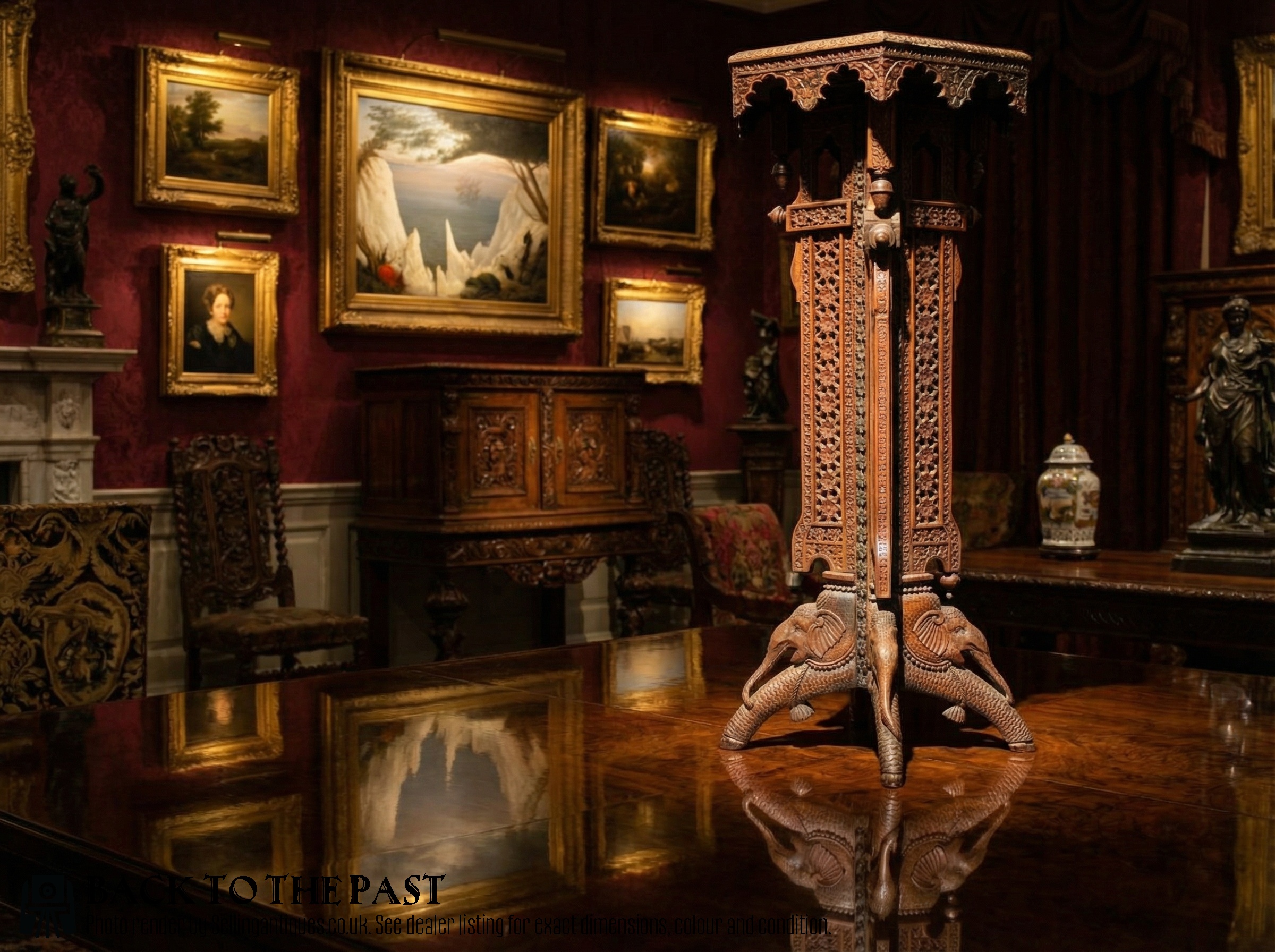
Carved Elephant Leg Stand
When you search for a carved elephant leg stand, you encounter distinctive small tables, pedestals, and plant stands created during the nineteenth and early twentieth centuries. These pieces typically originate from Anglo-Indian, Anglo-Indian Colonial, and Anglo-Burmese Colonial workshops, combining traditional regional motifs with Western furniture forms. On this page, you are most likely to meet hexagonal, octagonal, or tripod occasional tables featuring figural supports.
The regional origins and production periods span from the 1880s through the Edwardian era, encompassing Bombay Presidency, Hoshiarpur, Ceylon, and Burma. Forms range from compact specimen wood occasional tables to small side tables and plant stands. Each piece relies on the striking visual impact of elephant legs or full figural representations to anchor the design.
Materials and Construction
Maker workshops utilised dense tropical timbers such as solid rosewood, teak, and various specimen woods to ensure structural stability for intricate carving. These foundational hardwoods provided the heavy, durable core required for supporting complex figural legs and heavily decorated tabletops.
Artisans applied surface embellishment through bone, ebony, and satinwood inlay work, creating contrasting geometric or floral patterns across the timber surfaces. Deep relief carving defined the figural legs, translating the musculature and skin folds of elephants into functional furniture supports.
Several miniature tables feature toenails meticulously incised into the wooden elephant feet, proving that Victorian craftsmen took their zoological accuracy quite seriously.
Assessing Quality and Execution
The refinement of the carving dictates the distinction between standard production and superior craftsmanship, particularly in how realistically the elephant legs and feet are rendered. Crisp depth and clear definition in the botanical or geometric inlay further separate masterwork examples from simpler regional pieces.
The choice of primary timber and secondary inlay materials establishes the hierarchy of the piece, with solid rosewood and intricate bone inlay commanding higher regard than plain teak or minimal surface decoration. Proportional harmony between the top surface and the heavy figural supports governs the overall visual balance.
The Carved Elephant Leg Stand Glossary
- Anglo-Indian
- Descriptive of furniture produced in the Indian subcontinent during the British colonial period, blending British forms with local woodworking traditions. These pieces often incorporate regional motifs and dense carving.
- Hoshiarpur
- A North Indian city renowned for intricate woodwork and micro-mosaic inlay techniques utilising bone and ebony. Tables from this region frequently display dense geometric patterns.
- Specimen Wood
- Furniture constructed from a multitude of different native and exotic timbers arranged to showcase varied grain patterns and natural colours. This technique highlights the maker's access to diverse regional materials.
- Bone Inlay
- The decorative practice of recessing thin pieces of carved animal bone into timber surfaces to create contrasting patterns. It provides bright, pale detail against dark hardwoods like ebony or rosewood.
- Tripod
- A piece of furniture supported by three legs, commonly seen in small occasional tables and plant stands from this tradition. This configuration ensures stability on uneven floors.
Carved Elephant Leg Stand: Frequently Asked Questions
What is an elephant leg stand?
An elephant leg stand is a decorative occasional table or plant stand featuring carved supports shaped like elephant legs or feet. These pieces were predominantly produced in India and Burma during the late nineteenth and early twentieth centuries.
They reflect the cross-cultural design exchange of the British colonial period, combining Western furniture forms with Eastern decorative arts. The resulting objects serve as functional small tables with a distinct sculptural presence.
How were these tables used historically?
Historically, these stands functioned as occasional tables, plant stands, or display pedestals in colonial drawing rooms and parlours. Their compact proportions made them versatile for holding small decorative items, lamps, or potted plants.
The sturdy hardwood construction and distinctive figural supports allowed them to hold heavy ornaments while contributing an exotic decorative accent to Victorian and Edwardian interiors.
What woods were used for these stands?
Maker workshops utilised dense tropical hardwoods including teak, solid rosewood, and various regional specimen woods. These materials provided the necessary weight and durability for intricate carving and heavy figural supports.
Contrasting timbers such as ebony and satinwood were frequently employed for inlay work, alongside bone, to create complex surface patterns across the tops and aprons.
How do I date an elephant leg stand?
Dating relies on examining the construction methods, timber selection, and stylistic markers associated with specific periods like the Victorian, Edwardian, or late nineteenth century. Regional attribution, such as Bombay Presidency or Hoshiarpur work, also helps narrow the production window.
Documentation, regional trade history, and the evolution of inlay techniques provide further chronological context for individual items.