



Gothic Carved Library Table
A gothic carved library table brings robust Victorian craftsmanship and ecclesiastical motifs directly into a working study or reception room.
Gothic Carved Library Table
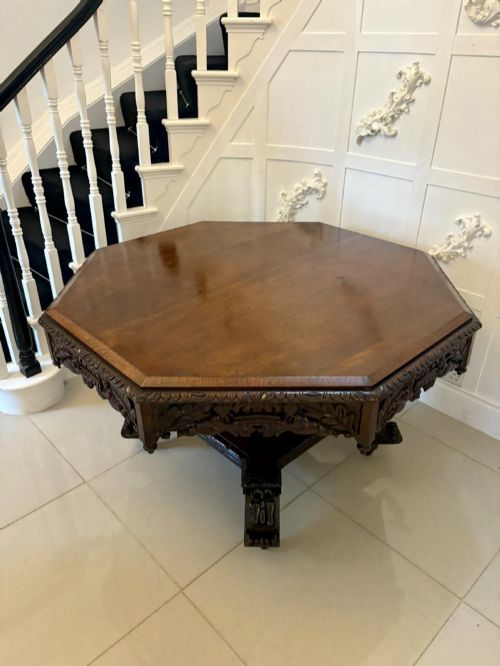
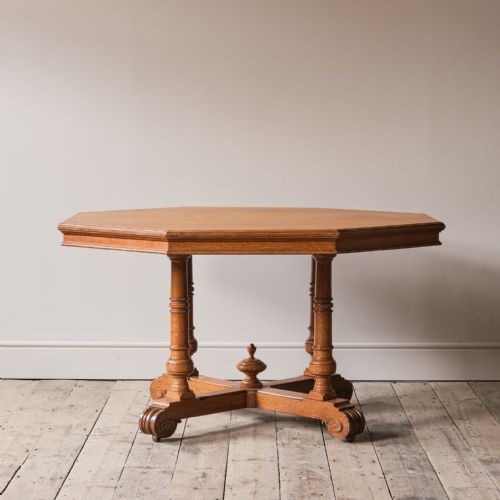
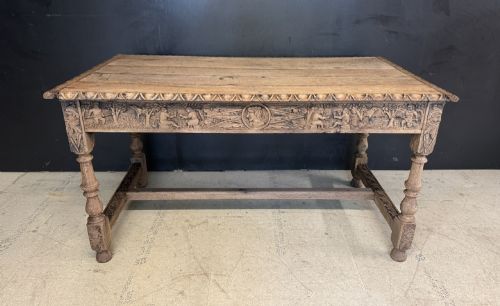
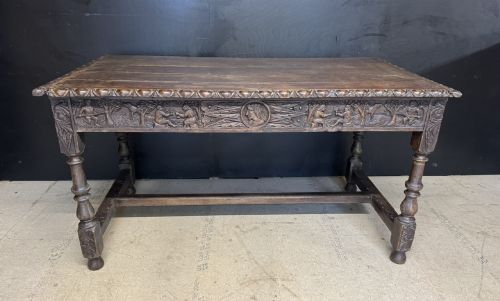
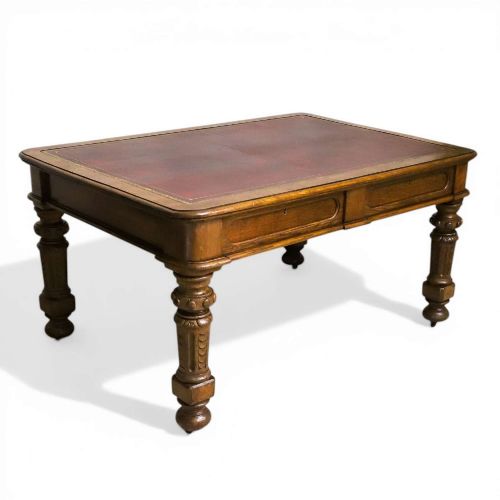
A gothic carved library table is a substantial 19th century writing desk or centre table influenced by medieval architectural forms. These tables appear primarily in oak and occasionally mahogany, taking shapes ranging from octagonal centre pieces to rectangular writing desks with fitted drawers. The evidence shows these pieces span the Victorian period, from the 1850s through to 1900, carrying revivalist design cues.
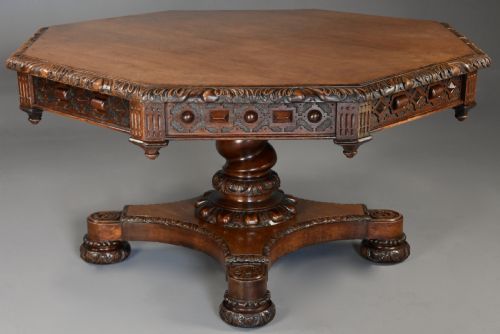
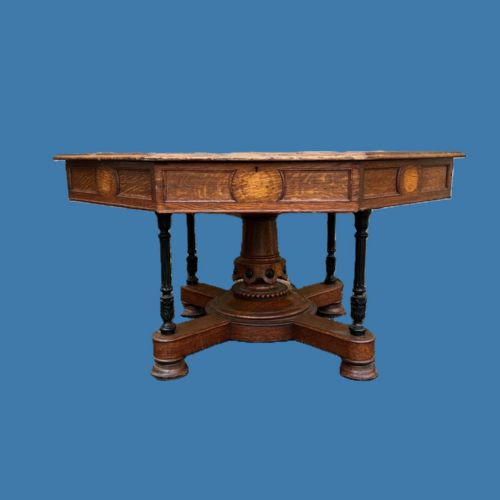
The most common version met on this page is the Victorian carved oak library or centre table, often displaying heavy relief work. Alongside standard rectangular writing tables, the selection includes octagonal forms, partners desks, and pedestal variations. These pieces originate predominantly from 19th century British workshops working within the Gothic Revival, Tudor, and Jacobean idioms.
How they were made
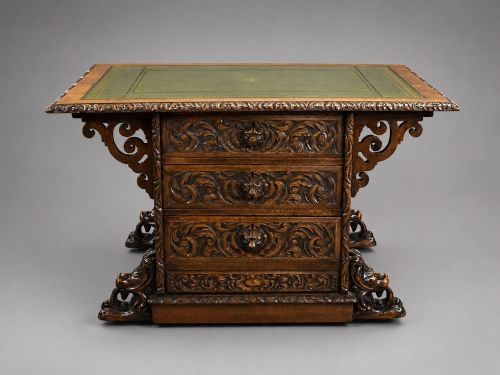
Makers constructed these tables chiefly from solid oak and mahogany, frequently incorporating brass hardware and inset leather writing surfaces. The woodwork relies on deep hand carving to achieve the characteristic linenfold panels, tracery, and figurative details associated with the Gothic Revival style.
Structural integrity depended on heavy timber frames, sometimes utilising pedestal supports, X frames, or substantial turned legs. Ebonised wood, marquetry, and bleached oak finishes occasionally appear alongside traditional honey and dark oak tones to vary the surface appearance.
Keep an eye out for the occasional grumpy Green Man staring out from beneath the drawer leaf.
What varies in quality
Quality rests heavily on the depth and crispness of the hand carving, distinguishing deeply undercut figural or architectural work from shallow, mechanical moulding. The selection of timber also dictates grade, with dense, well-figured oak or high-grade mahogany setting the better examples apart.
Proportion and structural ambition separate standard pieces from exceptional ones, particularly where complex forms like octagonal tops, fitted drawers, or integrated pedestal designs are executed with architectural precision.
James Winter
The Gothic Carved Library Table Glossary
- Gothic Revival
- An architectural and decorative style popular during the 19th century that reinterprets medieval pointed arches, tracery, and heavy relief carving. This style dominates the ornamentation of these tables.
- Centre Table
- A freestanding table designed to be viewed from all sides rather than pushed against a wall. These often feature finished backs or symmetrical octagonal tops.
- Partners Desk
- A large writing table designed with drawers on opposing sides to accommodate two people working face to face. These represent the more substantial forms found in institutional or grand domestic libraries.
- Green Man
- A sculptural motif depicting a human face disgorged from foliage, commonly found carved into Victorian oak furniture. This pagan architectural detail recurs frequently in nineteenth-century gothic woodwork.
- Marquetry
- The art of applying decorative pieces of veneer to a structure to form intricate patterns or pictures. This technique adds surface contrast to the predominant solid timbers.
Gothic Carved Library Table: Frequently Asked Questions
What is a gothic carved library table?
A gothic carved library table is a 19th-century writing or centre table decorated with medieval architectural motifs such as pointed arches, tracery, and heavy relief carvings. These pieces were built for studies and libraries during the Victorian revival period.
They combine practical writing surfaces with robust timber construction, frequently featuring inset leather tops and integrated drawers for storage.
How were these tables used originally?
These tables served as heavy-duty writing desks, reading tables, or central display pieces in grand Victorian homes and institutional libraries. Partners variants allowed two people to work opposite one another, while octagonal centre tables held lamps and heavy volumes.
Their sturdy oak and mahogany frames were built to support extensive collections of books and daily administrative work.
How do I identify a Victorian Gothic table?
Look for characteristic 19th-century revival details such as linenfold panelling, chamfered framing, carved tracery, and occasionally Green Man masks. The timber is predominantly solid oak or mahogany, often paired with an inset leather writing surface.
Construction methods from this era rely on heavy pegged joints and substantial turnings rather than modern mechanical fixings.
Where should I place one in a modern home?
A gothic library table makes a commanding centrepiece in a spacious home office, hallway, or living room. Because many are finished on all sides as centre tables, they do not need to be pushed against a wall.
Pair them with simpler contemporary seating to let the heavy 19th-century woodcarving stand out as a focal point.