
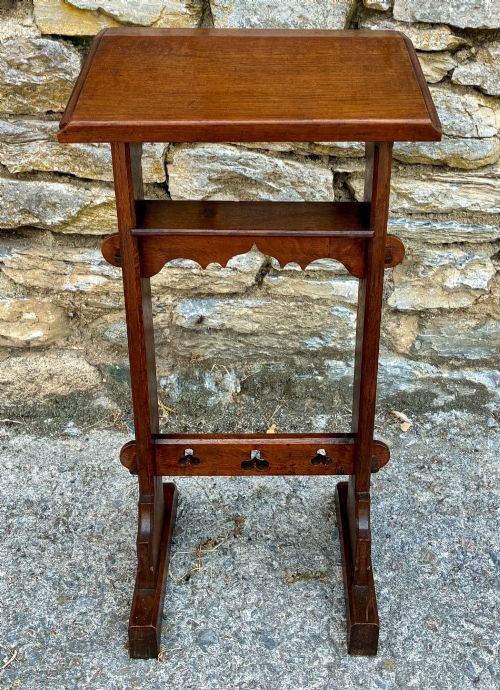

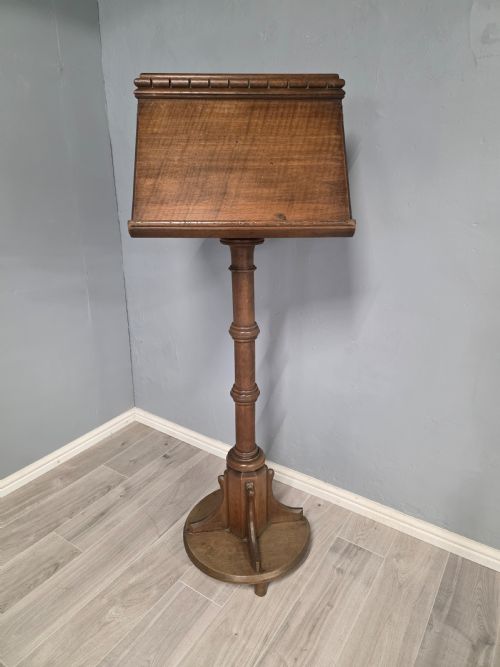
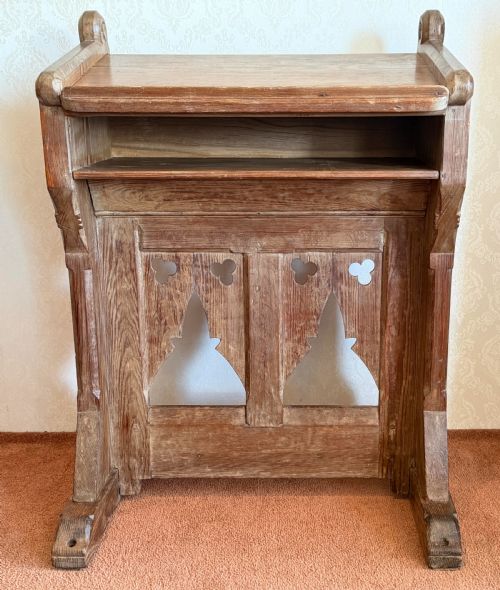
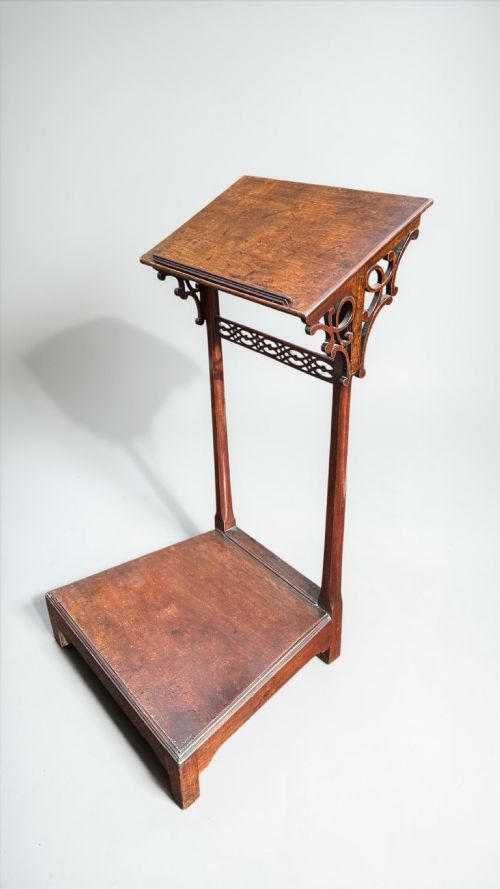


Gothic Carved Lectern
A gothic carved lectern brings ecclesiastical presence into a room, offering a sloping surface designed to hold large volumes for reading.
Gothic Carved Lectern
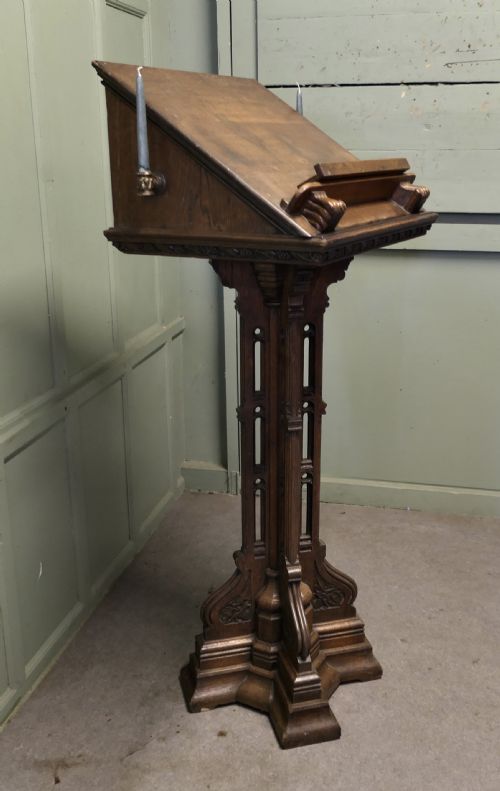
A gothic carved lectern combines architectural tracery with a functional reading slope, originating primarily in ecclesiastical settings like churches and chapels. These pieces serve as focal points for holding service books or large folios.
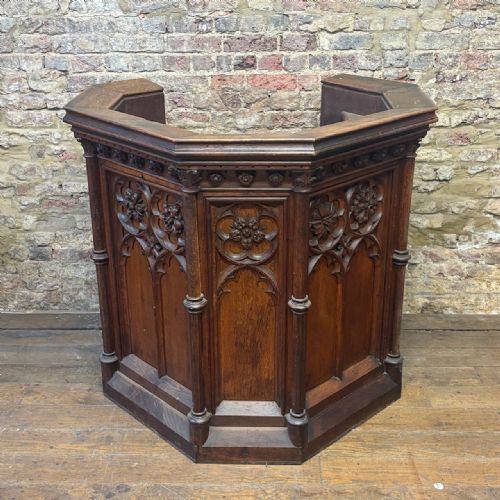
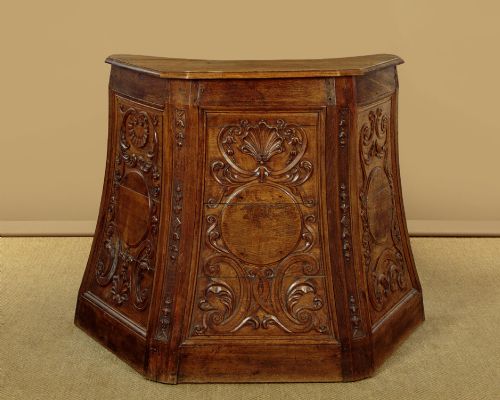
The versions met on this page span from the eighteenth century through the Victorian period and into the Edwardian era. Alongside traditional church lecterns, related forms include prayer desks, pulpits, and reading stands.
Styles lean heavily into Gothic Revival and Victorian Gothic Revival, often incorporating structural elements derived from church architecture. Pieces range from simple oak stands to elaborate pedestals featuring winged cherubs or carved eagles.
What varies in quality
Depth and crispness of the carving distinguish finer examples from standard workshop production. Carvings that retain sharp undercut details and well-defined proportions demonstrate superior craftsmanship.
Proportion and stability determine the utility of the stand. Heavier pedestals and balanced bases provide better support for large books compared to lighter domestic adaptations.
Listings demonstrate a strong preference for oak across the nineteenth and early twentieth centuries, alongside occasional examples in walnut and pine.
The Gothic Carved Lectern Glossary
- Gothic Revival
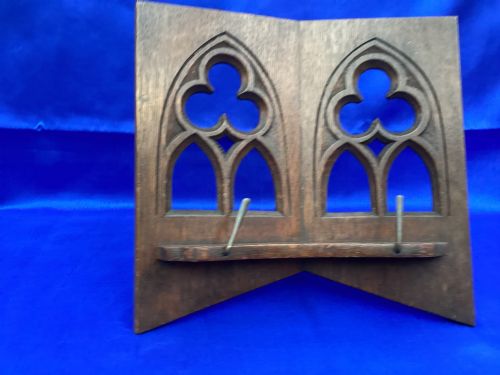
- An architectural and decorative style drawing on medieval forms, characterised by pointed arches, trefoils, and heavy structural timber.
- Prie Dieu
- A small desk or prayer kneeler designed for private devotions, equipped with a sloping shelf for a book and a padded lower rail.
- Linenfold
- A style of woodcarving that imitates folded linen, commonly used on panels in ecclesiastical furniture.
- Folio
- A large book size or a stand designed specifically to support oversized volumes and manuscripts.
- Tracery
- Openwork stonework or woodwork patterns, often found in the upper panels of church furniture and ecclesiastical lecterns.
Gothic Carved Lectern: Frequently Asked Questions
What were gothic carved lecterns used for?
These pieces served primarily in churches and chapels to hold heavy Bibles, service books, and missals for reading aloud during services.
Over time, many found their way into domestic libraries, studies, and grand halls to display large volumes or music.
How do I date a wooden lectern?
Dating relies on identifying the prevailing stylistic influences, timber preparation marks, and construction techniques used in the framework.
Victorian Gothic Revival pieces often display machine-assisted elements alongside hand-carving, whereas eighteenth-century examples show entirely hand-worked joinery.
Are all these lecterns from churches?
While many originated in ecclesiastical settings like pulpits and vestries, several forms were made specifically for domestic libraries and reception rooms.
Prayer desks and reading stands bridge the gap between ecclesiastical architecture and private study use.
How do I care for antique oak?
Keep wooden lecterns away from direct heat sources and dramatic humidity fluctuations to prevent the timber from splitting.
Regular dusting with a dry cloth maintains the finish without building up excess residue on carved surfaces.