




Golden Walnut Tea Table
These golden walnut tea table pieces offer warm timber tones and refined proportions, bringing understated surface pattern and practical charm to any sitting room.
Golden Walnut Tea Table
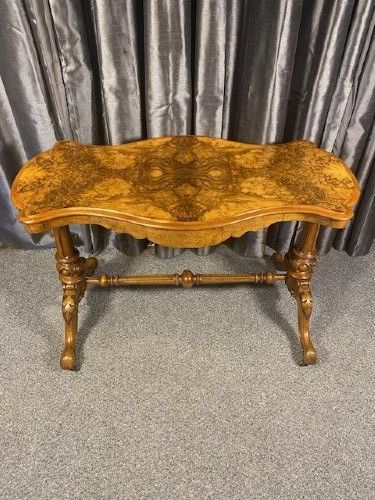
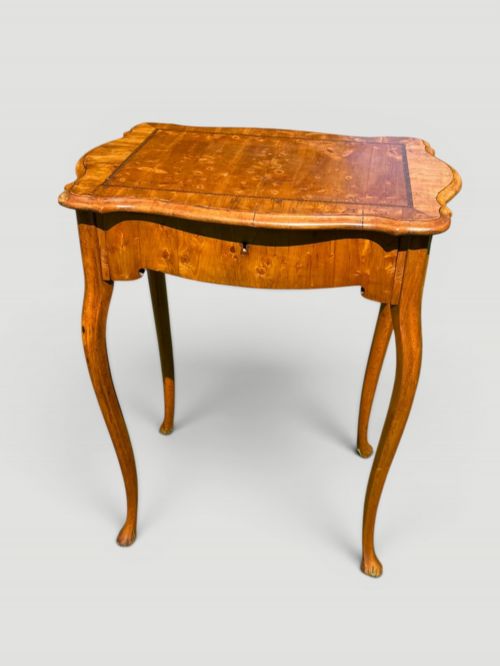
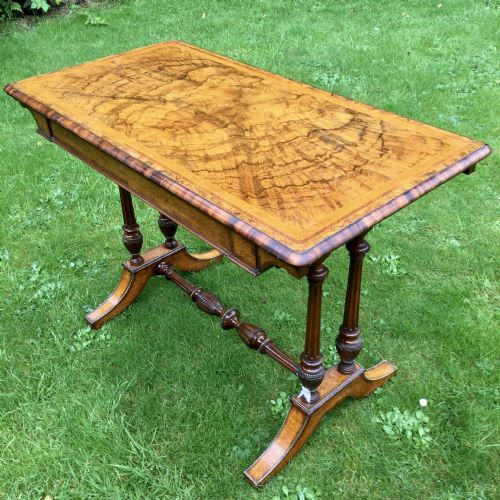
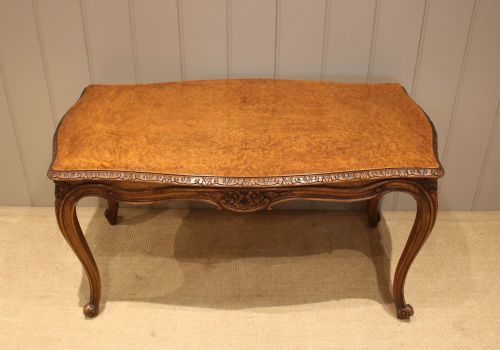
A golden walnut tea table brings together rich figured timbers and adaptable surfaces, appearing across nineteenth-century and early twentieth-century periods including Victorian and Art Deco eras. Buyers searching for a golden walnut tea table commonly encounter forms adapted for multiple uses, such as card tables, occasional tables, coffee tables, and tripod supports.
The material character relies heavily on burr walnut and walnut veneer, occasionally accented with boxwood inlay, burr maple, or mahogany. These examples span traditional revival styles like Queen Anne and French Rococo, alongside cleaner lines from the nineteen-thirties.
How they were made
Cabinet makers utilised choice cuts of burr walnut and walnut veneer applied over secondary timber carcases to create striking natural figuring on the main top surfaces. Intricate details often incorporate boxwood inlay and floral marquetry to frame the central grain patterns.
Structural elements rely on traditional joinery methods, supporting various formats from tilting tops and tripod bases to serpentine folding leaves and rigid occasional frames.
Several tables retain clever folding mechanisms designed specifically to hide the cards away when the evening guests finally departed.
What varies in quality
The visual appeal depends largely on the symmetry and depth of the burr walnut figuring across the primary surfaces. Finer examples display carefully matched veneer segments that create harmonious patterns rather than jarring transitions.
Execution of secondary details, such as crisp boxwood inlay and the stability of folding or tilting mechanisms, distinguishes standard domestic output from more accomplished workshop production.
The Golden Walnut Tea Table Glossary
- Burr walnut
- A prized timber harvested from the abnormal growth growths on walnut trees, yielding highly ornamental swirling grain patterns. This distinctive figuring forms the primary visual draw on top surfaces.
- Marquetry
- The art of applying small pieces of veneer to a structure to form decorative pictorial designs. Floral motifs often appear executed in contrasting woods.
- Serpentine
- A curved shape featuring alternating concave and convex sweeps along the edge of a table top or frieze. This contour adds dynamic movement to the silhouette.
- Tilt top
- A mechanism allowing the surface of the table to pivot ninety degrees for convenient storage against a wall when not in active use.
Golden Walnut Tea Table: Frequently Asked Questions
What is a golden walnut tea table used for?
These pieces served originally for the social ritual of serving afternoon tea or hosting evening card games in domestic drawing rooms.
Today, buyers utilise them as versatile low centre tables or decorative occasional surfaces in modern sitting spaces.
How do I date a burr walnut table?
Dating relies on observing the prevailing style characteristics, such as Victorian revival motifs or nineteen-thirties geometric minimalism, combined with construction methods.
Examining the secondary timbers and the thickness of the walnut veneer provides further clues regarding the period of manufacture.
Are these tables solid walnut?
Most examples utilise choice burr walnut or plain walnut veneers applied over stable secondary woods rather than solid blocks of figured timber.
This technique protected the precious figured grain from splitting while presenting an expensive decorative surface.
How do I care for walnut veneer?
Keep the timber away from direct sunlight and steady heat sources to prevent the underlying veneer from drying or lifting.
Regular dusting with a dry cloth and occasional application of appropriate wax maintain the natural lustre of the finish.