



Golden Walnut Side Cabinet
A golden walnut side cabinet brings rich burr grain and warm tones to an interior, offering practical storage through Victorian and Art Deco forms.
Golden Walnut Side Cabinet
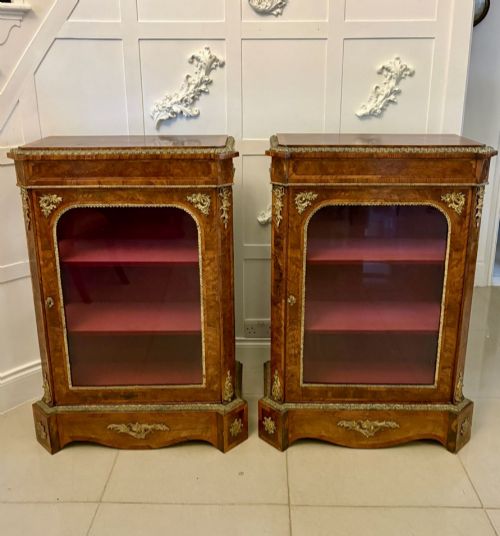
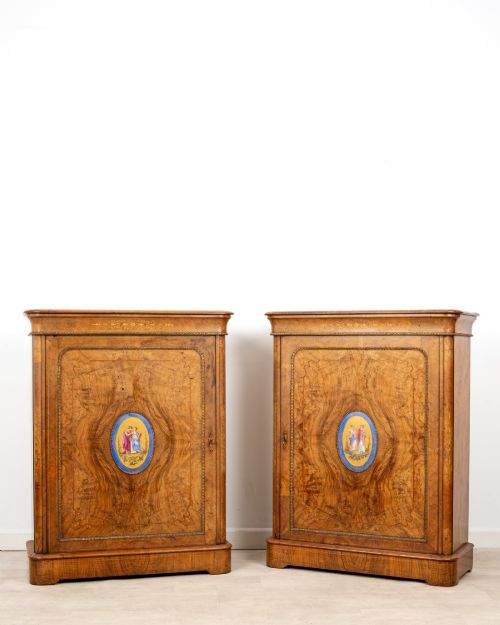
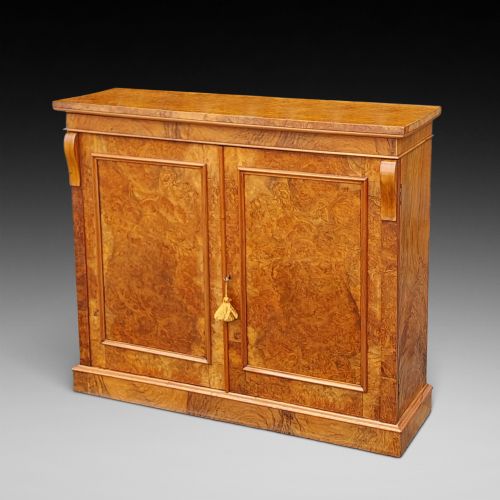
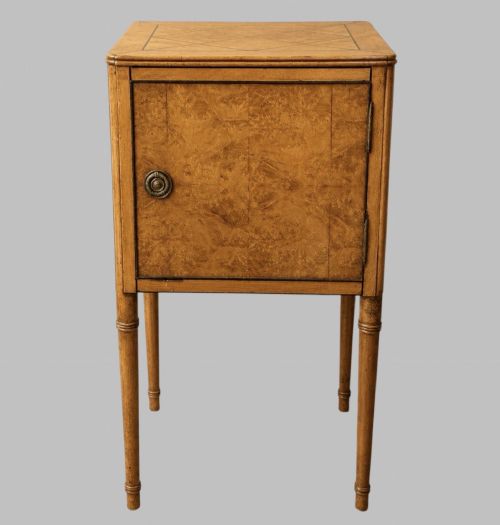
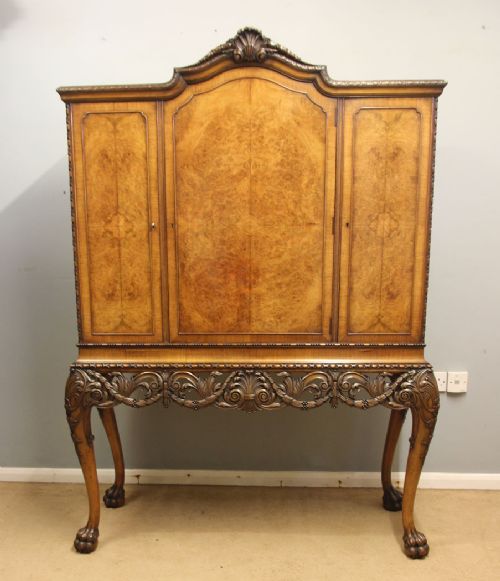
When you search for a golden walnut side cabinet, you encounter a variety of forms spanning the Victorian era and the 1930s. The selection on this page includes pier cabinets, credenzas, salon cabinets, and bedside tables alongside larger sideboards.
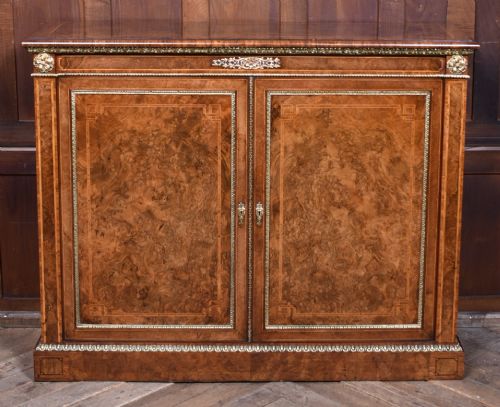
Victorian pieces from the mid to late nineteenth century frequently feature burr walnut veneers, glazed doors, or porcelain plaques, often accented with ormolu mounts. Art Deco examples from the 1930s shift towards streamlined modernist lines and satinwood or kingwood combinations.
Most items serve as focal points in reception rooms or bedrooms, offering surface display space paired with enclosed shelving. Pairs of matching pier cabinets or bedside chests appear regularly across different decades.
What varies in quality
Quality depends upon the choice and matching of the burr walnut veneer across the doors and top surfaces, where symmetrical grain patterns elevate a piece. The refinement of subsidiary timbers and the weight of decorative metal mounts also signal higher production standards.
Maker attribution influences standing, with pieces associated with firms like Hille, Walter Carter for Harrods, or Epstein demonstrating superior construction and design ambition. Exhibition quality works showcase finer joinery details and more intricate parquetry than standard commercial outputs.
Materials recorded across the selection include burr walnut, satinwood, kingwood, porcelain, brass, glass, and ormolu.
Walter Carter Harrods·Hille England·Harry And Lou Epstein
The Golden Walnut Side Cabinet Glossary
- Burr walnut
- A wood harvested from the burl growth of a walnut tree, yielding complex, swirling grain patterns. Cabinet makers prized this material for decorative veneering on high-status furniture.
- Ormolu
- Gilded bronze applied as decorative mounts, feet, or gallery rails on nineteenth-century furniture. This technique adds metallic highlights against dark wood surfaces.
- Pier cabinet
- A tall, narrow display cabinet designed to fit against the wall space between windows. These pieces often feature glass doors and velvet-lined interiors.
- Credenza
- A low cabinet or sideboard, frequently fitted with glass-fronted side cupboards and central doors. Victorian iterations often incorporated elaborate porcelain plaques.
- Kingwood
- A dense, heavily figured exotic timber with dark violet-brown tones and pale stripes. Makers utilised it for crossbanding and contrasting string lines.
Golden Walnut Side Cabinet: Frequently Asked Questions
How do I date a walnut cabinet?
Dating relies on architectural styles, construction methods, and materials present in the piece. Victorian examples often display revival motifs, mirrors, or ormolu mounts, whilst 1930s Art Deco pieces favour geometric veneers and streamlined shapes.
Examining secondary timbers inside drawers and cupboards helps confirm the period. Cabinet making techniques evolved from hand-cut dovetails in the nineteenth century to more mechanised production methods by the twentieth century.
Where should I place a side cabinet?
These cabinets suit reception rooms, hallways, or large bedrooms where surface display and enclosed storage are both required. Pier cabinets and bedside chests fit narrower wall spaces, whilst credenzas and sideboards anchor larger living areas.
Direct sunlight should be avoided to protect the walnut veneer and finish from fading over time. Placing them away from direct heat sources prevents the timber and glue joints from drying out.
What is the difference between a credenza and a side cabinet?
A credenza typically denotes a low credenza or sideboard with central and flanking curved glass doors designed for display. Side cabinets encompass a broader category that includes pier cabinets, salon pieces, and bedside units.
Nineteenth-century credenzas frequently incorporate extensive porcelain plaques and mirror backs. Standard side cabinets focus more on vertical display or enclosed cupboard storage.
How do I care for burr walnut veneer?
Maintaining walnut furniture involves dusting regularly with a soft, dry cloth and avoiding silicone-based polishes. Occasional application of quality beeswax feeds the timber and preserves the sheen of the veneer.
Maintaining stable room humidity prevents the wood from expanding or contracting excessively. This protects the delicate burr veneer from lifting along the edges.