

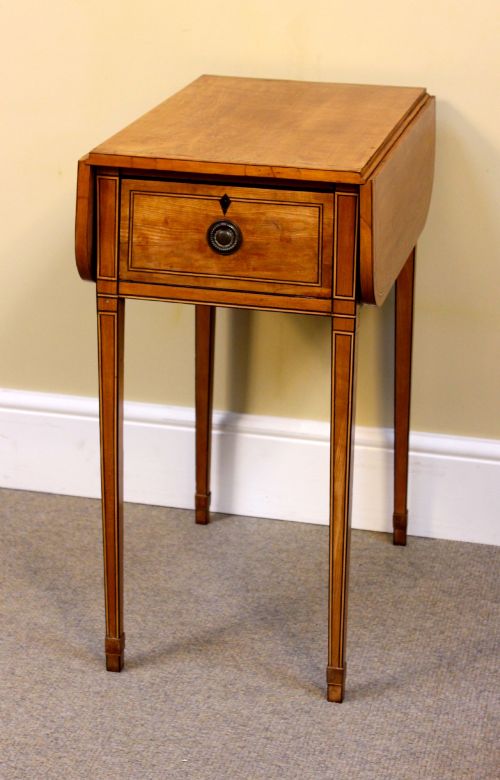
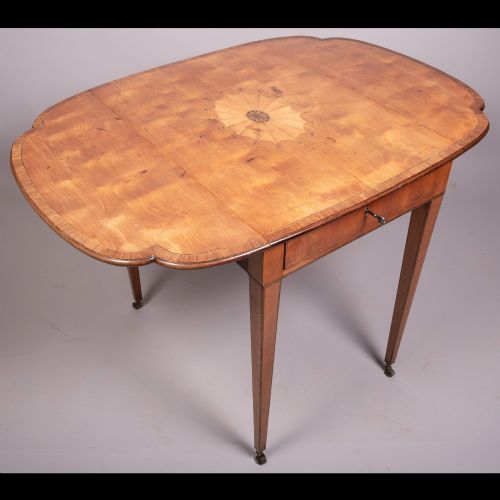


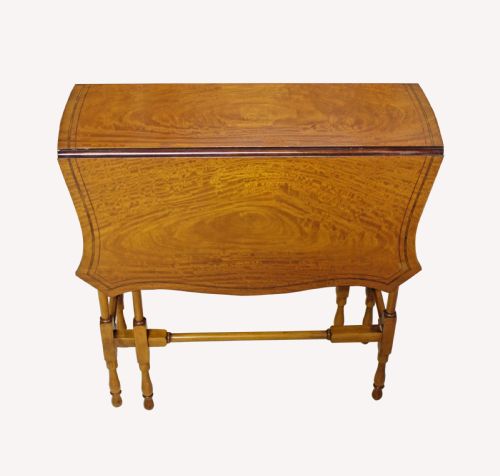


Golden Satinwood Pembroke Table
A golden satinwood pembroke table offers folding leaves and bright timber grain, bringing refined Georgian and Regency elegance to any room.
Golden Satinwood Pembroke Table
A golden satinwood pembroke table is a drop-leaf occasional piece designed with hinged flaps on either side, making it adaptable for small spaces or central display. These tables date primarily from the Georgian, Regency, and 18th century periods, alongside later twentieth-century interpretations.
The versions met most frequently on this page feature the characteristic rectangular top, slender legs, and timber crossbanding associated with Sheraton and George III aesthetics. They function equally well as side tables, tea tables, or compact supper tables.
How they were made
Cabinetmakers constructed these tables using solid or veneered satinwood, frequently accented with contrasting timbers such as rosewood, mahogany, ebony, boxwood, and tulipwood. Fine stringing and painted details define the surface decoration of many examples.
Structural hardware typically incorporates brass castors on the legs to allow the drop leaves and the table itself to be moved easily. Joinery relies on traditional framing techniques suited to the delicate proportions of nineteenth and eighteenth-century furniture.
Golden Satinwood Pembroke Table Retail Price Guide 2026
Typical asking prices for golden satinwood pembroke table among the pieces listed under this phrase on Sellingantiques today, from the lower quarter to the upper quarter. They describe what is for sale here now, not the wider market.
Some tables feature secret drop leaves that transform a narrow side console into an impromptu tea station within seconds.
What varies in quality
The refinement of the timber selection and the precision of the contrasting inlay dictate the visual standing of each piece. Tables featuring delicate painted motifs or intricate crossbanding demonstrate a higher tier of cabinetmaking ambition.
Proportion and the handling of the drop leaves separate standard items from superior examples. The crispness of the legs and the fidelity of the period detailing reveal the original maker's skill.
Williamson
The Golden Satinwood Pembroke Table Glossary
- Pembroke table
- A small occasional table with two hinged drop leaves supported by brackets or swinging legs. This form gained popularity during the eighteenth century for breakfast or needlework use.
- Satinwood
- A hard, durable timber with a natural golden sheen and a smooth, satiny grain. It became highly fashionable in elite British cabinetmaking during the Georgian and Regency eras.
- Crossbanding
- A strip of veneer applied to the edges of a tabletop running perpendicular to the grain of the central panel. This technique frames the primary timber and adds visual contrast.
- Drop flap
- A hinged leaf attached to the main surface of a table that drops down when not in use. It allows the footprint of the furniture to expand or contract according to need.
Golden Satinwood Pembroke Table: Frequently Asked Questions
How were pembroke tables used historically?
Historically, these tables served multiple domestic functions ranging from small-scale dining and tea service to needlework and writing. Their folding leaves allowed them to sit compactly against a wall when floor space was required.
When expanded, the leaves provided a stable surface for daily tasks or entertaining guests in withdrawing rooms. Their portability made them convenient additions to various rooms throughout a residence.
How do I distinguish Georgian from Regency examples?
Georgian and George III pieces often display classic Sheraton influences, featuring straight tapered legs, subtle stringing, and restrained neoclassical ornament. Satinwood usage in these eras emphasised balanced geometry and fine timber contrast.
Regency examples frequently lean toward bolder lines or heavier brass mountings, sometimes incorporating painted surfaces or broader proportions. The integration of rosewood or ebony details often points toward the nineteenth-century transition in style.
How do I care for satinwood furniture?
Satinwood requires gentle maintenance to preserve its natural golden lustre and protect the delicate veneer surfaces. Keep the timber away from direct sunlight and excessive heat sources to prevent fading and drying.
Dust regularly with a soft, dry cloth and avoid harsh chemical polishes or silicone sprays. Occasional application of a quality wax helps nourish the antique finish.