


Golden Satinwood Mirror
A golden satinwood mirror brings a luminous warmth to a room, catching the light across finely grained timber and polished glass.
Golden Satinwood Mirror
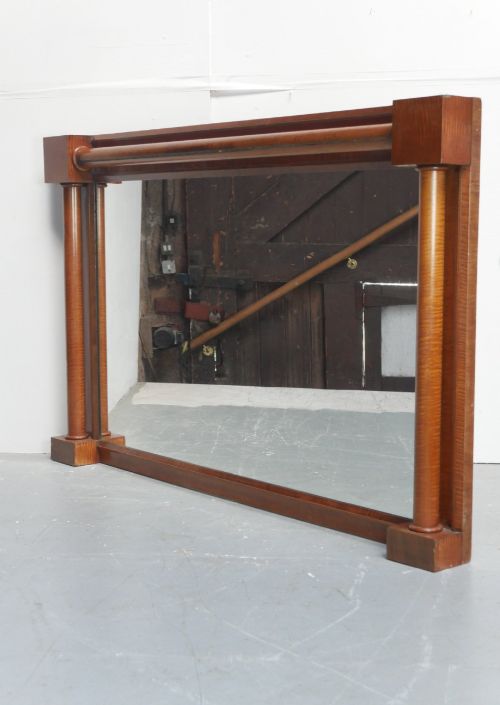
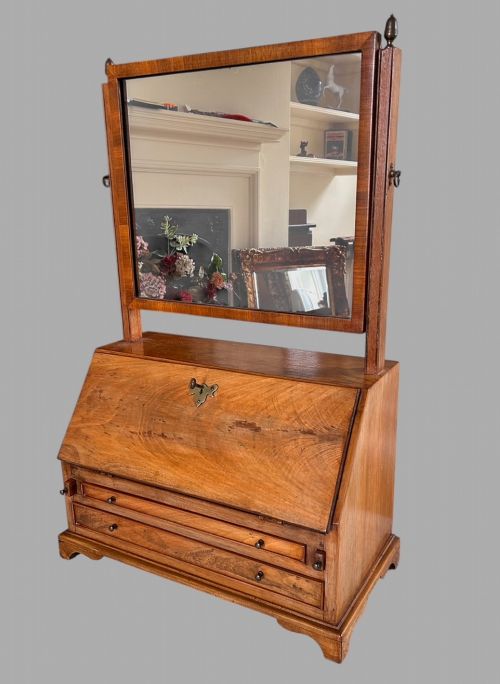
When searching for a golden satinwood mirror, buyers encounter a selection spanning the Victorian, Edwardian, and George III periods, alongside pieces from the nineteenth century. These items primarily appear as tabletop dressing table mirrors, cheval mirrors, and toilet mirrors incorporated into larger furniture pieces or standing alone.
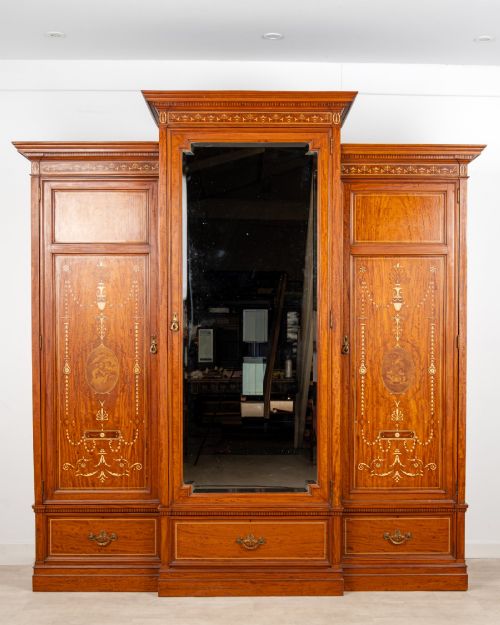
The version most commonly met on this page is the Edwardian or late Victorian inlaid dressing table mirror, often featuring delicate marquetry and Sheraton Revival styling. Alongside these, various wardrobes, writing tables, and cabinets incorporate mirrored glass within satinwood frameworks.
Origins stretch from English workshops to Scottish makers and continental European pieces in birch and satinbirch, reflecting diverse regional tastes in domestic dressing furniture.
How they were made
Cabinet makers utilised dense satinwood veneers and solid timbers, frequently laid over secondary woods such as oak and walnut. Surfaces were carefully polished to highlight the natural golden chatoyancy of the grain.
Inlay work and marquetry of contrasting woods defined the decorative approach of Edwardian and Sheraton Revival pieces, complemented by hand-painted details and fitted brass hardware.
Mirror glass was set into rebated frames, sometimes supported by adjustable brass pivots on tabletop swinging toilet mirrors or heavy floor-standing cheval frames.
Some Victorian dressing tables secretly whisper of busy mornings, having survived generations of hairpins rattling in their tiny side drawers.
What varies in quality
The distinction between standard domestic pieces and exhibition quality work lies in the choice of timber selection and the precision of the marquetry inlay. Highly figured satinwood with deep chatoyancy commands attention over plain timber.
Construction methods reveal the maker's hand, particularly in the joinery of dressing table frames, the crispness of hand-painted floral motifs, and the weight of the cast brass fittings.
Gillows·JEAN FAURE·John Taylor of Edinburgh
The Golden Satinwood Mirror Glossary
- Satinwood
- A dense tropical timber known for its lustrous, light-reflecting golden grain. It serves as the primary decorative surface for late eighteenth and nineteenth-century cabinet work.
- Cheval mirror
- A full-length plate glass mirror suspended on a vertical floor-standing frame with pivots. This design allows the glass to tilt to various angles.
- Marquetry
- The art of applying small pieces of veneer to a structure to form decorative patterns and pictorial designs. Cabinet makers use contrasting timbers to create depth and colour.
- Sheraton Revival
- A late nineteenth and early Edwardian design movement inspired by the neoclassical furniture of George III designer Thomas Sheraton. It relies on satinwood, slender proportions, and fine inlay.
Golden Satinwood Mirror: Frequently Asked Questions
How do I clean a satinwood mirror frame?
Dust the timber gently with a dry, soft cloth to remove surface particles without disturbing the polish. Avoid modern chemical sprays or excessive moisture, which can damage aged veneer and delicate inlay.
For the mirror glass, apply a mild glass cleaner to a cloth rather than spraying directly onto the glass. This prevents moisture from seeping under the silvered backing or into the wooden frame joints.
Are these mirrors freestanding or wall-mounted?
The majority of pieces listed are tabletop dressing table mirrors or floor-standing cheval mirrors that require no wall attachment. They rely on their own wooden stands and weighted bases for stability.
Over mantel mirrors and certain pier mirrors are designed to hang above a fireplace or against a wall space, secured with appropriate fixings to support their substantial weight.
What is the difference between satinwood and satin walnut?
True satinwood is a dense, exotic hardwood prized for its natural golden sheen and fine grain texture. It was widely used in high-status furniture during the Georgian and Victorian eras.
Satin walnut is an alternative domestic timber, often stained or finished to resemble the warmth of exotic woods while offering a different grain pattern and weight.
How do I date an Edwardian satinwood mirror?
Edwardian pieces typically date from around 1900 to 1910, often displaying Sheraton Revival influences with light marquetry inlay and painted floral swags. Construction techniques show machine-sawn components alongside traditional hand-finishing.
Compare the style of the brass hardware, the backing boards, and any maker signatures with documented examples from the same decade to confirm the period.