


Golden Satinwood Gaming Table
These golden satinwood gaming table examples bring refined Georgian and Edwardian craftsmanship to any room, offering elegant surfaces for cards and parlour entertainment.
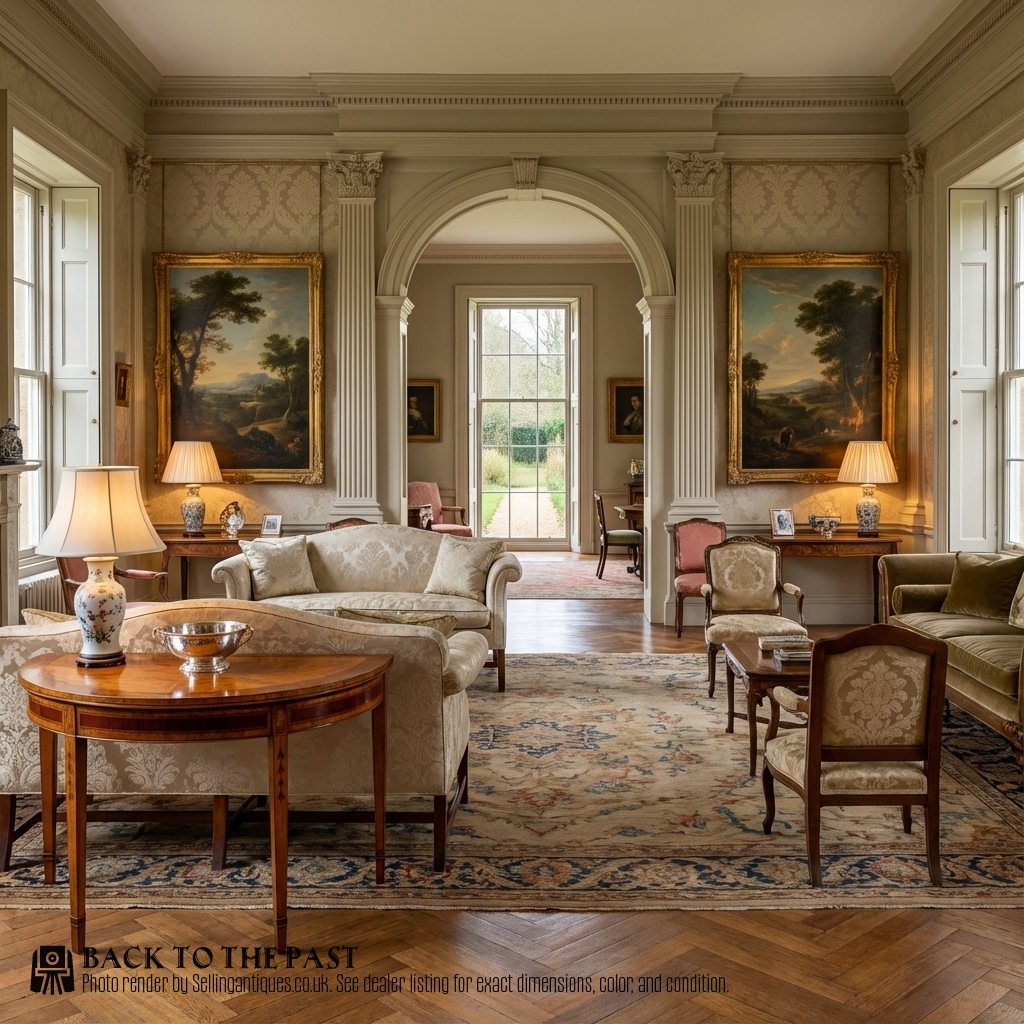
Golden Satinwood Gaming Table
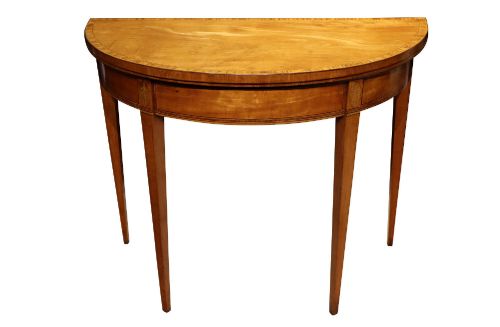
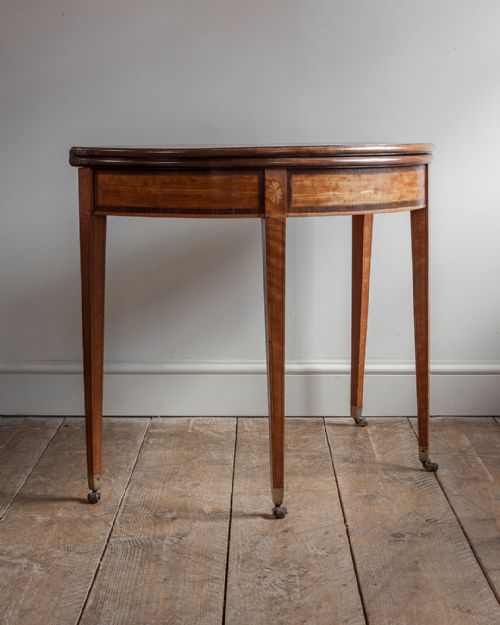
A golden satinwood gaming table is a specialised piece designed for cards and social games, appearing primarily in Georgian, Edwardian, and nineteenth-century forms across these listings. Buyers encounter demi-lune shapes, fold-over tops, and rectangular formats intended to sit neatly against a drawing-room wall when not in use.
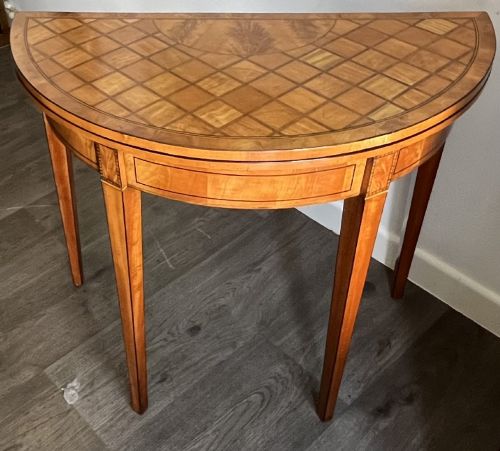
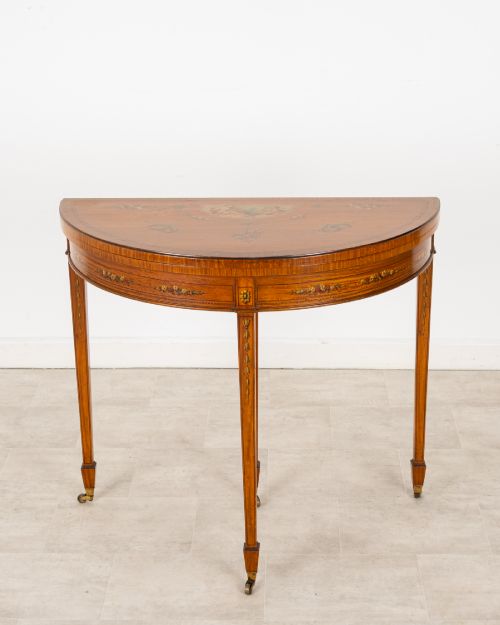
The evidence shows clear stylistic lineages spanning George III neoclassical designs, Sheraton proportions, and later Edwardian revivals. Examples range from plain satinwood surfaces to pieces enhanced by marquetry inlay, rosewood cross-banding, and painted decorations.
Makers and cabinetmakers of the eighteenth and nineteenth centuries utilised the natural warmth of the timber to create striking visual contrast with darker woods like kingwood and rosewood. These tables served both practical and decorative functions in period interiors, adapting from simple card surfaces to combined games and drinks furniture.
Materials and construction methods
Construction relies heavily on satinwood veneers applied over secondary timbers such as mahogany or oak, creating smooth, reflective top surfaces. Cabinetmakers employed contrasting stringing and cross-banding in rosewood, boxwood, and kingwood to define the edges and geometric borders of the folding tops.
Inlaid marquetry and delicate painted motifs appear across various periods, requiring skilled handwork to integrate the decorative elements into the dense grain of the satinwood. Brass hardware often secures the folding leaves and internal pivot mechanisms that support the extended table top during play.
Listings demonstrate that satinwood tables frequently incorporate rosewood cross-banding, boxwood stringing, and brass hardware across both Georgian and Edwardian periods.
Distinguishing quality across examples
The refinement of the timber figure and the precision of the cross-banding largely separate standard production from finer cabinetmaking. Pieces featuring crisp marquetry inlay or well-executed painted details demonstrate a higher degree of artisan skill than plain surfaces.
Structural integrity in the pivoting and folding mechanisms dictates daily utility, with superior examples maintaining a level top surface when open. The choice of secondary woods and the subtlety of the colour contrast within the satinwood grain further distinguish workshop outputs across the Georgian and Edwardian periods.
The Golden Satinwood Gaming Table Glossary
- Demi-lune
- A half-moon shape popular for console and card tables designed to stand flat against a wall. When the top folds out, it forms a full circle or square for play.
- Cross-banding
- A strip of veneer applied to the border of a table top with the grain running perpendicular to the centre panel. This technique frames the primary wood and adds visual depth.
- Marquetry
- Decorative patterns formed by fitting small pieces of veneer into a prepared background of wood. It differs from inlay by assembling the entire design before gluing it to the carcase.
- Stringing
- Thin inlaid lines of contrasting timber used to outline panels and edges on furniture. Boxwood is frequently used for light stringing against dark backgrounds.
- Fold-over top
- A hinged table surface that opens to double its enclosed area, supported by a swing leg or pivoting frame. This mechanism conceals the gaming surface when the furniture is closed.
Golden Satinwood Gaming Table: Frequently Asked Questions
How do I use a folding card table?
The top lifts and rotates on a pivot or swings open on hinges to reveal a baize-lined or polished wooden playing surface. One of the rear legs typically pulls out to support the extended leaf.
Ensure the supporting leg is securely locked into position before placing any weight on the open leaf during a game.
Where should I place a demi-lune table?
These tables fit flat against a drawing room or hallway wall when folded, taking up minimal floor space while displaying the decorative satinwood grain. They work well beneath a mirror or painting.
Pull the piece away from the wall and unfold the top when you need a functional surface for card games or entertaining.
How do I tell Georgian from Edwardian pieces?
Georgian examples generally date from the eighteenth or early nineteenth centuries, displaying restrained neoclassical proportions, Sheraton or Hepplewhite influences, and subtle cross-banding. Edwardian pieces date from around nineteen hundred to the nineteen thirties, often showing lighter painted decoration or revival styles.
Examining the secondary timbers, construction joints, and wear patterns helps confirm the period of manufacture.
What maintenance does satinwood require?
Keep the wood away from direct sunlight and excessive heat sources to prevent the satinwood veneer from fading or splitting. Dust regularly with a dry, soft cloth.
Apply a traditional beeswax polish sparingly to maintain the natural lustre of the timber without building up a heavy residue.