



Golden Oak Library Bookcase
A golden oak library bookcase brings a warm, honeyed grain and substantial presence to a room, offering practical storage for heavy volumes.
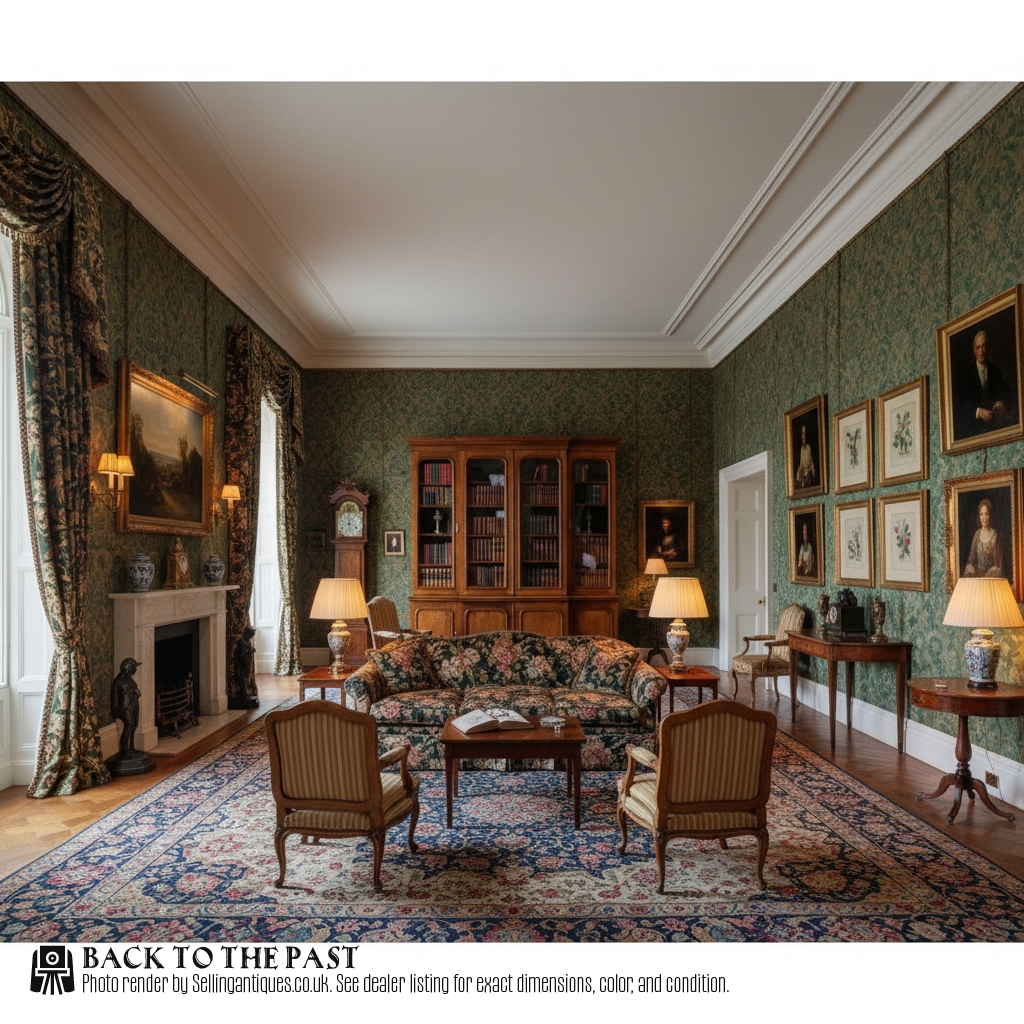
Golden Oak Library Bookcase
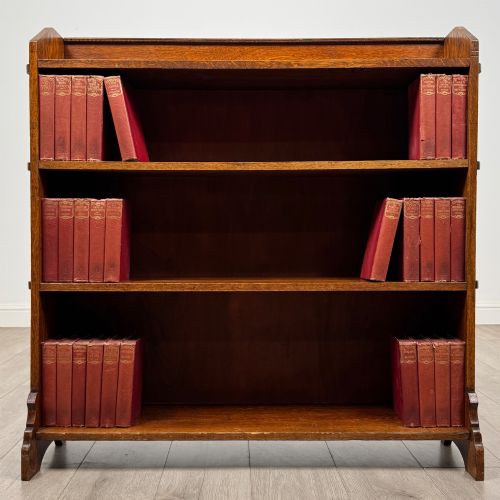
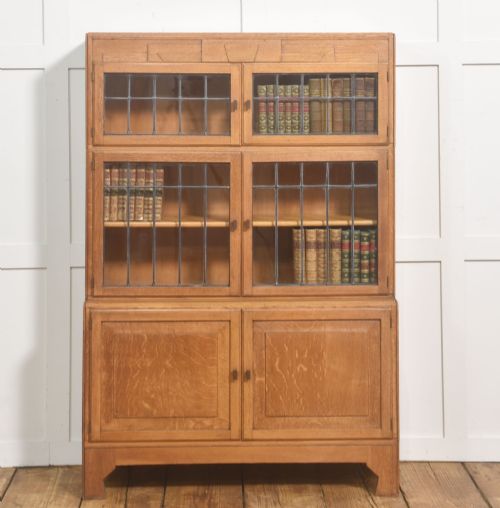
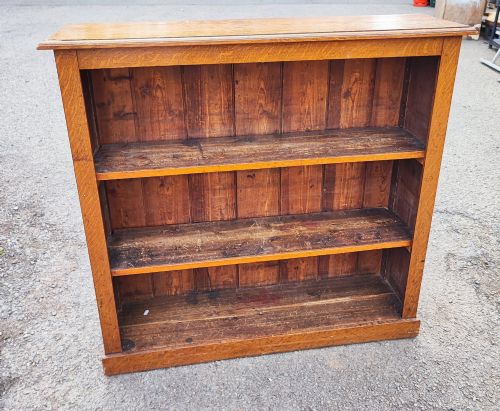
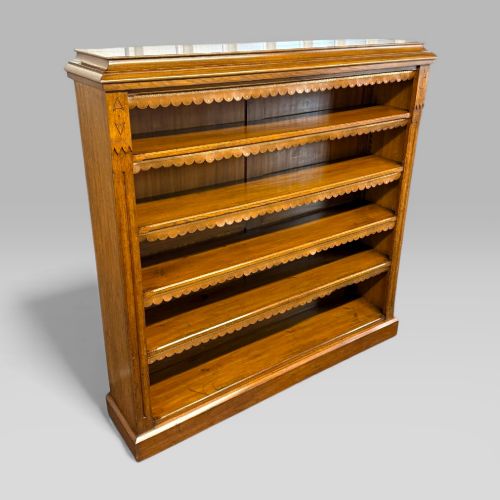
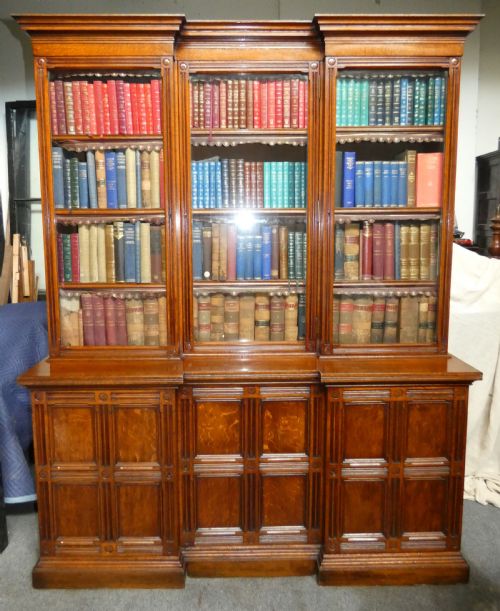
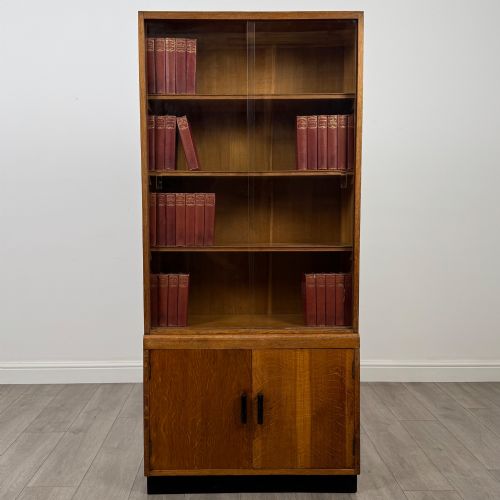
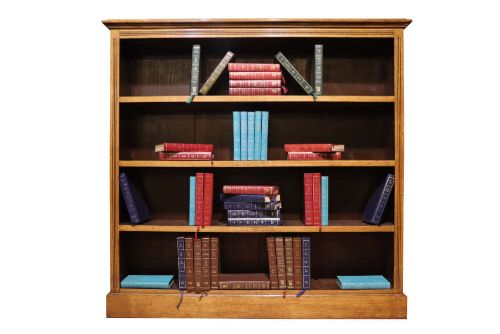
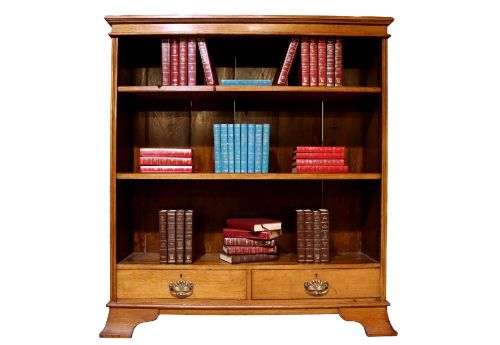
A golden oak library bookcase is a sturdy storage piece designed to hold large volumes, emerging in various forms from open front shelves to glazed cabinets and sectional barrister designs. When searching for a golden oak library bookcase, buyers encounter pieces spanning the nineteenth century through the Edwardian era and into the early twentieth century.
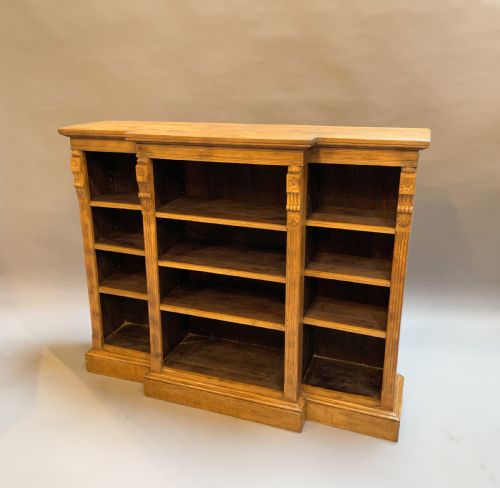
The selection ranges from simple open front shelving with adjustable boards to breakfront structures, glazed standing cupboards, and modular stacking office units. Most examples adhere to traditional Victorian and Edwardian aesthetics, though styles such as Gothic Revival, Arts and Crafts, and Aesthetic Movement appear across the inventory.
Makers such as James Shoolbred, Lebus, and Gunn contributed specific designs, including modular stacking systems and large breakfront formats suited for institutional or grand domestic libraries. Alongside primary bookcases, related items like library steps occasionally accompany the main furniture pieces.
Assessing Craftsmanship and Proportion
Quality rests in the selection of timber figures, where burr and pollard oak veneers or solid sections display superior grain depth and colour consistency. The sophistication of the architectural detailing, such as carved mouldings, leaded glass patterns, and well-fitted adjustable shelving systems, distinguishes standard utility furniture from finer commissions.
Original hardware, sound structural framing, and intact makers' marks or brass tags elevate a piece's integrity. The balance of proportions, particularly in large breakfront and sectional stacking formats, dictates how successfully the timber integrates into a room.
The archive includes specialised variants such as drop-front secretaire compartments and matching pairs of country house bookcases.
James Shoolbred·Globe Wernicke·Lebus·Gunn·Richard Bridgens
The Golden Oak Library Bookcase Glossary
- Breakfront
- A large cabinet featuring a central section that projects forward from the flanking wings. This configuration creates architectural depth and accommodates extensive book collections.
- Pollard oak
- Timber taken from trees that have been pruned close to the trunk to encourage dense, highly figured branch growth. It yields a distinctive swirling grain pattern highly prized in nineteenth-century cabinetry.
- Barrister bookcase
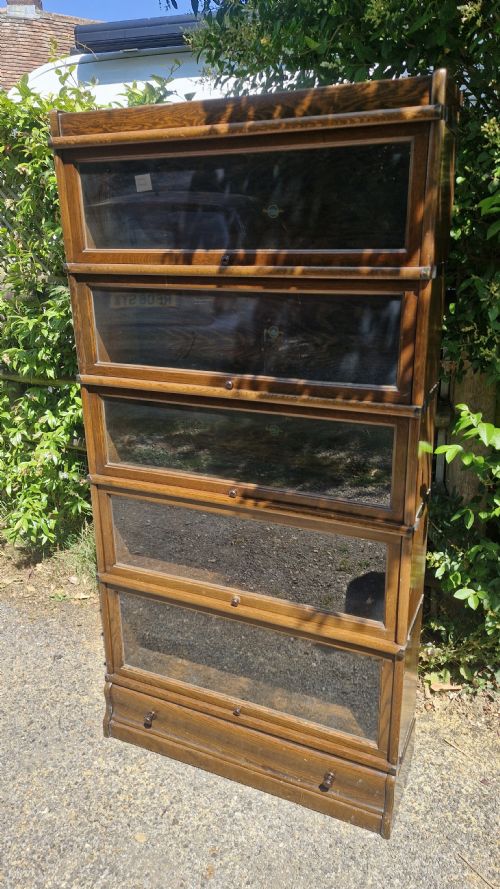
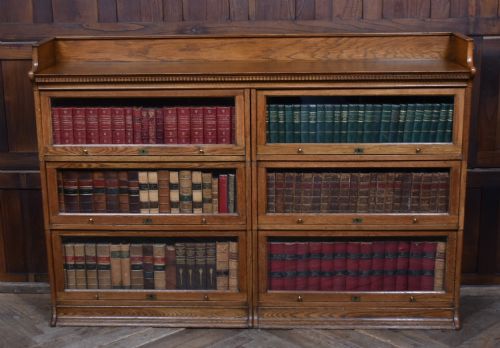
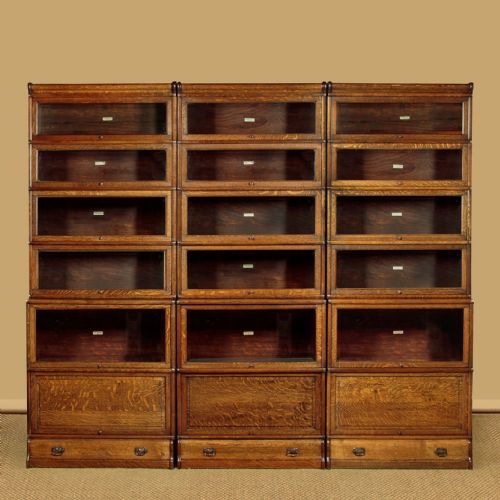
- A modular office bookcase featuring stacked sections with upward-lifting glass-fronted doors. Also known as a stacking bookcase, it allowed libraries to expand vertically by adding individual tiers.
- Secretaire
- A cabinet incorporating a drop-front drawer or panel that pulls down to reveal a writing surface and small interior pigeonholes. This hybrid form combines storage with a pull-out desk.
- Aesthetic Movement
- A late nineteenth-century design style that emphasised visual beauty and artistic reform over heavy historical revivalism. Pieces from this movement often feature simplified lines and subtle decorative elements.
Golden Oak Library Bookcase: Frequently Asked Questions
What is a barrister bookcase?
A barrister bookcase is a modular shelving unit made of stacked sections, each featuring an upward-swinging glass door that slides back into the cabinet.
This design kept dust away from reference books and allowed lawyers to transport their libraries easily between courts.
How do I adjust the shelves?
Most nineteenth and early twentieth-century oak bookcases utilise internal vertical wooden ratchets, metal pegs, or side grooves.
Shelves simply lift out of their supports and relocate into alternative slots to accommodate different book heights.
Are these bookcases suitable for low ceilings?
While grand breakfront and library bookcases often demand generous vertical clearance, sectional stacking units and open front models come in lower heights.
Modular sections can also be separated to fit beneath standard domestic lintels.
What distinguishes pollard oak from standard oak?
Pollard oak derives from trees pruned at the crown, producing tightly clustered growth rings that create a mottled, highly decorative grain.
Standard oak displays a straight, linear grain pattern compared to the dramatic swirling movement found in pollard and burr selections.