

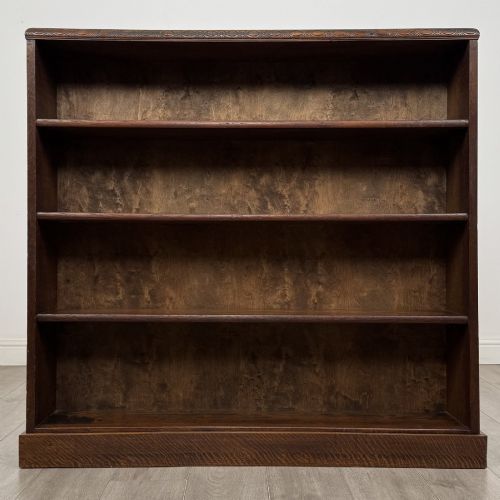
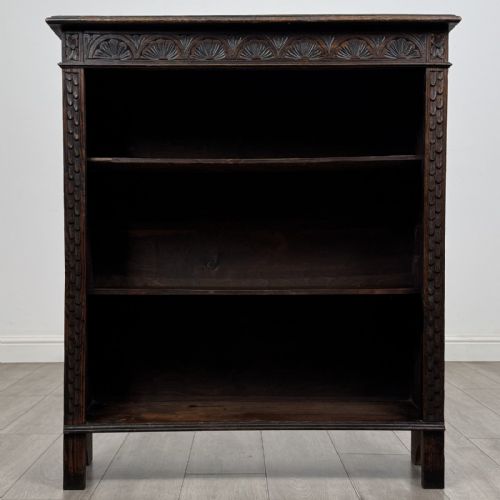
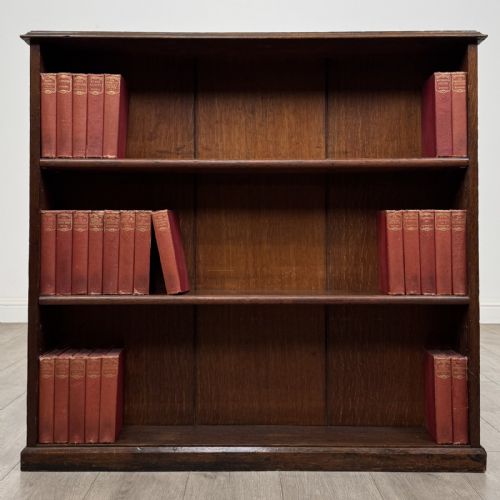

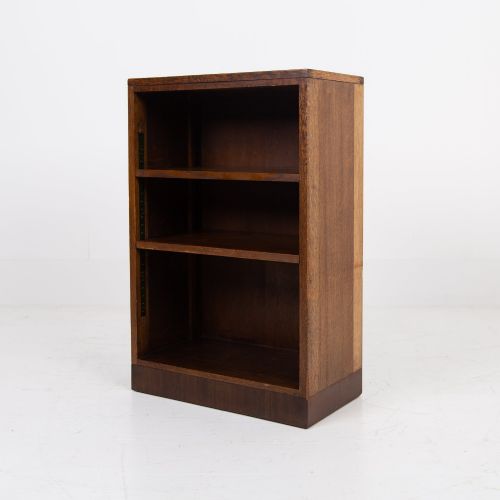


Adjustable Oak Book Shelves
Adjustable oak book shelves offer sturdy utility and flexible storage, bringing practical timber character to any study or library.
Adjustable Oak Book Shelves
Adjustable oak book shelves provide adaptable shelving housed within open fronts or glazed cabinets designed for home libraries and studies. When searching for adjustable oak book shelves, buyers encounter pieces ranging from tall Victorian library editions to compact Edwardian dwarf cabinets.
The selection spans the nineteenth century through the 1930s, encompassing styles such as Arts and Crafts, Gothic Revival, and Art Deco. Most examples appear as open front bookcases or glazed standing cabinets constructed to hold varied volumes securely.
Victorian and Edwardian workshops produced the majority of these pieces, utilising solid timber alongside decorative carving, glass doors, and brass fittings. Buyers find both standing open variants and enclosed cabinet designs fitted with moveable shelf mechanisms.
Assessing quality and craftsmanship
Quality rests on the selection of timber and the precision of the shelf adjustment mechanism. Heavier solid oak construction and cleanly fitted internal shelf supports distinguish superior pieces from standard utilitarian shelving.
Carved ornamentation and maker signatures elevate certain examples, showing careful hand-chiselled details on columns and cornices rather than repetitive machine mouldings. The presence of original glazed doors, brass hardware, and integrated leather trim also separates standard utility items from finer workshop production.
Adjustable Oak Book Shelves Retail Price Guide 2026
Typical asking prices for adjustable oak book shelves among the pieces listed under this phrase on Sellingantiques today, from the lower quarter to the upper quarter. They describe what is for sale here now, not the wider market.
The archive and current selection span diverse forms, including dwarf bookcases, breakfront cabinets, and tall open library shelving.
Waring and Gillows
The Adjustable Oak Book Shelves Glossary
- Open bookcase
- A freestanding or fitted shelving unit without doors, providing direct access to books from the front. These pieces rely on sturdy side panels to support moveable timber planks.
- Dwarf bookcase
- A low-standing bookcase designed to sit beneath window height, often featuring adjustable shelving within a compact footprint. They frequently incorporate panelled backs and plinth bases.
- Gothic Revival
- A nineteenth-century design movement drawing inspiration from medieval architecture, characterised by pointed arches, heavy moulding, and deep carved details. Such bookcases often display religious or architectural motifs.
- Arts and Crafts
- A style prioritising visible construction, simple utility, and quality materials over excessive ornamentation. These items showcase honest timber grain and straightforward joinery.
- Breakfront
- A piece of furniture where the central section projects forward from the flanking wings. This configuration adds architectural depth and visual presence to larger library bookcases.
Adjustable Oak Book Shelves: Frequently Asked Questions
How do adjustable shelves work on antique bookcases?
Antique adjustable shelves typically utilise vertical wooden ratchets, metal shelf studs, or brass tracks inset into the interior sides of the bookcase. These systems allow the user to lift and relocate timber planks to accommodate books of varying heights.
Simpler Victorian and Edwardian examples rely on moveable wooden pegs resting inside drilled holes, whilst older library editions feature slotted pilasters for secure repositioning.
Are these bookcases suitable for heavy modern books?
Solid oak construction provides exceptional structural strength, making these bookcases well-suited for supporting heavy modern volumes and large reference sets. The dense hardwood resists sagging under substantial weight better than softer timbers.
Buyers should ensure the internal shelf supports and wooden planks remain firmly seated within their original vertical grooves before loading heavy collections.
What is the difference between open and glazed bookcases?
Open bookcases feature no doors, allowing immediate access to books and displaying colourful spines directly within a room. Glazed bookcases incorporate glass-panelled doors that protect volumes from dust, light exposure, and atmospheric moisture.
Glazed variants often date to the Victorian and Edwardian periods, frequently housing more delicate bindings or valuable private library collections.
How do I identify a Victorian adjustable bookcase?
Victorian examples frequently display heavier proportions, deep moulded cornices, plinth bases, and occasionally hand-carved floral columns or lion head motifs. The timber often exhibits a rich honey or dark oak tone with visible medullary rays in the grain.
Construction details such as pegged mortise and tenon joints and heavy brass adjustment hardware further confirm nineteenth-century origins.