


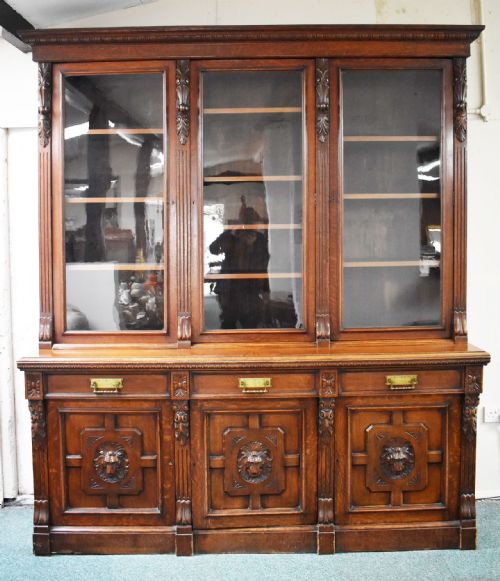


Large Glazed Oak Bookcase
A large glazed oak bookcase anchors a room with timber grain and glass, designed to protect substantial libraries.
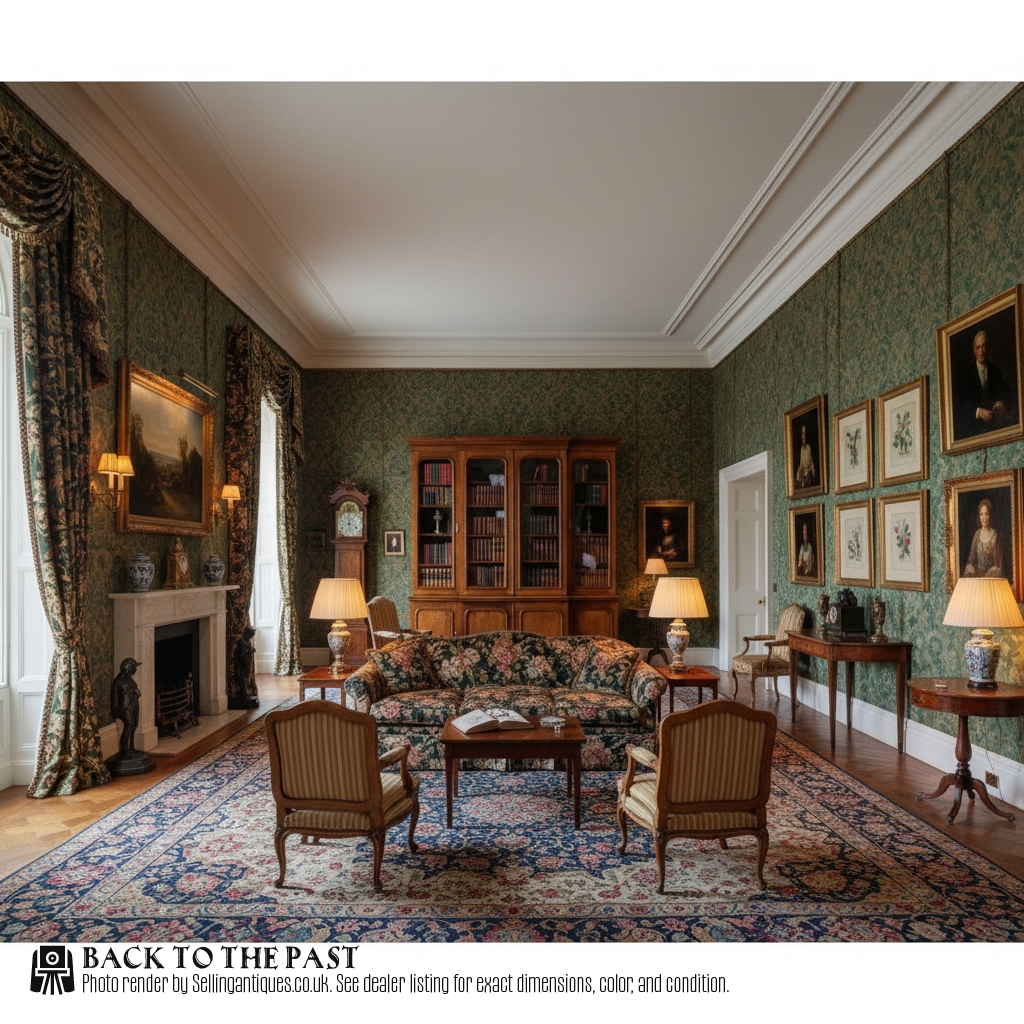
Large Glazed Oak Bookcase
A large glazed oak bookcase combines generous shelving behind glass doors with solid timber construction, designed to house and display comprehensive book collections in domestic or institutional settings. These pieces date predominantly from the nineteenth and early twentieth centuries, spanning Victorian, Edwardian, and later periods.
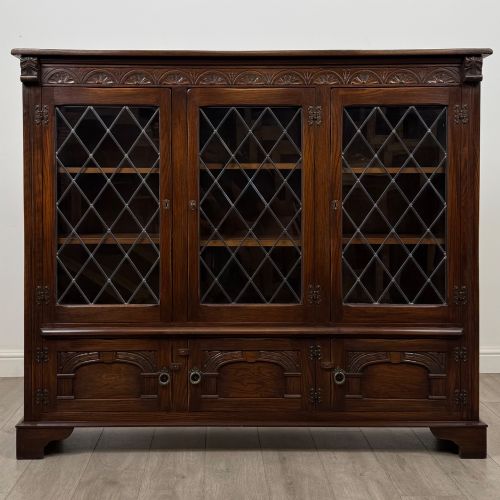
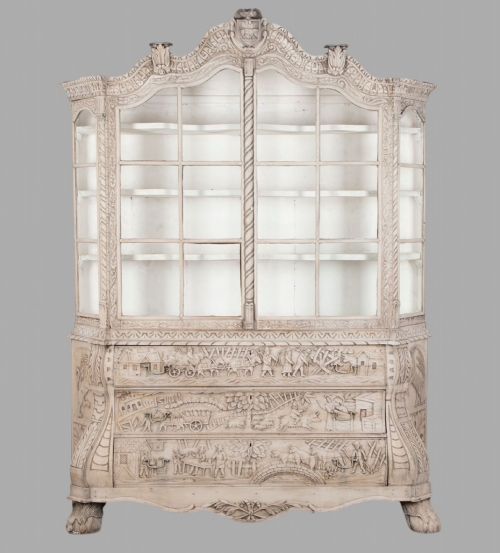
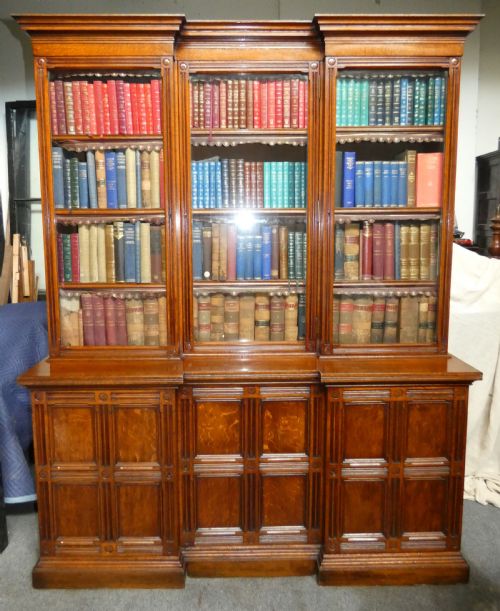
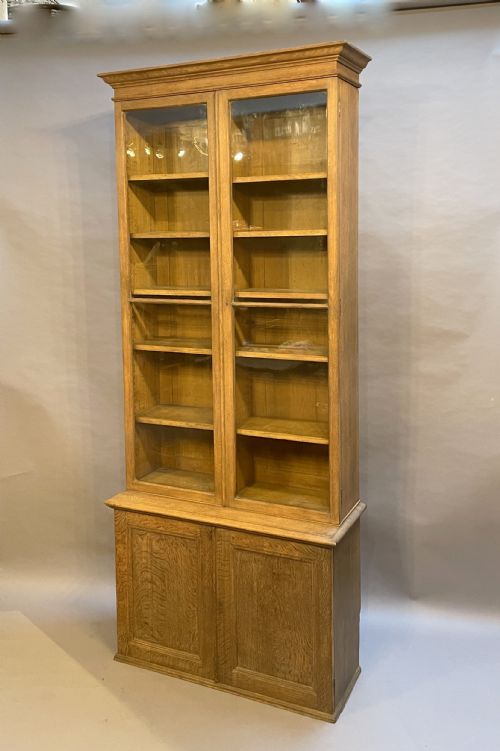
The most frequent examples encountered on this page are substantial Victorian and nineteenth-century library bookcases featuring multi-door configurations, often paired with cupboard bases for additional storage. Alongside traditional library formats, buyers will find revival styles such as Gothic Revival and Dutch Rococo, as well as institutional cabinets from school and college contexts.
Makers and workshops utilised sturdy oak timbers to build structures that stood floor-to-ceiling or filled entire walls. These large pieces range from breakfront designs with intricate carvings to simpler glazed cabinets with sliding or hinged glass panels.
Distinctions in Quality and Craftsmanship
The distinction between standard utility pieces and exceptional examples rests upon the selection of timber and the ambition of the carving. Monumental library bookcases featuring figured pollard oak veneers, deep relief carvings, and breakfront profiles represent the higher end of the range.
Joinery execution and original glass integrity further separate workshop standards, with superior examples retaining functioning brass fittings, adjustable shelving systems, and unbroken leaded or clear panes. The harmony between the upper glazed display area and the lower cupboard base indicates the maker's original intent and proportion.
Listings feature oak, pollard oak, brass, iron, glass, and lead across Victorian, Edwardian, and twentieth-century periods.
Howard And Sons
The Large Glazed Oak Bookcase Glossary
- Breakfront
- A cabinet design where the central section projects forward from the flanking outer sections. This architectural arrangement adds depth and visual interest to large library furniture.
- Pollard Oak
- Timber taken from trees that have been pollarded, producing a highly figured, mottled grain pattern. It was utilised on high-status Victorian and nineteenth-century furniture facades.
- Lead Came
- A slender rod of cast lead used to hold individual panes of glass together in leaded windows and cabinet doors. It creates geometric patterns common in Gothic Revival pieces.
- Globe Wernicke
- A sectional bookcase system composed of stacked, self-contained units with glazed upward-lifting doors. This modular design became popular in the late nineteenth and early twentieth centuries.
- Housekeeper Cupboard
- A large storage piece combining upper and lower compartments, traditionally used for household linens and dry goods. Oak examples often bridge the boundary between utility furniture and display.
Large Glazed Oak Bookcase: Frequently Asked Questions
How do I clean the oak wood?
Dust the timber regularly with a soft, dry cloth to prevent dirt accumulation on the grain and carved details.
Apply a traditional beeswax conditioner periodically to nourish the oak and maintain its natural lustre without sealing the surface.
Are the shelves adjustable?
Many library bookcases include adjustable shelving supported by wooden ratchets, brackets, or metal pins.
This adaptability allows the interior layout to accommodate folio volumes, modern hardbacks, or decorative objects of varying heights.
How do I secure a heavy bookcase?
Large timber furniture requires careful placement on level flooring to ensure the doors hang true and the frame remains stable.
Given the height and weight of monumental oak bookcases, secure the upper structure to a wall stud to prevent tipping.
How do I date an oak bookcase?
Examine the construction methods, such as drawer dovetailing, screw types, and backboard thickness, which shift across Victorian and Edwardian periods.
Stylistic indicators like Gothic Revival tracery, barley twist columns, or Art Deco linear geometry provide further chronological markers.