






Golden Birch Desk
These golden birch desk pieces combine warm figured timber with practical workspace, offering striking continental and British writing furniture for the home.
Golden Birch Desk
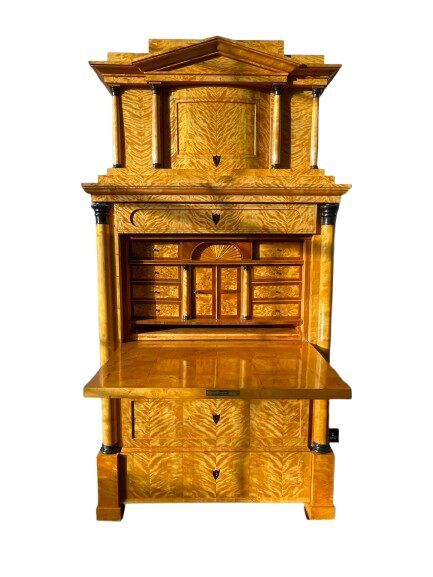
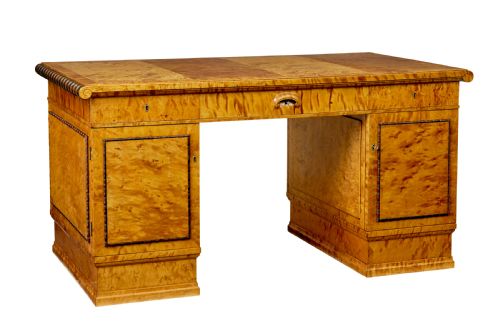
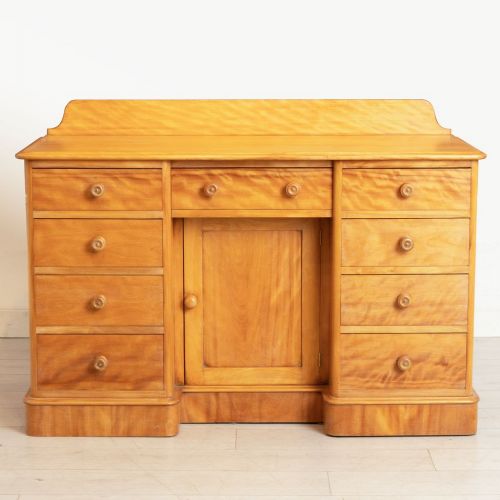
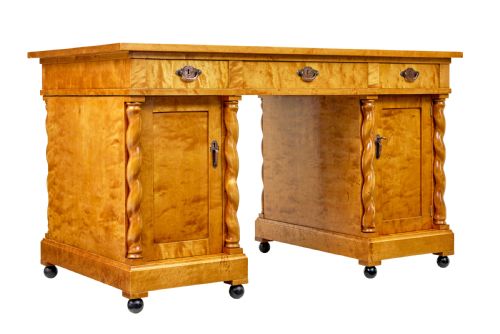
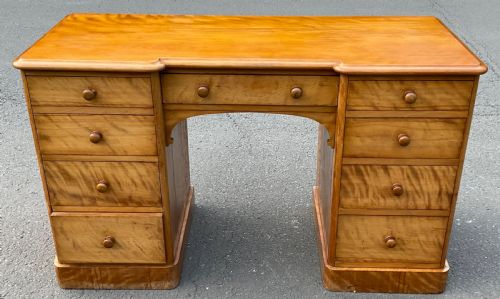
A golden birch desk brings together distinct 19th-century British examples and continental forms such as Swedish Biedermeier secretaires and pedestal desks. Buyers searching for a golden birch desk will encounter kneehole writing tables, architectural secretaire chests of drawers, and pedestal writing furniture.
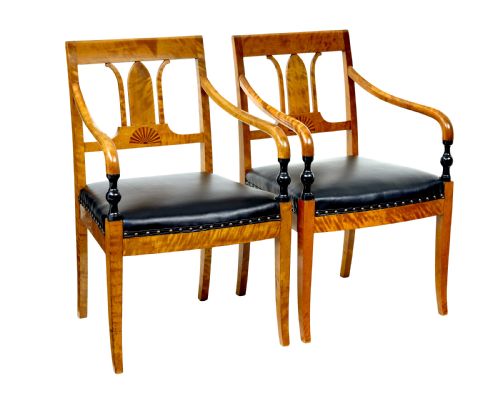
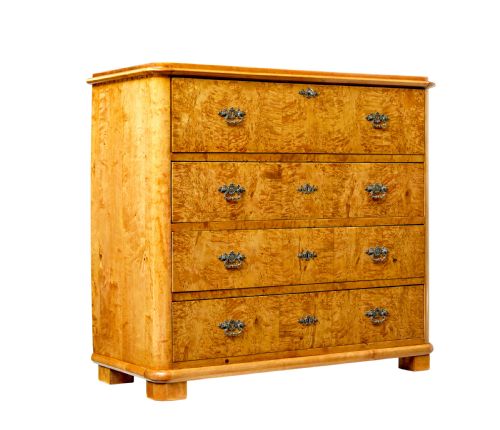
The aesthetic relies heavily on the pale, shimmering quality of the timber, whether finished as satin birch, flame birch, burr birch, or Masur birch. These pieces often feature contrasting dark details in ebonised wood or brass hardware that accentuates the grain.
Originating largely from Victorian Britain and Scandinavian workshops, these items span several decades from the mid 19th century into the Art Deco period of 1930. The typical survivor balances functional drawers and writing surfaces with striking figured timber facades.
How they were made
Cabinetmakers selected choice cuts of birch, utilising burr, satin, and flame veneers over solid pine carcases to create dramatic grain patterns across the front drawers and writing surfaces. The timber was carefully sliced and matched to present symmetrical movement across large flat surfaces.
Details such as ebonised wood mouldings and cast brass handles were applied to contrast against the pale golden ground of the birch. Leather inserts frequently lined the writing surfaces of British kneehole tables, providing a durable plane for correspondence.
Some secretaire drawers hide secret compartments deep within, designed to keep private letters safe from prying housemaids.
What varies in quality
The visual appeal of a golden birch desk rests largely on the choice and matching of the wood veneer. Pieces with richly figured burr or flame birch displays across the primary drawers sit at the upper end of visual refinement compared to plain timber surfaces.
Construction methods also distinguish finer workshops, particularly the seamless integration of secret compartments within secretaire drawers and the crispness of ebonised architectural details. The harmony between the pale primary wood and secondary contrasting elements dictates the visual balance.
The Golden Birch Desk Glossary
- Satin birch
- A pale, highly reflective timber variety showing a silky sheen. It was widely favoured by British cabinetmakers during the Victorian period.
- Secretaire
- A cabinet or chest featuring a fitted pull-out writing drawer that conceals smaller pigeonholes and small drawers inside. This dual-purpose form allows workspace to remain hidden when not in use.
- Biedermeier
- A Central European style spanning the mid 19th century emphasising clean architectural lines and rich wood veneers without excessive ornamentation. It suits the natural figuring of birch exceptionally well.
- Kneehole desk
- A writing table featuring a recessed central space for the legs flanked by pedestals of drawers on either side. This form became popular in Victorian Britain for domestic studies.
Golden Birch Desk: Frequently Asked Questions
Where were these desks made?
The pieces originate primarily from British workshops during the Victorian era alongside Scandinavian centres including Sweden.
Continental makers often favoured Biedermeier and Empire Revival styles, while British makers produced kneehole writing desks in satin birch.
How do I care for birch veneer?
Keep the timber away from direct sunlight and excessive heat sources to prevent the wood veneers from drying out or fading.
Dust regularly with a dry cloth and avoid harsh chemical polishes that can damage the traditional French polished finish.
What is a secretaire chest?
A secretaire chest combines the outward appearance of a standard drawer chest with a fold-down or pull-out writing compartment.
Opening the top drawer reveals an inner arrangement of small compartments and drawers designed for correspondence.
How do I date these pieces?
Dating relies on construction techniques, hardware style, and the characteristic design vocabulary of periods like the Victorian era or 1930s Art Deco.
Swedish pieces often reflect Biedermeier or Empire Revival movements from the 19th century, while British examples align with Victorian domestic trends.