




Fitted Office Desk
A fitted office desk is a substantial workspace designed for efficiency, and these period pieces bring architectural presence and dedicated pigeonholes to a room.
Fitted Office Desk
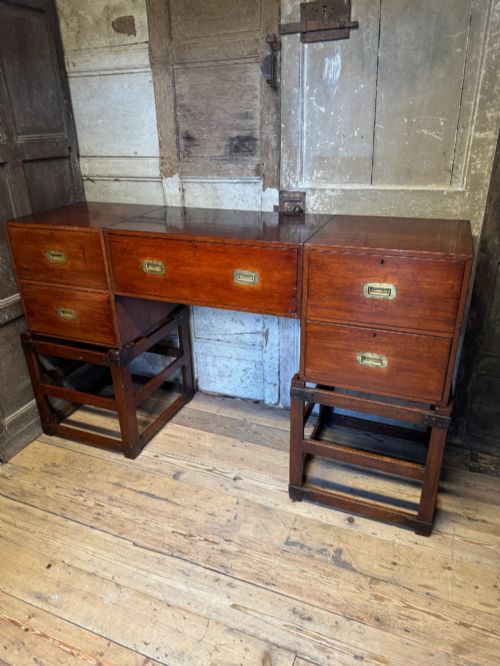
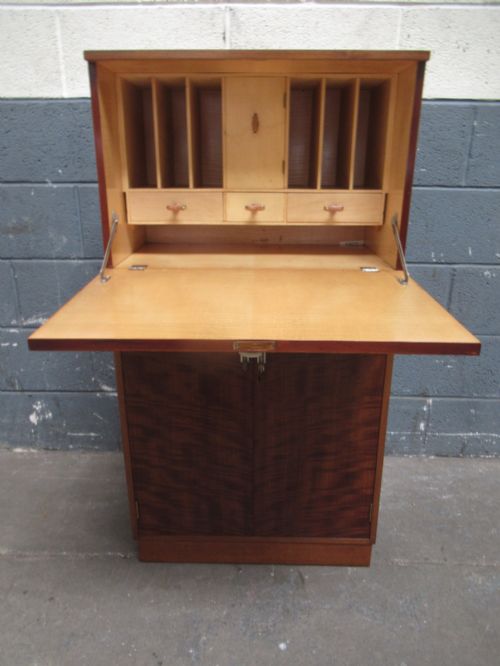
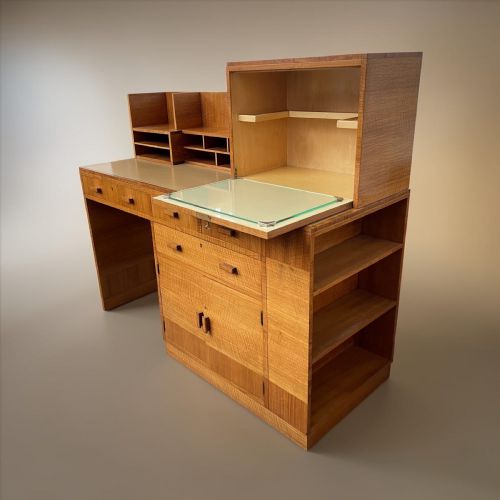
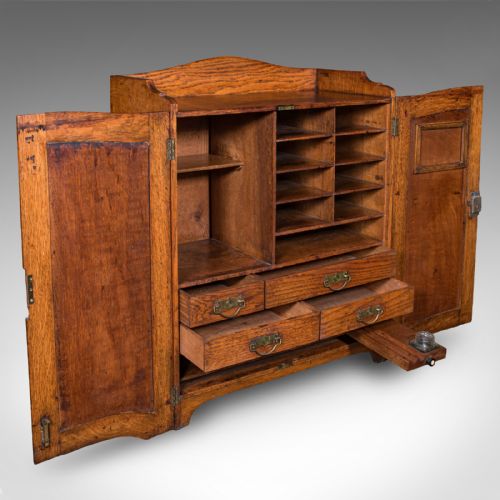
A fitted office desk spans substantial pedestal kneehole configurations, roll top variants with internal compartments, and secretaire forms originating from the nineteenth and early twentieth centuries. These pieces reflect the expanding administrative needs of the Victorian, Edwardian, and Art Deco eras.
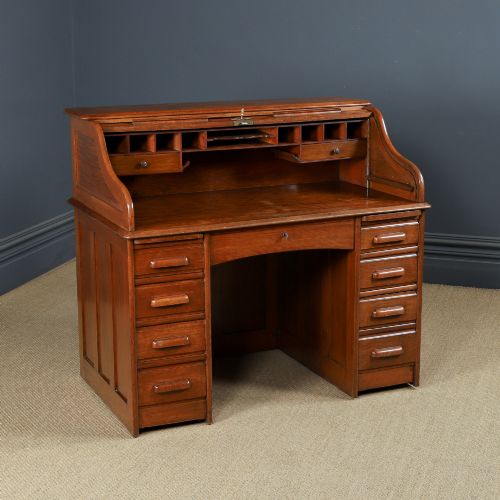
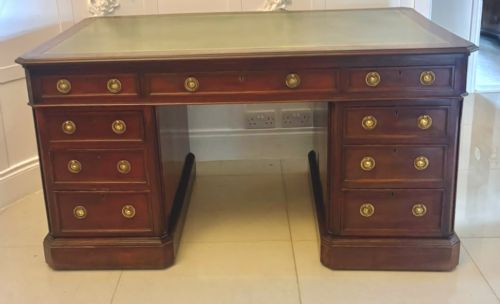
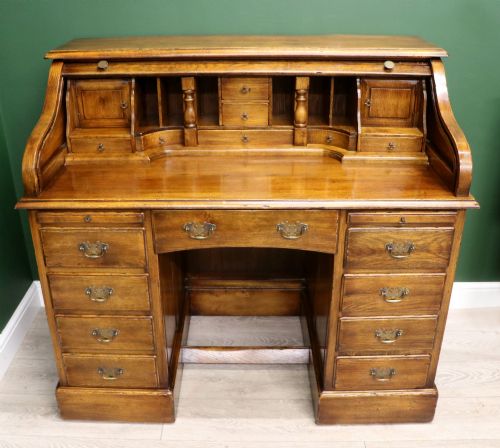
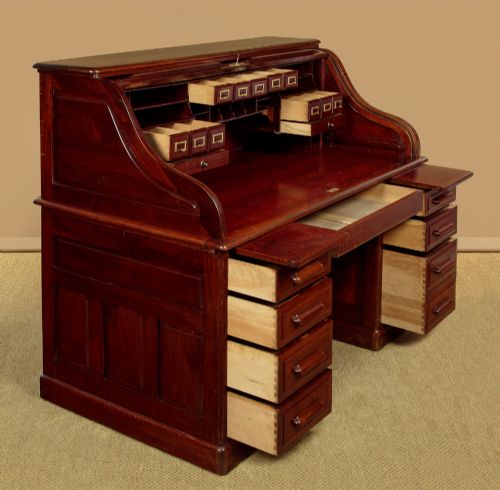
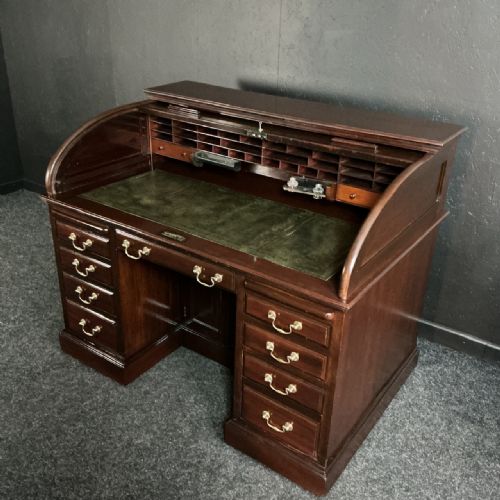
The most common form encountered on this page is the oak or mahogany roll top desk, alongside walnut pedestal writing tables equipped with stationery drawers and writing slides. Examples range from compact late nineteenth century variants to large Edwardian and interwar designs.
Construction and materials
Cabinet makers built these pieces using solid timbers and veneers including oak, mahogany, walnut, burr walnut, and satin birch. Brass hardware and inset leather writing surfaces were incorporated for durability and daily use.
Internal organisation relied on intricate joinery for tambour shutters, pigeonholes, and fitted stationery drawers. Secondary woods and traditional hand-cut dovetailing characterise the interior construction of the period.
Listings span Victorian, Edwardian, and Art Deco periods, utilising oak, mahogany, walnut, satin birch, and brass.
Craftsmanship and distinction
Quality rests in the selection of figured timber veneers, the smoothness of mechanical tambours and drawers, and the integrity of internal fittings like pigeonhole banks and secret compartments. Maker attribution also elevates certain pieces.
Execution of carved details, panel thickness, and the retention of original brasses and leather writing surfaces differentiate standard commercial pieces from workshop productions by firms such as Heal's or Holland & Sons.
Heal's·Holland & Sons·Boston Chair Company·Maples of London and Paris
The Fitted Office Desk Glossary
- Pedestal desk
- A freestanding writing table supported by two vertical banks of drawers flanking a central kneehole. This form provides substantial storage beneath the main writing surface.
- Roll top desk
- A workspace featuring a slatted wooden tambour shutter that pulls down over the desktop to conceal papers and pigeonholes. It became a staple of early twentieth century office furniture.
- Kneehole
- The central recessed space beneath a desk designed to accommodate the user's legs. It is often flanked by pedestals containing banks of drawers.
- Secretaire
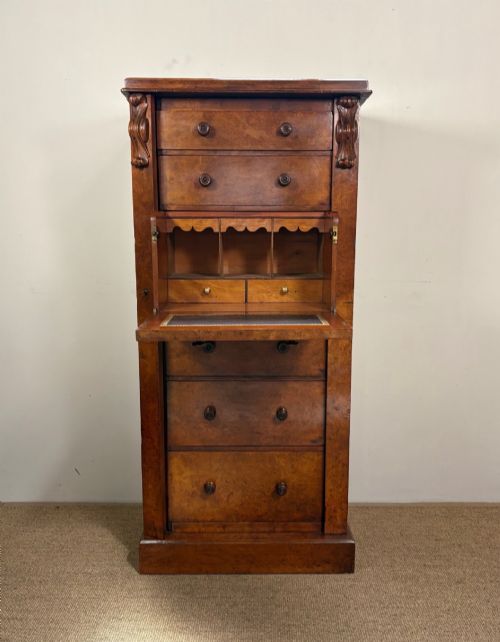
- A cabinet or bureau incorporating a drop-front writing flap that conceals a fitted interior of small drawers and pigeonholes. These pieces combine storage with writing utility.
- Tambour
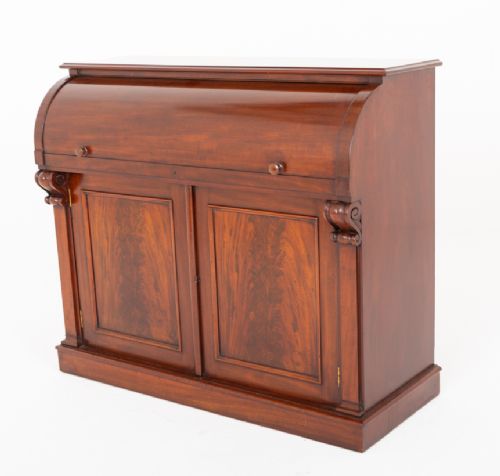
- A flexible shutter made from narrow strips of wood glued to canvas or leather backing, allowing it to slide along a curved track. It is the defining mechanism of roll top desks.
Fitted Office Desk: Frequently Asked Questions
How do I use a pedestal desk?
A pedestal desk sits freestanding in a room, offering dual banks of drawers on either side of a central kneehole. Many include pull-out writing slides above the drawers for extra surface area.
They serve as principal writing tables or library desks, providing both workspace and enclosed storage.
What period are these desks from?
The pieces span the nineteenth and early twentieth centuries, encompassing Victorian, Edwardian, William IV, and Art Deco styles. Oak and mahogany examples dominate the Victorian and Edwardian eras.
Later interwar designs introduce streamlined forms associated with the 1920s and 1930s.
What woods were used?
Common timbers include oak, mahogany, walnut, burr walnut, and satin birch. These woods were chosen for their durability and grain pattern.
Secondary materials like brass handles and leather inserts are frequently integrated into the design.