

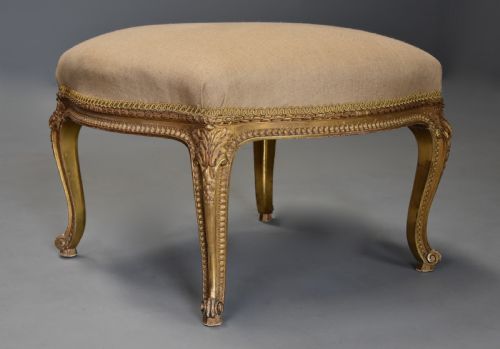
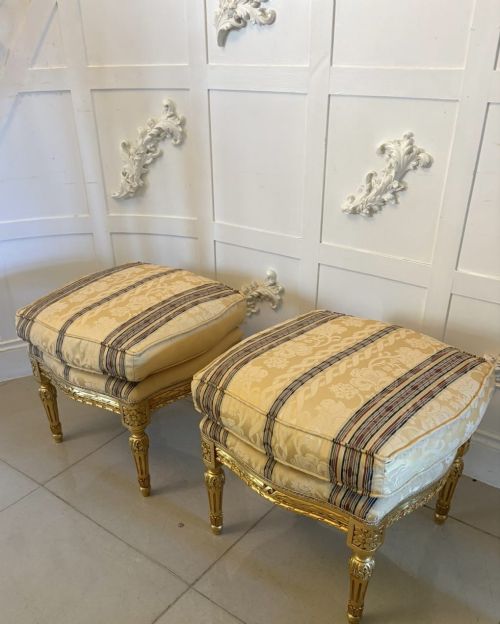
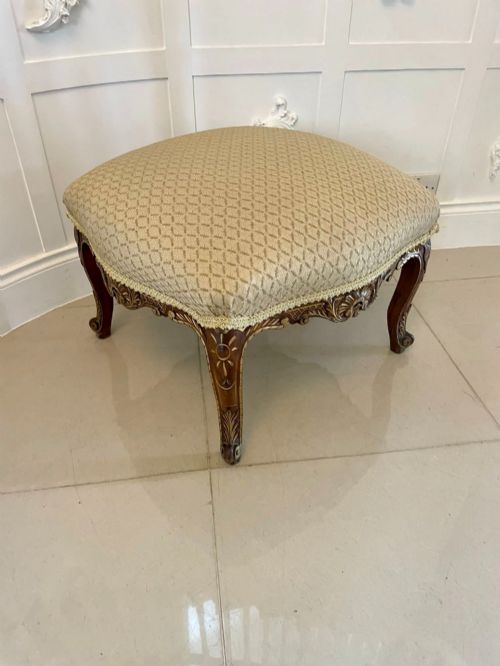
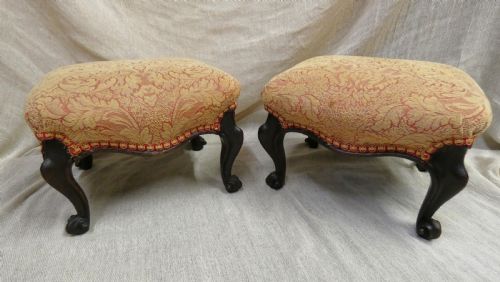

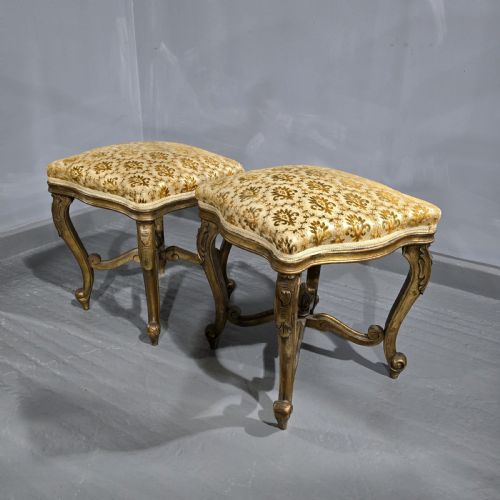


Gold Upholstered Footstool
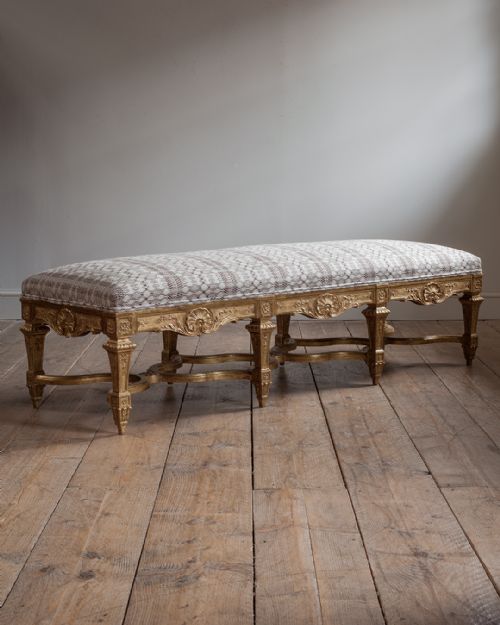
A gold upholstered footstool brings rich texture and carved character to a room, offering a versatile seat or rest.
Gold Upholstered Footstool
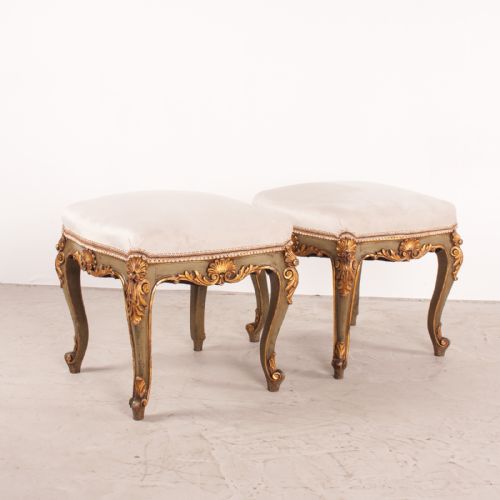
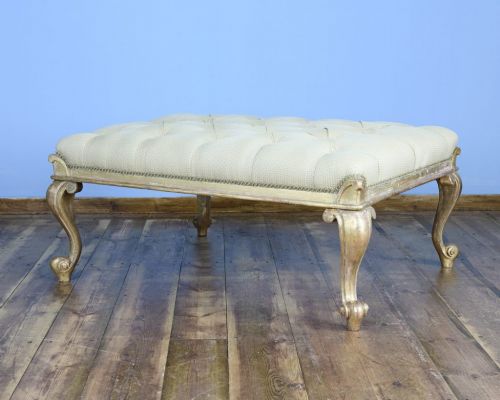
A gold upholstered footstool encompasses a variety of low seating forms designed for comfort and display, ranging from compact stools to larger ottomans. When searching for a gold upholstered footstool, buyers encounter pieces fashioned in diverse revival styles such as Louis XV, Louis XVI, and Rococo Revival.
Makers and workshops across France and Britain produced these items as dressing stools, boudoir seats, and larger footstools. The inventory includes singular items, pairs, and occasional work boxes that combine storage with textile upholstery.
Materials and Techniques
Craftsmen shaped the structural frames of these stools from hardwoods such as mahogany, walnut, and elm, often applying intricate hand-carved details. Giltwood and parcel gilt finishes required meticulous application of gold leaf over prepared wooden surfaces to achieve a luminous sheen.
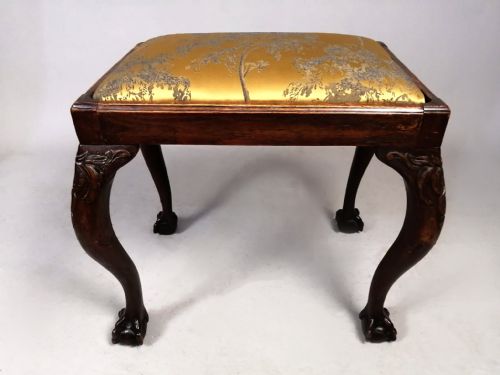
Upholstery techniques varied from traditional stuffing to deep buttoning executed on textiles like silk, velvet, and patterned fabrics. Brass tacks and decorative braids frequently secured the fabric edges to the wooden rails.
Ebonisation and painted decoration appear on specific nineteenth-century pieces, contrasting with the dominant gilt surfaces. Joinery relied on traditional mortise and tenon methods to ensure the stability of the low frames.
Gold Upholstered Footstool Retail Price Guide 2026
Typical asking prices for gold upholstered footstool among the pieces listed under this phrase on Sellingantiques today, from the lower quarter to the upper quarter. They describe what is for sale here now, not the wider market.
A pair of coronation stools made for the 1911 ceremony sits alongside French boudoir seats and deep-buttoned work boxes.
Assessing Quality
The crispness and depth of the hand-carved woodwork distinguish superior frames from simpler production pieces. Carvings on giltwood and walnut components should exhibit sharp relief and confident execution rather than soft or shallow detailing.
The choice and execution of the upholstery contribute significantly to a piece's integrity. Deep buttoning and the use of quality textiles like silk or velvet demonstrate a higher standard of finish.
Originality of the gilding and the stability of the underlying timber frame dictate the overall merit of the stool. Pieces retaining their original stamped maker marks or historical gilding hold greater distinction.
LOIDRAULT FRERES PARIS·A.M.E. Fournier
The Gold Upholstered Footstool Glossary
- Giltwood
- Wood that has been coated with gold leaf or gold paint. This finish creates a reflective and decorative surface popular in formal seating.
- Ottoman
- A low upholstered seat or bench without a back or arms. These pieces often double as storage boxes or large footrests.
- Curule stool
- An ancient Roman shape featuring two curved legs that cross in the middle to form an X-form support. This classical form was revived in later centuries for formal interiors.
- Parcel gilt
- Woodwork that is partially gilded with gold leaf while other areas show the natural wood grain or paint. It highlights specific carved details on the frame.
- Deep buttoning
- An upholstery technique where stitches pull the fabric tight into the padding in a diamond pattern, secured with buttons. This method provides texture and structural tension.
Gold Upholstered Footstool: Frequently Asked Questions
How were these stools used?
These pieces served multiple functions in period interiors, acting as footrests before armchairs or as standalone seats in dressing rooms and boudoirs. Larger variants functioned as ottomans for resting or holding textiles.
Some examples incorporated internal compartments to store sewing equipment or small personal items while doubling as low seats.
What styles are common?
French revival styles dominate the selection, notably Louis XV, Louis XVI, and Rococo Revival designs characterised by ornate curves and carved ornamentation. Victorian interpretations also feature prominently.
Other examples display Gothic Revival influences, ebonised aesthetic movement details, or formal Regency lines.
How do I date a stool?
Dating relies on examining the timber species, joinery methods, and the stylistic characteristics of the carved frame. Nineteenth-century pieces often display revival motifs tied to specific reigns.
Stamp marks or labels left by makers provide more precise chronological anchors when present on the timber frame.
Can I use them daily?
The sturdy hardwood frames allow for regular seating and use as footrests in modern living spaces. Periodic checking of the upholstery and frame stability helps maintain them.
Placing them out of direct sunlight protects delicate silk and velvet textiles from fading over time.