
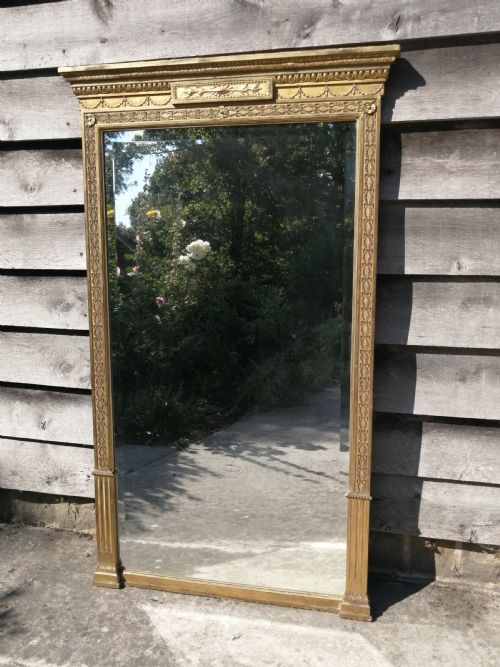
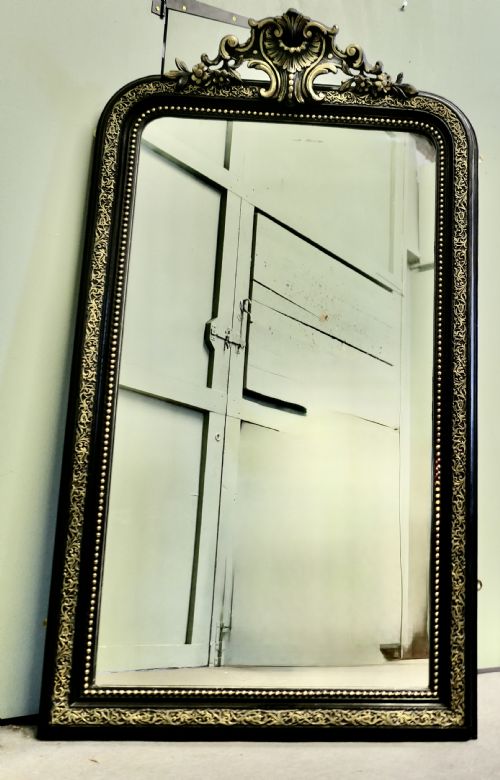
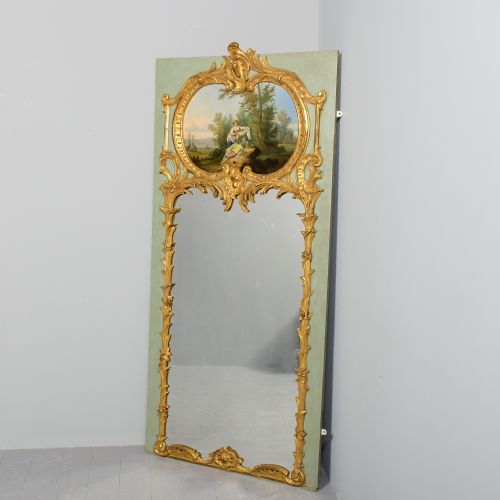
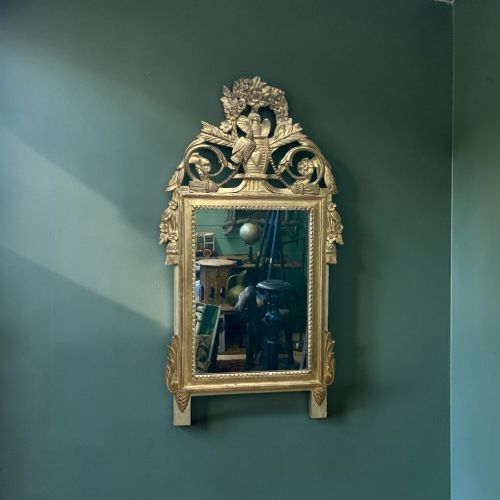
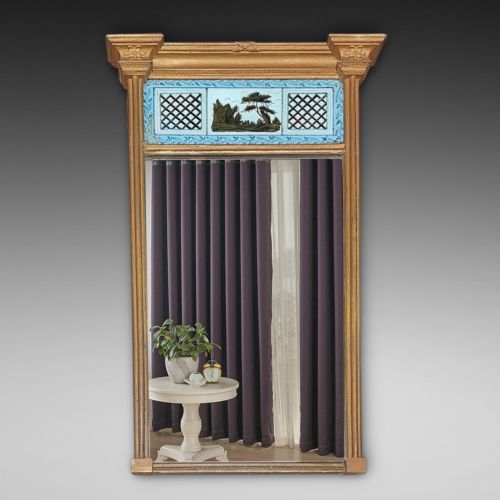

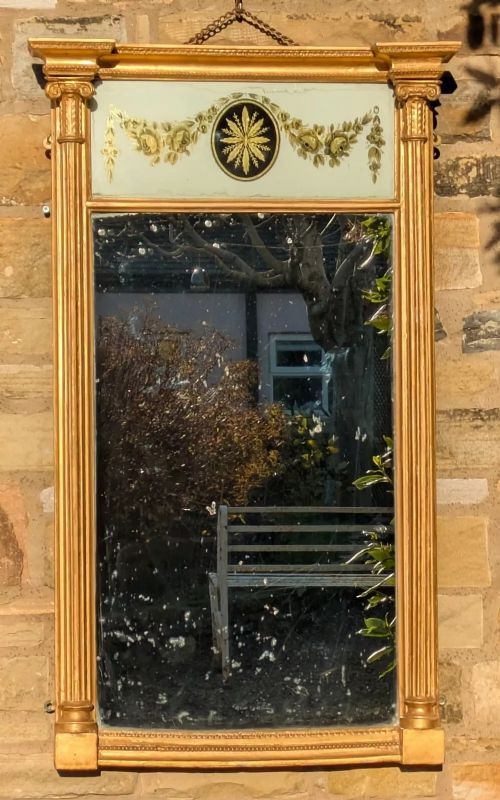
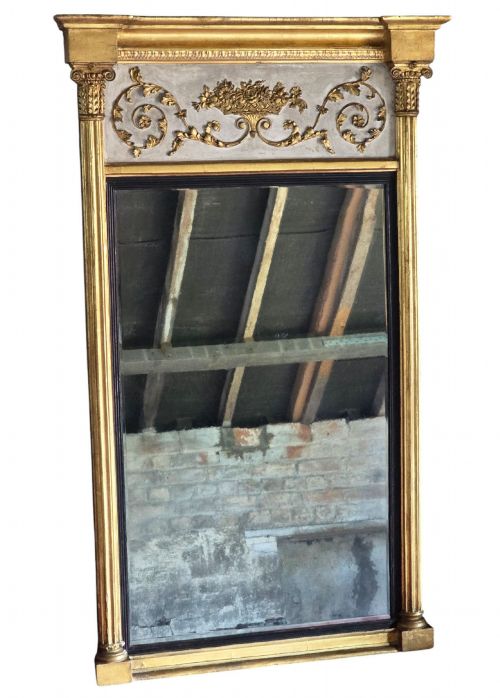
Gold Trumeau Mirror
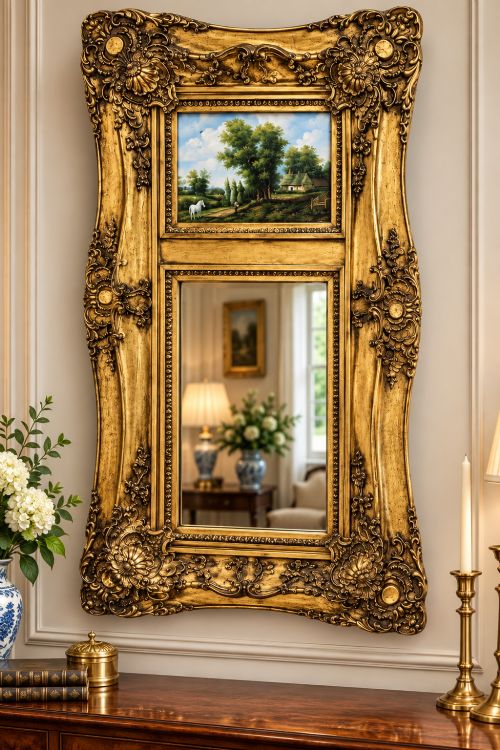
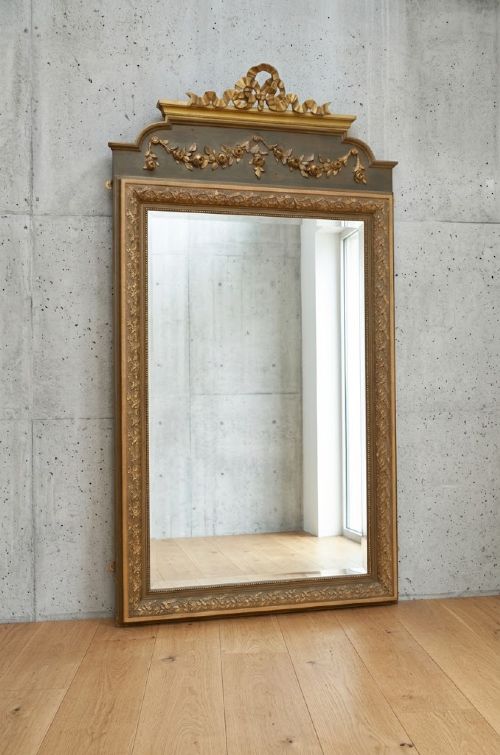
A gold trumeau mirror combines a vertical glass plate with an upper decorative panel, bringing architectural presence and painted or carved detail to a room.
Gold Trumeau Mirror
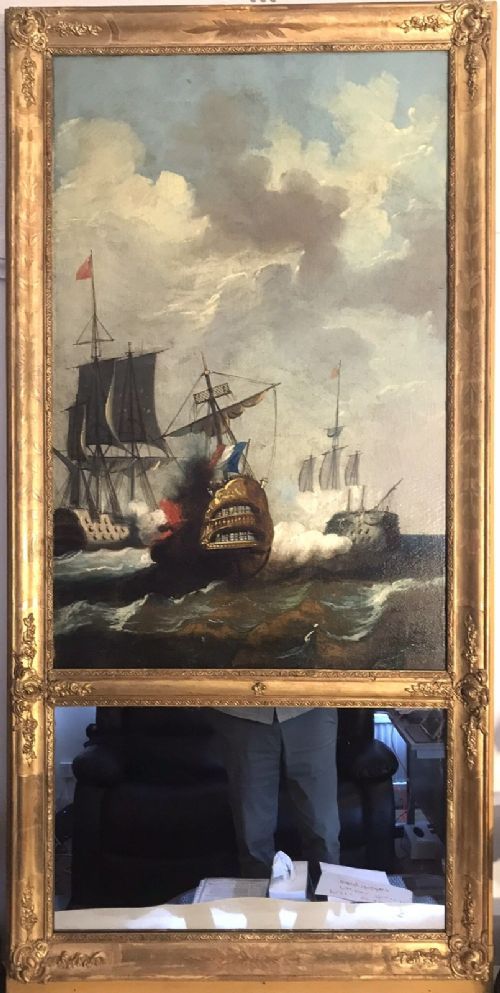
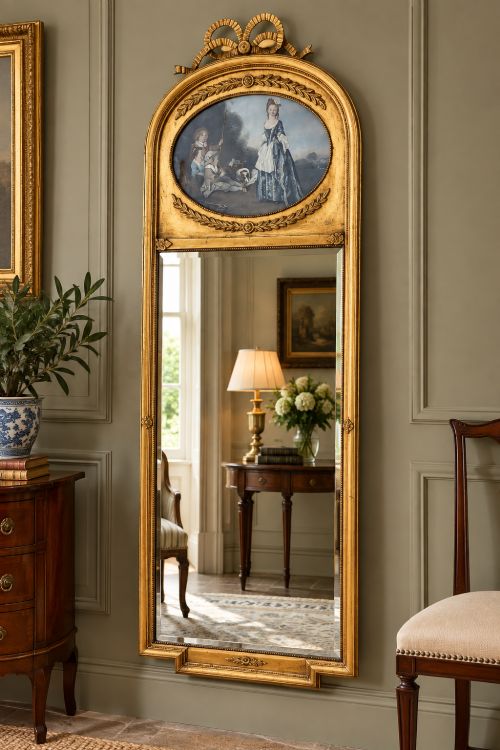
A gold trumeau mirror unites a lower reflective plate with an upper section housing either an oil painting, a canvas work, or a decorated glass panel. The form originates in French interior architecture, designed to hang in the pier space between tall windows.
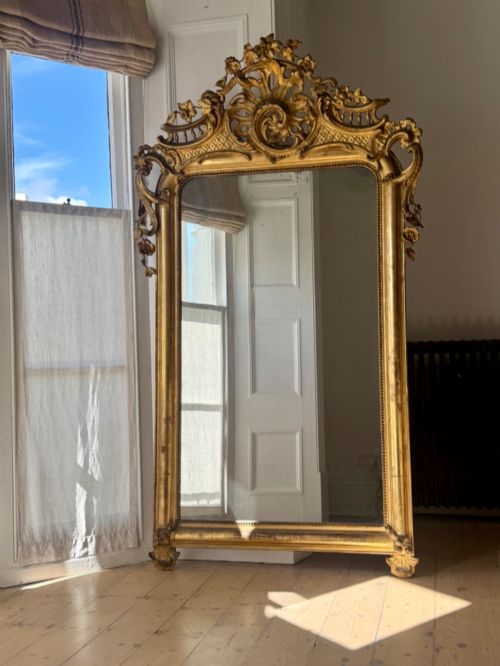
Most examples found here date from the nineteenth or eighteenth centuries, displaying styles ranging from French Rococo and Louis XVI to Regency and French Empire. These pieces function as substantial wall mirrors or overmantels, often integrating painted wood and gilded frames.
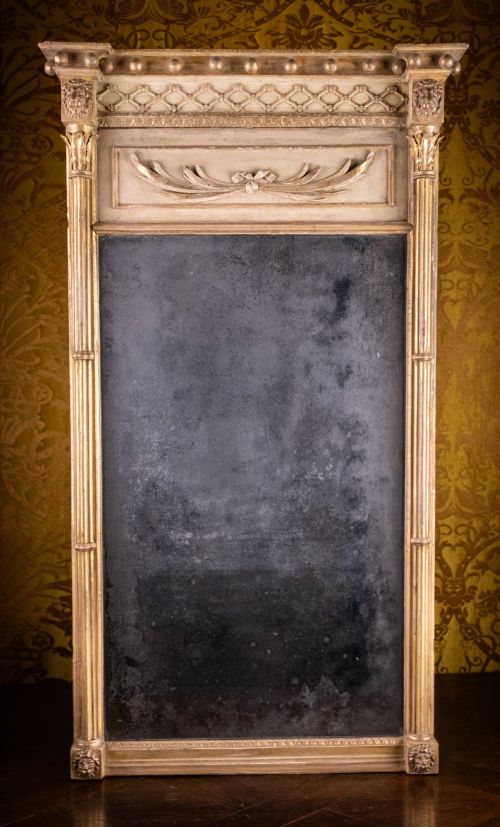
Variations include marriage mirrors, pier mirrors, and console sets, which incorporate motifs such as ribbon crests, lion masks, and Egyptian Revival columns into the carved giltwood structure.
Materials and construction
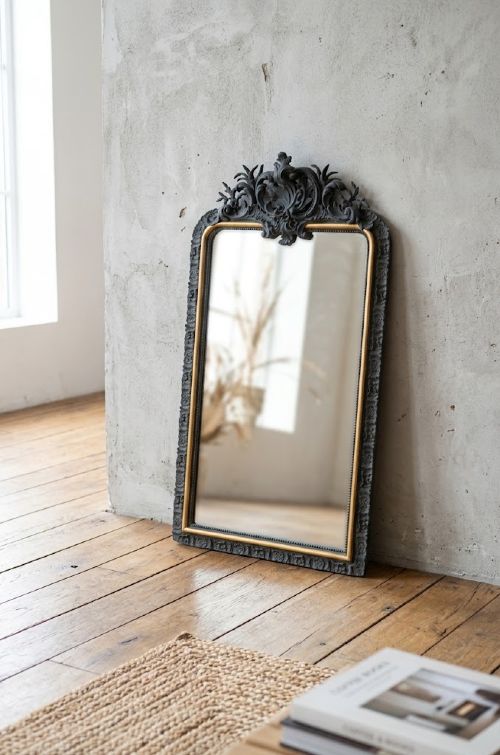
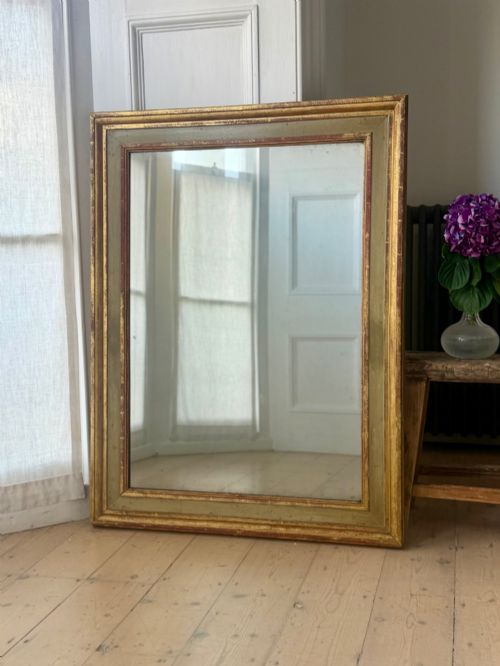
Frames are built from carved wood or gesso over wood, finished with gold leaf or paint, frequently combining gilded elements with olive green, white, or black painted surfaces. The upper panels employ canvas, wood, or reverse painting techniques such as verre églomisé.
Mirrors utilise mercury glass plates or early original glass plates, which display characteristic ageing, foxing, and depth. Carved ornaments and mouldings are applied to the main structural frame to create relief depth.
The listings span the eighteenth, nineteenth, and early twentieth centuries, featuring Regency, French Empire, and Louis XVI styles constructed from giltwood, painted wood, and mercury glass.
Judging quality in mirrors
Quality rests upon the crispness of the original carved giltwood details, the preservation of the painted or oil-painted upper panel, and the integrity of the mercury glass plate. Superior items retain their original gilding and integrated upper artwork without later repainting.
Proportion and scale dictate the visual impact of the piece, where grander scale works exhibit more intricate architectural mouldings, lion masks, or specialised verre églomisé panels rather than simple frames.
The Gold Trumeau Mirror Glossary
- Trumeau
- A decorative architectural wall panel or pier glass containing an integrated painting or decorative panel above the mirror glass. This French form fills the wall space between windows.
- Verre églomisé
- A cold decoration technique where design elements are gilded and painted onto the reverse side of glass. This process creates a reflective, metallic panel often seen in the upper section of Regency pieces.
- Mercury glass
- A type of mirror glass produced by pouring a mercury and tin amalgam behind double-walled blown glass. This historical method creates a warm, mottled reflection.
- Gesso
- A plaster-like mixture applied to wood frames to provide a smooth surface for gilding or painting. Artisans carve fine details directly into this layer.
- Pier glass
- A tall mirror designed specifically to hang on the narrow pier of wall between two windows. These pieces often match console tables positioned below them.
Gold Trumeau Mirror: Frequently Asked Questions
Where should I hang a trumeau mirror?
These pieces suit positions above mantelpieces, over console tables, or on wide expanses of wall where their vertical height can anchor the room.
Because they originate as architectural fixtures, placing them at eye level or aligned with furniture groupings allows the upper painted or carved panel to function as focal artwork.
How do I identify original mercury glass?
Original mercury glass exhibits a characteristic dark, mottled appearance with small spots of foxing and uneven reflection depths. This differs from modern uniform silver nitrate backing.
The glass often shows slight waviness and sits deep within the original rebate of the frame.
What is the difference between a pier mirror and an overmantel mirror?
Pier mirrors are traditionally narrow and tall to fit between windows, while overmantel mirrors are wider and built to sit horizontally above a fireplace.
Both forms share similar giltwood frames and decorative upper panels when executed in the trumeau style.
How do I care for antique giltwood frames?
Giltwood surfaces require gentle dusting with a soft, dry brush to protect the delicate gold leaf and gesso layers from damage.
Moisture and chemical cleaners must be avoided, as they strip the historical finish and disrupt the original patination.