





Louis XVI Trumeau
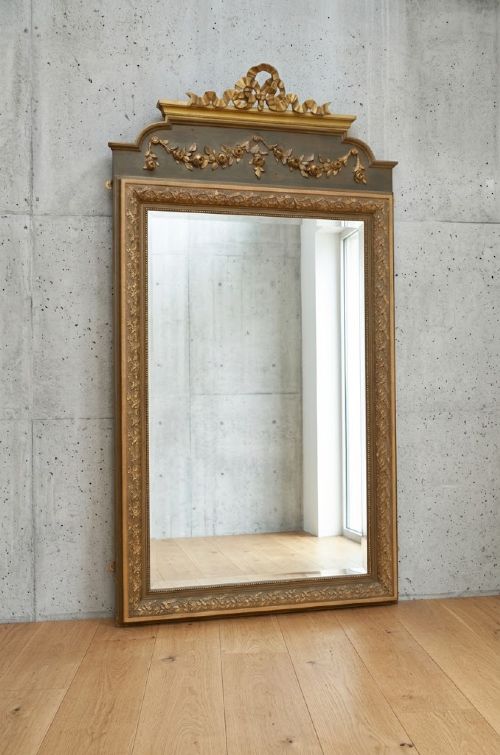
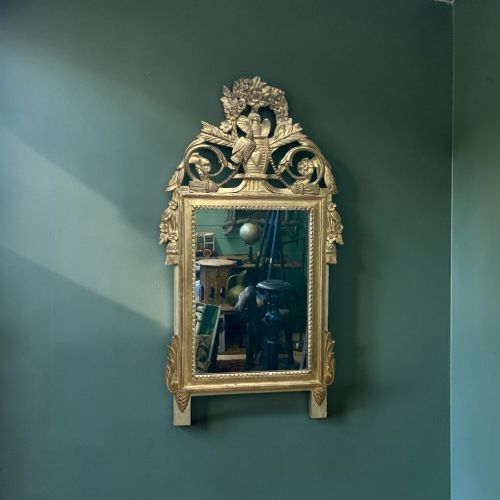
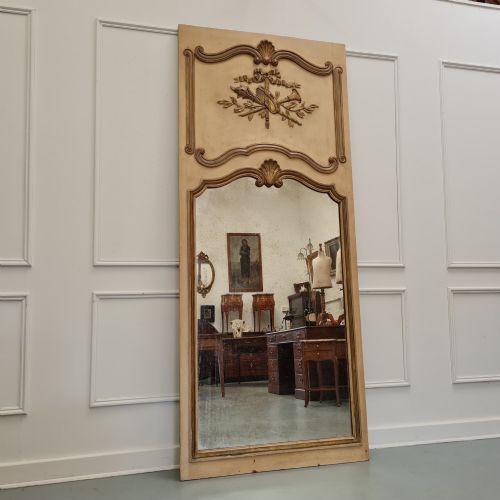
Louis xvi trumeau mirrors are architectural wall panels incorporating oil paintings or carved crests, bringing authentic French Neoclassical elegance to an interior.
Louis XVI Trumeau
A louis xvi trumeau combines a wall mirror with an integrated painted panel or decorative carving, designed to sit flush against the wall of a formal reception room. These pieces originate from France and span the eighteenth, nineteenth, and early twentieth centuries, encompassing genuine period examples as well as later revival interpretations.
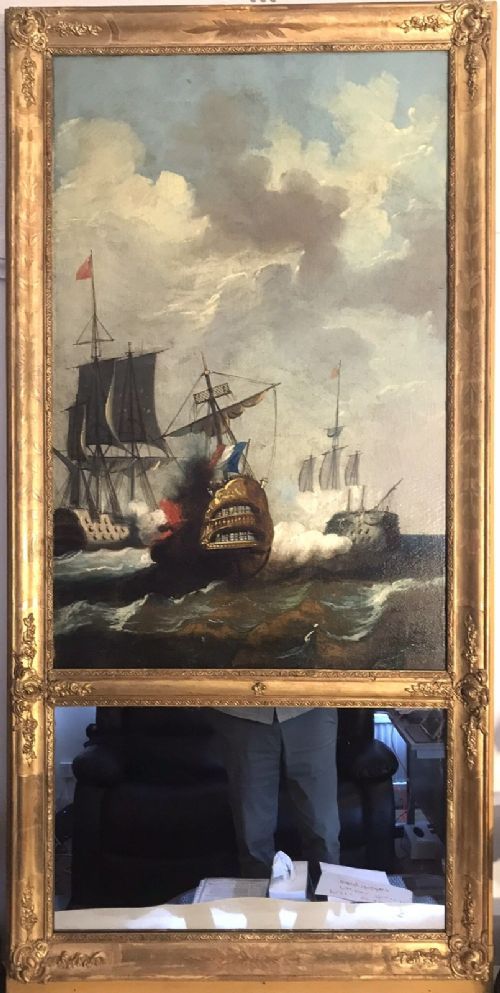
The versions most commonly encountered on this page date from the nineteenth century, reflecting the enduring popularity of French Neoclassical and Louis XVI styles. They appear in various forms, including tall pier mirrors, console combinations, and overmantel pieces, often featuring pastoral scenes or seascapes set above the glass plate.
How they were made
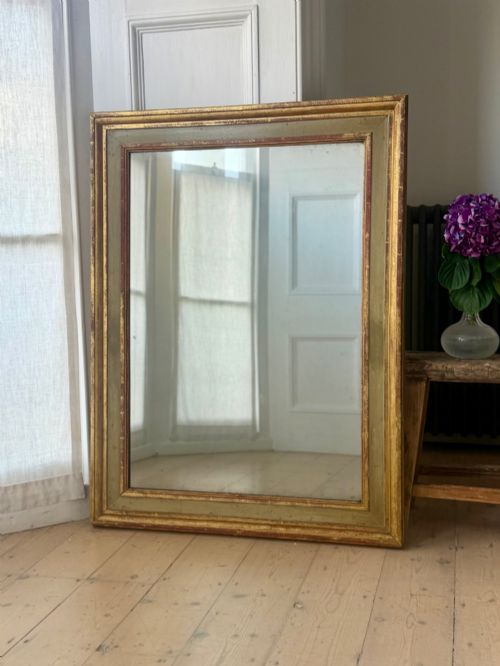
Makers constructed the frames from carved wood and gesso, applying gold leaf, parcel gilt, or olive green and neutral paint finishes to achieve the desired decorative scheme. These surfaces were frequently layered over time, combining carved wooden elements with delicate gesso mouldings to frame the upper artwork and lower glass.
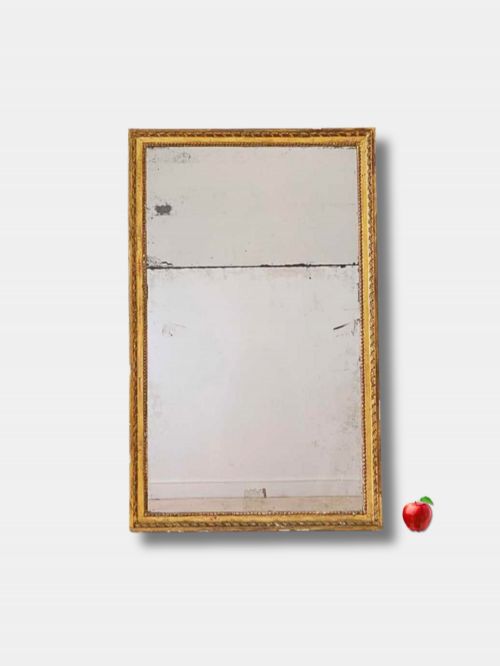
The mirrors utilise original mercury glass plates, which exhibit characteristic foxing and deep reflection distinct from modern silvered glass. Upper panels house oil paintings on canvas or wood depicting subjects such as galleons at sea, integrated directly into the architectural woodwork of the frame.
Listings feature wood, gesso, and mercury glass across periods from the eighteenth century to the early twentieth century.
What varies in quality
Quality rests in the harmony of the proportions and the crispness of the carved wood and gesso details around the crest and borders. Fine examples demonstrate skilful hand-carving and balanced integration between the mirror plate and the painted upper panel, rather than heavy or hurried execution.
The integrity of the original surface finish, whether giltwood or painted parcel gilt, significantly influences the character of the piece. Trumeaus retaining their original mercury glass plates and untouched painted panels hold greater visual coherence than those with later replacements.
The Louis XVI Trumeau Glossary
- Trumeau
- An architectural mirror panel designed to fit the space between windows, often featuring an upper oil painting or carved motif.
- Mercury glass
- An early type of silvered glass created by pouring a mercury amalgam between double-walled glass blown spheres, known for mottled ageing.
- Giltwood
- Timber that has been coated with a thin layer of gold leaf over a prepared gesso and bole ground.
- Pier mirror
- A tall mirror specifically proportioned to hang on the wall space between two windows.
- Parcel gilt
- A decorative technique where only specific raised portions of a painted or stained wooden surface are gilded.
Louis XVI Trumeau: Frequently Asked Questions
What is a trumeau mirror?
A trumeau mirror is a traditional French architectural wall piece that combines a looking glass with an integrated decorative painting or carved wooden panel above.
Originally built into the boiserie panelling of period rooms, these mirrors serve to reflect light while introducing pictorial or sculptural art into the wall elevation.
How do I hang a heavy trumeau?
Because these pieces are constructed from solid wood, gesso, and glass, they require robust structural support anchored directly into wall studs.
Professional mirror installers typically utilise heavy-duty french cleats or steel brackets to distribute the substantial weight safely along the wall.
Are the paintings original to the frame?
Many trumeaus retain their original oil paintings, such as classical landscapes or seascapes, integrated directly into the upper wooden panel during construction.
Some nineteenth-century revival examples also incorporate period-style artwork chosen to complement the architectural proportions of the painted wooden frame.
How do I identify mercury glass?
Mercury glass is distinguished by characteristic dark speckling, uneven reflection, and a deep, cloudy backing caused by the historic amalgamation technique.
This distinct ageing pattern differs noticeably from the bright, uniform reflection found in modern silvered mirror plates.