



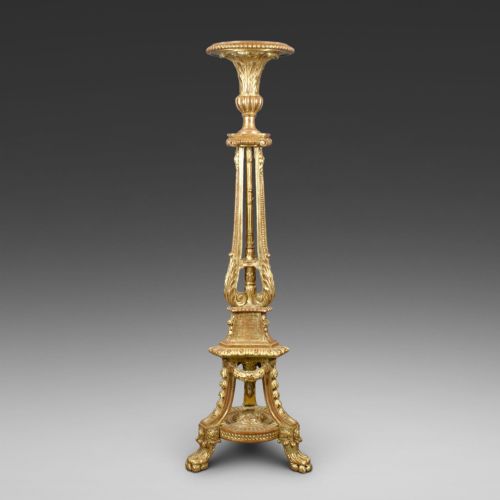


Gold Torchere Stand
A gold torchere stand brings height and brilliant surface to a corner, lifting a lamp, plant, or sculpture above the room.
Gold Torchere Stand
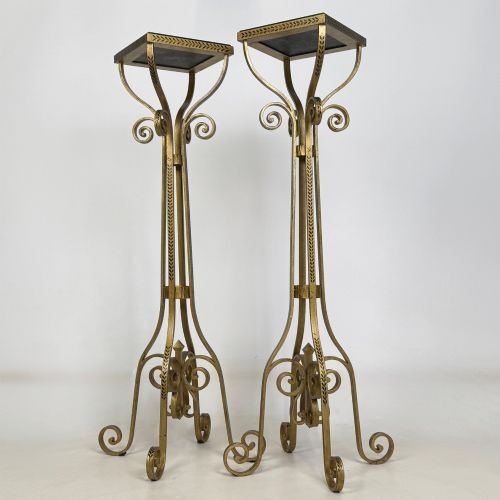
A gold torchere stand is a tall, slender support designed to hold a light, plant, or figure, taking up minimal floor space while making a strong vertical statement. Buyers searching for a gold torchere stand will find pieces ranging from the eighteenth century to the twentieth century, with nineteenth-century Italian and French examples appearing frequently.
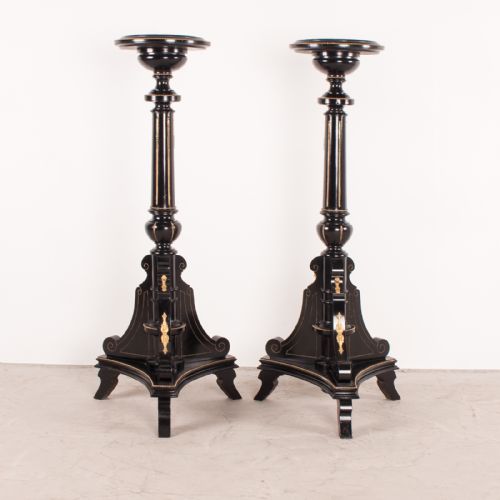
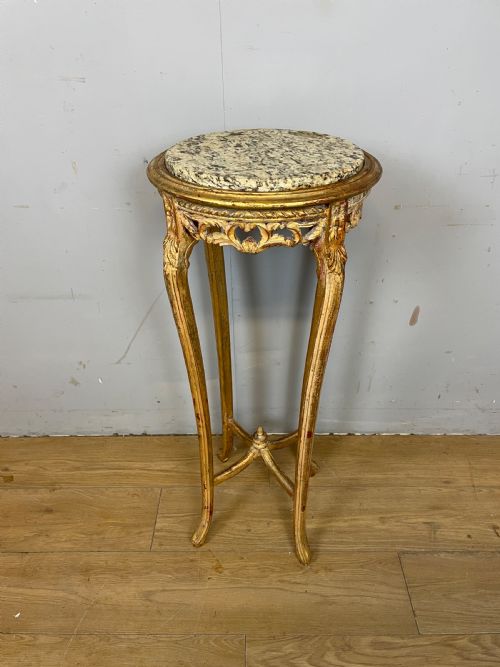
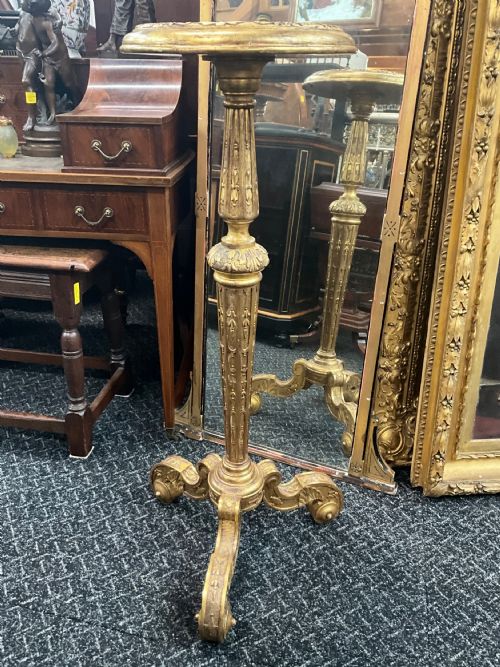
The forms vary from triform pedestals and carved standard lamps to figural stands and marble-topped plant holders. Styles span Venetian Baroque, French Neoclassical, and Arts and Crafts, reflecting both grand European drawing rooms and lighter decorative interiors.
Many of these stands serve multiple purposes, functioning as torchere and pedestal combinations or occasional tables. Their slender proportions make them versatile for corners or beside seating.
Materials and Technique
Makers shaped these stands primarily from carved wood, applying layers of gesso to create smooth surfaces for gilding. Gold leaf and paint provide the luminous finishes seen across Italian and French pieces.
Some examples incorporate marble tops, ebonised wood, or polychrome paint, introducing contrasting textures and colours to the gilded structure. Structural joinery and hand-carving define the construction of the earlier eighteenth- and nineteenth-century pieces.
Listings feature pieces spanning the eighteenth to the twentieth century, utilising giltwood, gesso, marble, and polychrome paint.
Craftsmanship and Surface
Quality rests in the depth of the carving and the integrity of the original surface. Crisp detail in the gesso and wood carving distinguishes finer workshop production from simpler output.
The preservation of original gold leaf, polychrome paint, or parcel-gilt finishes determines the visual power of the stand. Stands with intact, untouched surfaces hold greater presence than those with heavy later repainting.
The Gold Torchere Stand Glossary
- Torchere
- A tall stand or ornamental candlestick designed to carry a light source. The form evolved from functional lighting supports into decorative display furniture.
- Giltwood
- Wood that has been covered with thin sheets of gold leaf or gold dust. It provides a reflective surface that catches artificial and natural light.
- Gesso
- A plaster mix applied to wood surfaces as a preparation for painting or gilding. It allows craftsmen to model crisp decorative details before applying gold leaf.
- Polychrome
- Painted in several colours. This finish appears frequently on figurative Venetian stands alongside parcel-gilding.
- Triform
- Having three sides or a triangular base. This configuration provides stability for tall, slender pedestals.
Gold Torchere Stand: Frequently Asked Questions
What is a gold torchere stand used for?
These stands serve as elevated platforms for lighting, plants, urns, or small sculptures. Their height draws the eye upward and illuminates dark corners of a room.
Historically, they held candles or oil lamps to light grand interiors. Today, they function primarily as decorative display furniture in living spaces and hallways.
How do I identify Italian pieces?
Italian stands often feature carved figural elements, such as Venetian figures, combined with rich polychrome paint and parcel-gilt surfaces. The Baroque and Neoclassical influence remains strong in their ornamental detail.
Makers in Venice and other Italian centres utilised local lime or softwoods, finished with gesso and gold leaf. The sculptural quality often surpasses that of simpler regional pieces.
Are marble tops original?
Many plant stands and occasional tables incorporate inset marble tops to provide a durable, cool surface for plants or water.
These tops were integrated into the design to handle damp pots or heavy ornaments. Inspecting the rebate where the marble rests helps confirm its period relation to the base.
How do I care for giltwood?
Giltwood requires a stable environment away from direct sunlight and high moisture, which can damage the delicate gesso and gold leaf. Dusting should be done gently with a soft, dry brush.
Avoid liquid cleaners or polishes, as they strip the gold leaf and soften the gesso layer underneath. Gentle handling preserves the original surface for the future.