
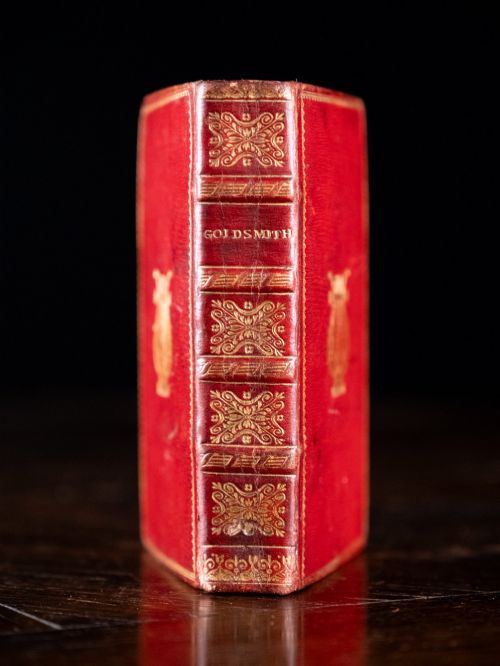

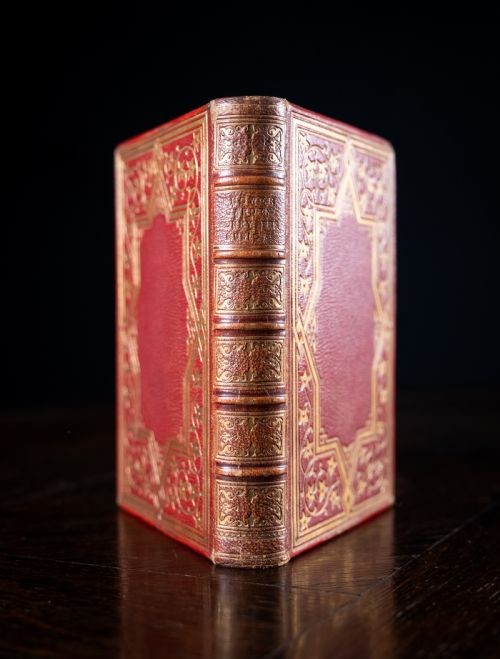
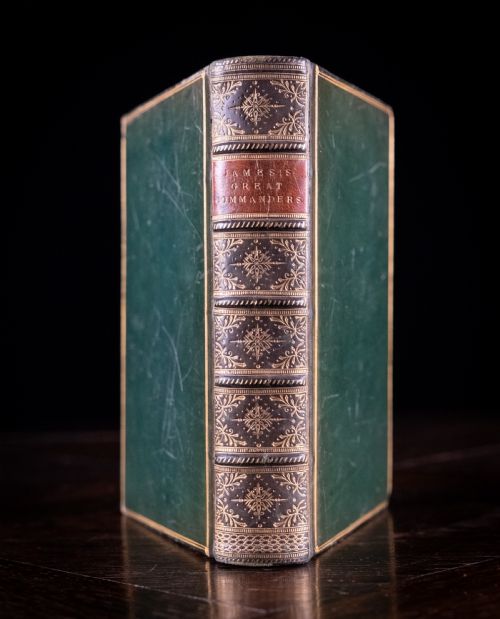

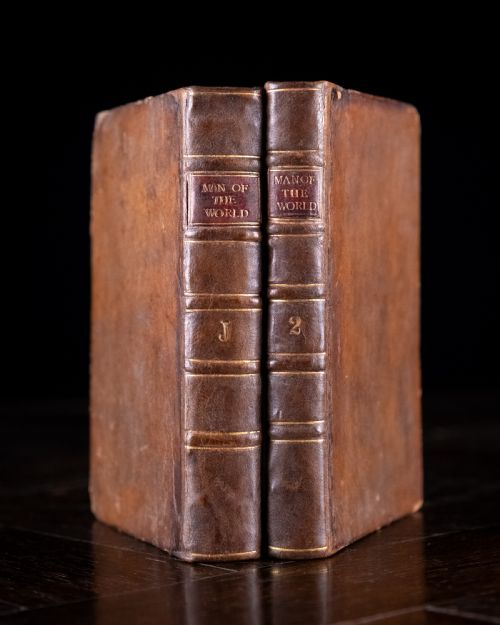


Gold Tooled Books
Gold tooled books are bound volumes carrying impressed metallic decoration that brings shelf presence and history to any room.
Gold Tooled Books
When you search for gold tooled books, you encounter volumes featuring intricate metallic embellishments applied to leather bindings across various historical periods. The selection on this page ranges from single antique volumes and multi-volume sets to desk accessories and book-tables.
Most items you meet here date from the eighteenth century through to the early twentieth century, spanning Georgian, Regency, and Victorian eras. You will find works by authors such as Oliver Goldsmith, Sir Walter Scott, and Goethe, alongside specialised collections and miniature editions.
The form varies from individual volumes of poetry and history to substantial sets like the Waverley Novels. Alongside traditional books, the inventory includes desk blotters and specialised furniture designed to display bound volumes.
Materials and construction
Binders utilised natural materials including calfskin leather, paper, cardboard, and wood to construct the structure and covers of these volumes. Marbled paper frequently appears on endpapers or inside covers, adding colour and pattern.
Workers applied gold leaf to the leather using heated metal tools and hand-operated presses to impress gleaming designs into the surface. This technique created the metallic decoration that defines the exterior of the bindings.
Listings include items from the eighteenth, nineteenth, and early twentieth centuries, utilising leather, paper, gold leaf, and wood.
Assessing quality and finish
The crispness and depth of the metallic impression on the leather surface separate superior examples from plainer items. Sharply defined tooling demonstrates greater skill from the original binder.
Uniformity across multi-volume sets and the preservation of the original leather and paper components influence the overall standard of each piece.
The Gold Tooled Books Glossary
- Calfskin leather
- A fine, smooth leather derived from a calf, commonly utilised for high-quality bookbindings during the eighteenth and nineteenth centuries. It takes gold tooling particularly well due to its fine grain.
- Gilt
- A thin layer of gold applied to the surface of leather or page edges. This finish protects the material beneath while providing a bright metallic shine.
- Marbled paper
- Paper decorated with a colourful patterned swirl resembling marble, frequently used for endpapers inside the covers of antique books. Artisans created these patterns by floating pigments on a liquid bath.
- Miniature book
- A small volume produced on a reduced scale, often measuring only a few inches in height. These compact items required precise hand craftsmanship to achieve legible text and detailed bindings.
Gold Tooled Books: Frequently Asked Questions
How should I clean antique leather bindings?
Dust bindings gently with a dry, soft cloth to remove surface particles without damaging the fragile material.
Avoid using modern chemical cleaners or excessive moisture, which can dissolve the gold leaf and ruin the leather surface.
What periods do these books span?
The available volumes range from eighteenth-century editions through Regency and Victorian periods up to the early twentieth century.
Each era brought distinct binding styles, typography, and tooling patterns that help identify the date of production.
Can I read these antique books?
Many volumes remain structurally sound and suitable for careful reading, provided you support the spine properly while opening them.
Fragile or miniature editions require extra care to prevent stress on the historical binding and paper pages.
How are multi-volume sets assembled?
Publishers and binders produced multi-volume sets uniformly so that shelves maintained a consistent and orderly appearance.
Matching bindings and continuous numbering across the volumes indicate a complete set from the original publisher or bindery.