


Gold Side Chairs
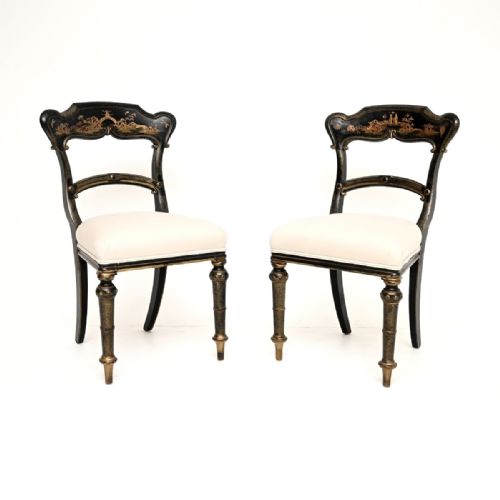
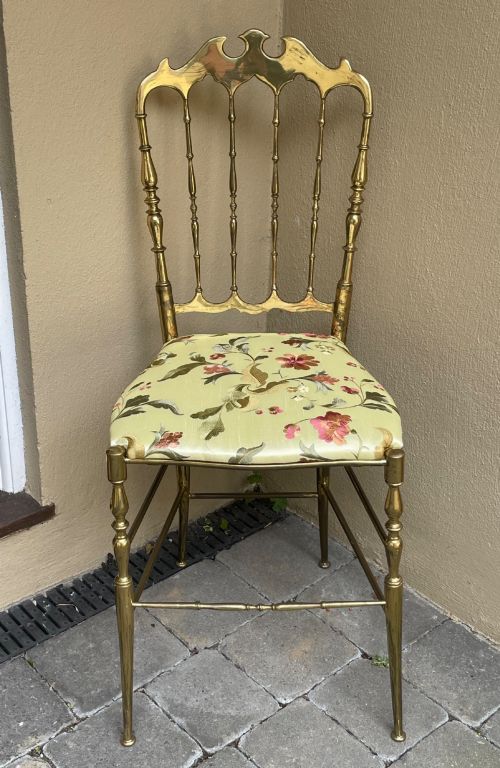
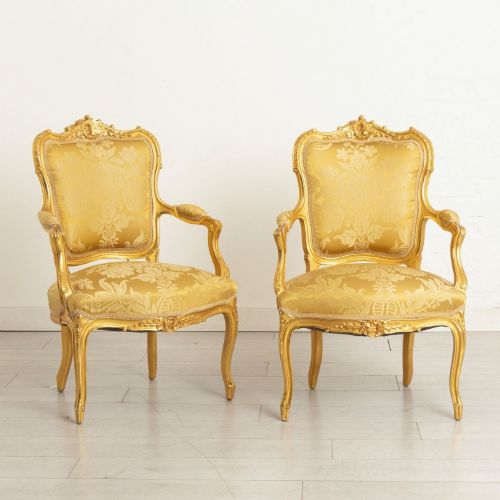
Gold side chairs bring gilt surfaces and fine upholstery into a room, offering practical seating with decorative presence.
Gold Side Chairs
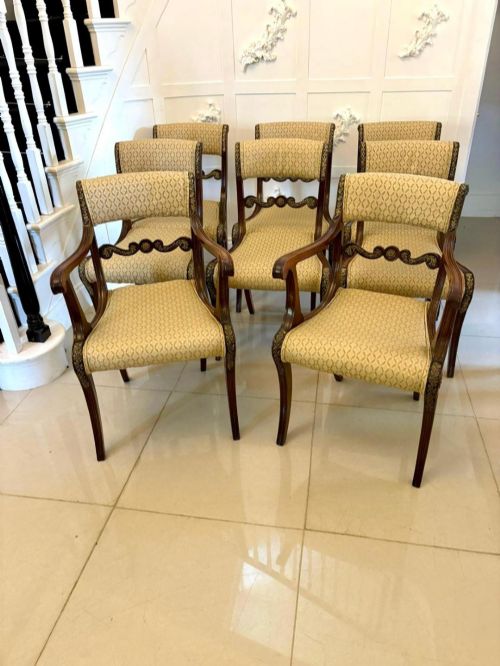
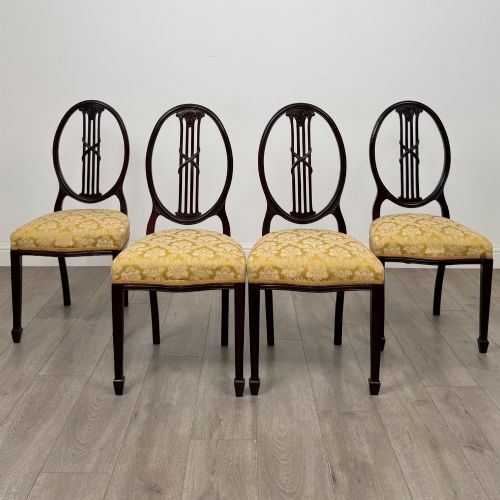
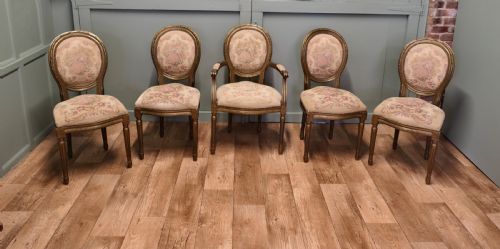
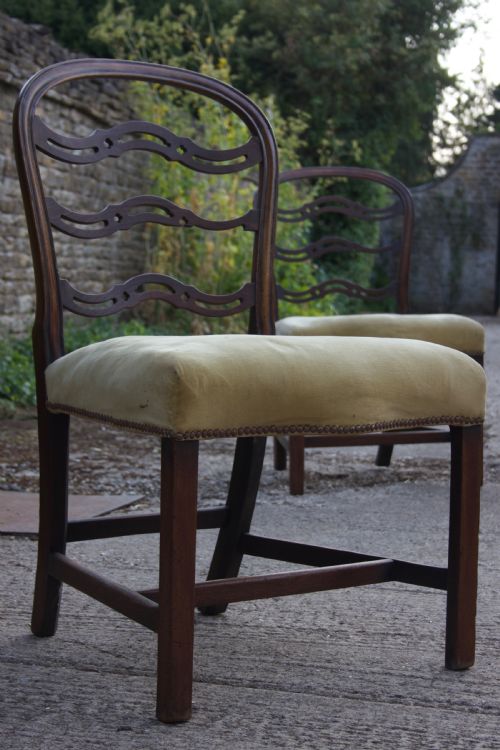
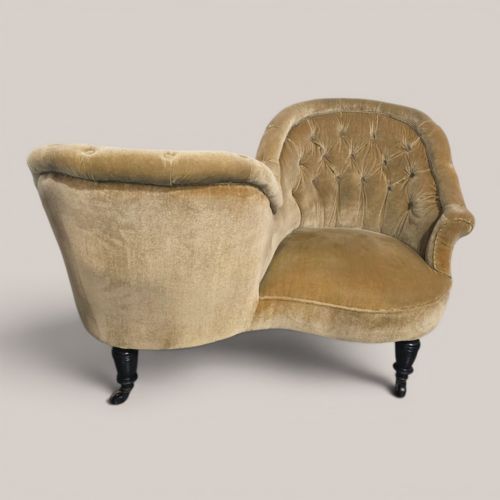
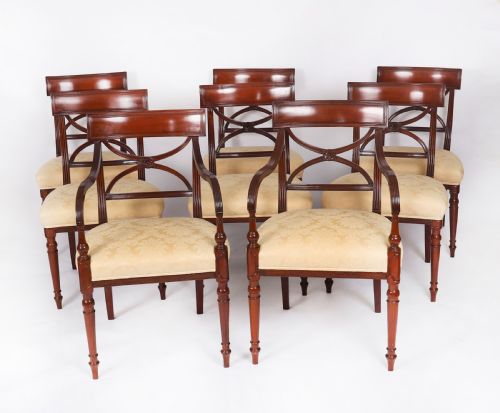
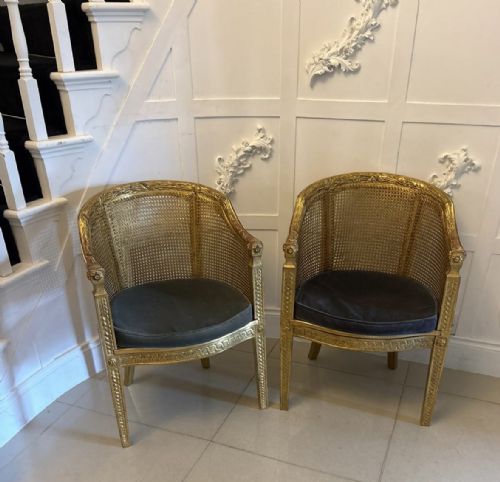
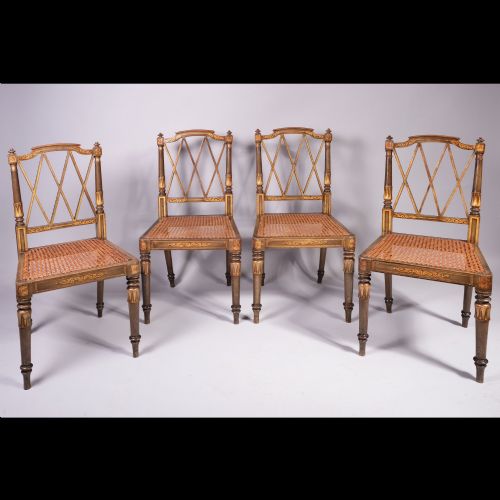
Gold side chairs encompass a range of decorative seating options, primarily appearing here in 19th century, Victorian, Regency, and Edwardian periods. These pieces include specific side chair formats alongside related forms like salon chairs, occasional chairs, and bedroom chairs.
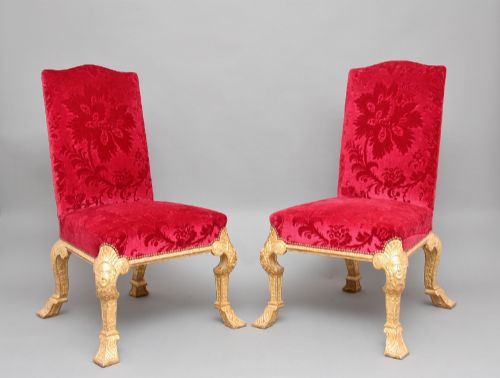
The materials and styles span giltwood frames, painted finishes, and French influences such as Louis XVI and Rococo, alongside British Regency and Victorian interpretations. Buyers frequently encounter French giltwood frames paired with silk fabric, damask, or velvet upholstery.
Makers and regional workshops produced diverse variations, from Anglo-Indian carved gilt wood examples to simulated bamboo and neoclassical revival designs. The selection balances formal salon seating with lighter occasional pieces suited to various interior settings.
Materials and construction
Construction relies heavily on hardwood frames carved from timber such as mahogany, walnut, or beech, which are then gilded, painted, or lacquered. Giltwood surfaces involve the application of gold leaf to a prepared gesso and bole ground over the wooden base.
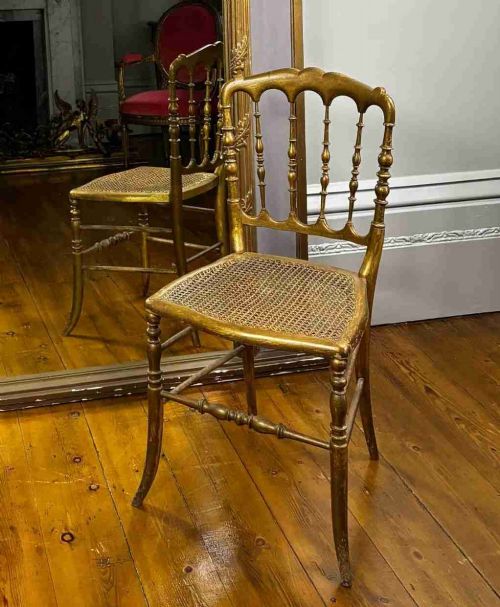
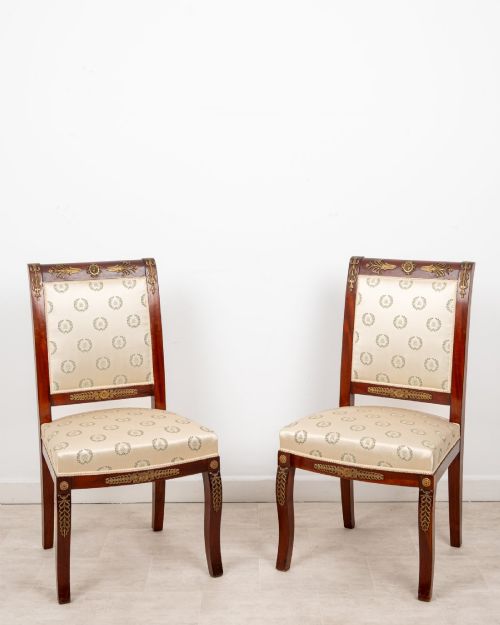
Upholstery methods utilise traditional stuffing and webbing techniques to support coverings of silk, velvet, damask, or plain fabric. Details such as ormolu mounts, turned legs, and caned seats appear across various pieces to enhance structural and visual texture.
Listings feature 19th century, Victorian, and Regency periods alongside Edwardian examples in giltwood, walnut, and mahogany.
Assessing quality and craftsmanship
Quality rests significantly in the crispness of the hand-carving on the wooden frame and the integrity of the original or period gilding. Superior examples display deep, well-defined detail in scroll arms, moulded rails, and applied ornaments rather than soft or cast resin substitutes.
The choice of secondary woods and the joinery of the frame determine long-term durability. Refurbishment standards also matter, as professional re-upholstery using period-appropriate materials preserves the seating profile and historical character of the chair.
Blyth & Sons
The Gold Side Chairs Glossary
- Giltwood
- Wood that has been coated with gold leaf or powder. This finish is typical of formal 19th century French and English salon seating.
- Damask
- A reversible figured fabric with a pattern woven into the cloth. It frequently appears as upholstery on Louis XVI style seating.
- Ormolu
- Gilt bronze mounted to furniture for decoration. It is commonly found on French revival side chairs from the 19th century.
- Caned
- Woven rattan or split cane used for seats or backs. This technique provides a lighter, resilient surface seen on Regency occasional chairs.
- Bergere
- An enclosed upholstered armchair with wooden framing. These chairs typically feature padded armrests and a loose cushion.
Gold Side Chairs: Frequently Asked Questions
Where were gold side chairs placed historically?
These chairs were primarily utilised in formal reception rooms, drawing rooms, and private salons where visual display mattered. They served as occasional seating rather than heavy daily chairs.
In domestic interiors, lighter frames also functioned in bedrooms and boudoirs as dressing or side seating.
How do I identify a French style frame?
French style frames often exhibit carved motifs such as ribbons, fluted legs, and giltwood finishes referencing Louis XVI or Rococo designs. The proportions tend to emphasise elegant curves and decorative crest rails.
English interpretations of these continental styles usually integrate local cabinet-making traditions into the structural joints.
Can I use these chairs for daily dining?
Most gold side chairs are relatively light and intended for occasional use rather than robust family dining. The delicate gilt surfaces and upholstered silk or velvet fabrics require careful handling.
Selecting models designated specifically as dining chairs ensures appropriate structural reinforcement for regular sitting.