

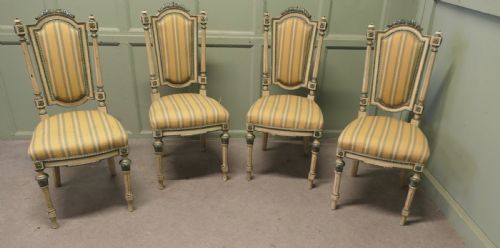
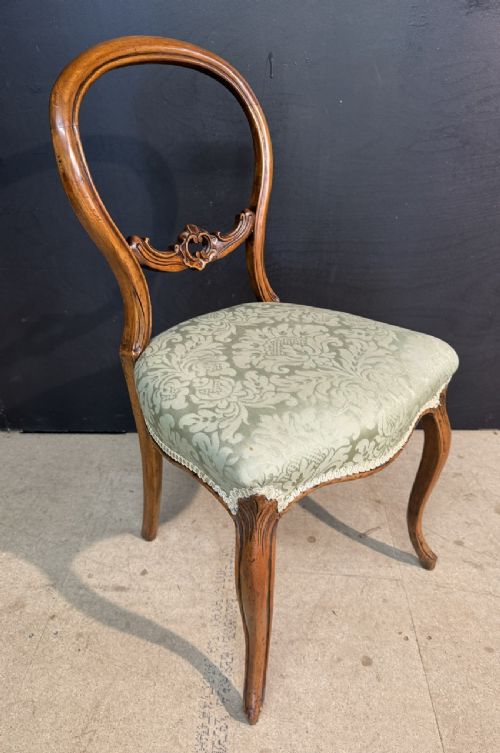
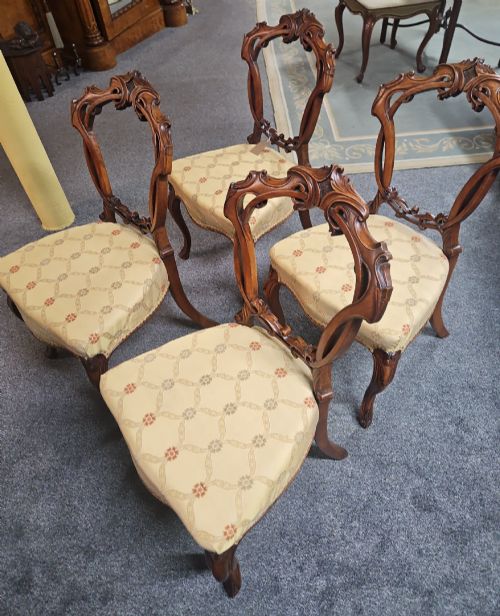
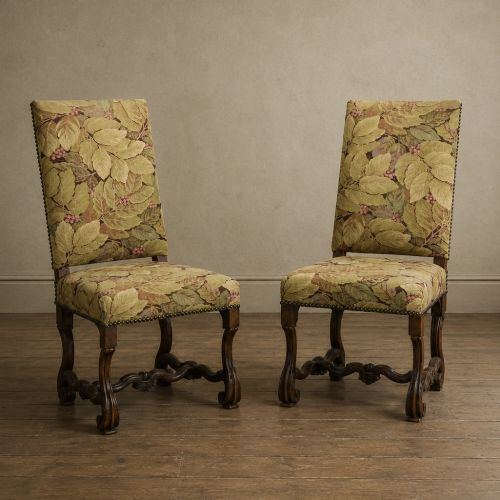
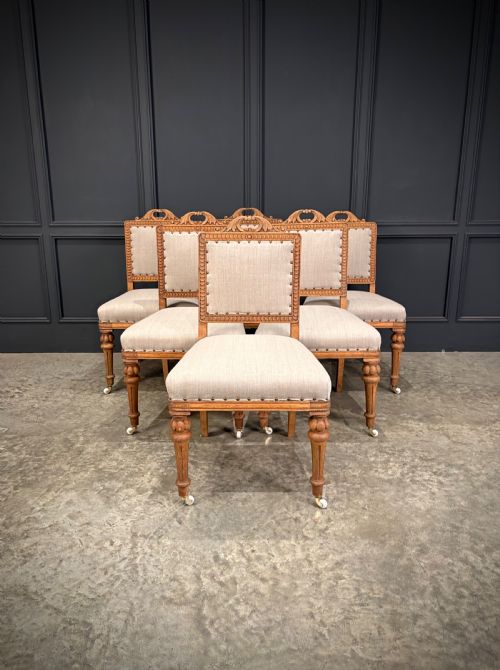


Carved French Dining Chairs
These carved french dining chairs combine historic continental refinement with robust seating, offering robust character and ornate woodwork for traditional interiors.
Materials and Construction Techniques
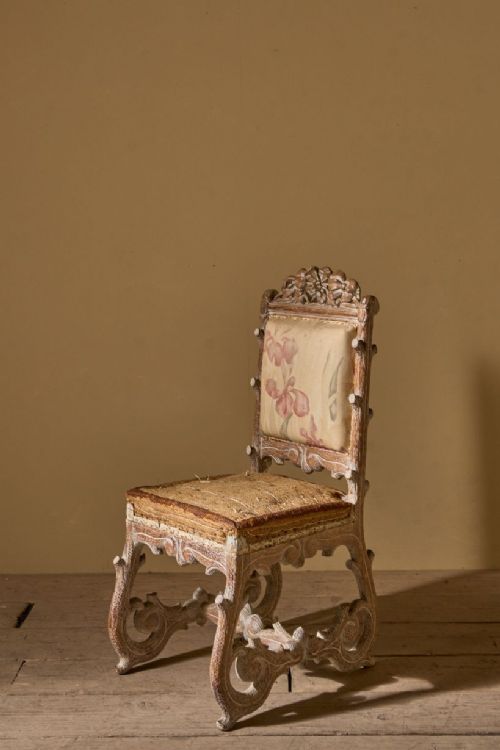
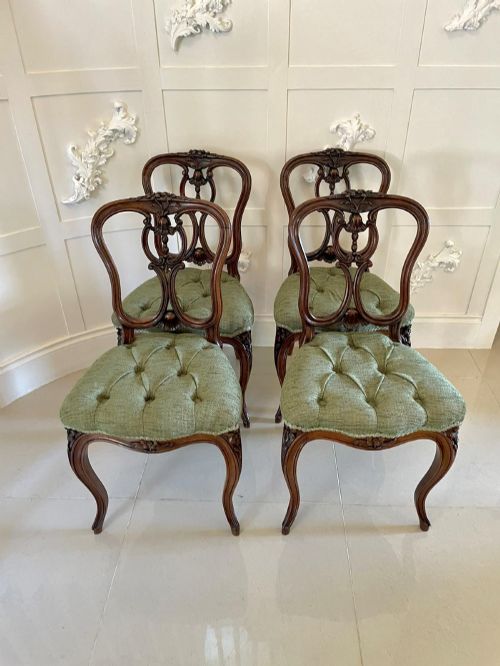
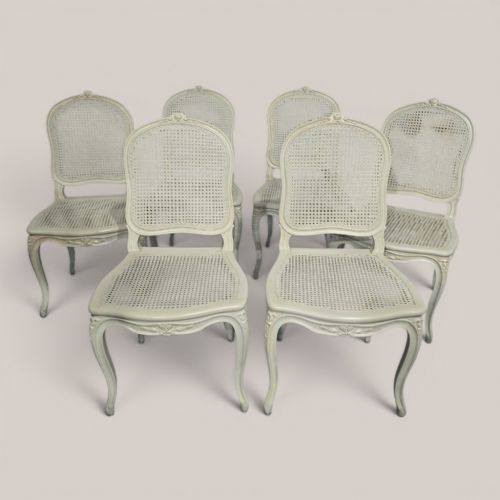
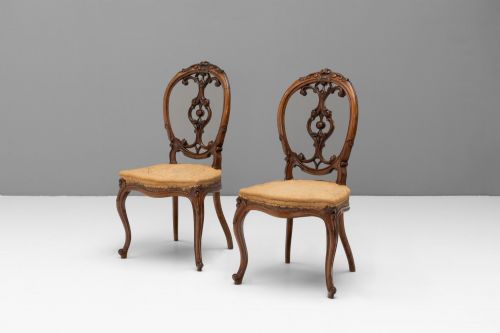
Makers utilised dense hardwoods such as walnut and oak for primary frames, providing structural stability for intricate hand-carving. Giltwood, painted wood, and simulated bamboo finishes further distinguish the surface treatments recorded in these examples.
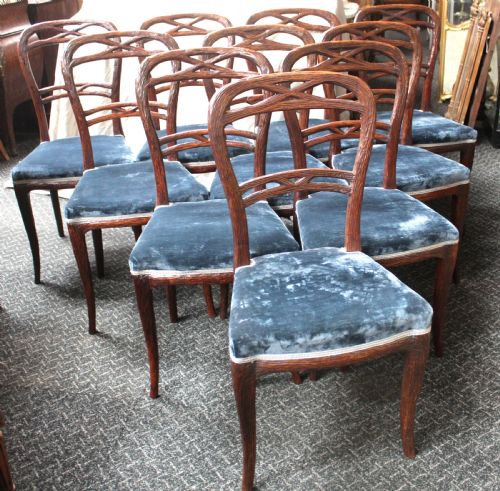
Joinery methods rely on traditional pegged and tenoned joints to support curved components like cabriole legs. Upholstered sections incorporate textile, leather, and fabric secured over padding, while other variations employ woven rush or caning.
Assessing Quality and Craftsmanship
Quality rests in the depth, crispness, and continuity of the hand-carved ornamentation across the wooden frame. Superior pieces exhibit precise joinery at stress points, such as the junctions of cabriole legs and seat rails, ensuring enduring stability.
The choice of primary timber and the integrity of applied finishes, whether original paint, gilding, or polished walnut, dictate the visual refinement of each chair. Matching sets demonstrate greater uniformity in grain and carving detail than assembled groups.
Several dining chairs feature carved animal hoof feet, giving formal seating a delightfully unexpected stride.
The Carved French Dining Chairs Glossary
- Cabriole leg
- A furniture leg that curves outward at the knee and tapers inward to an ankle, frequently terminating in a hoof or scroll foot.
- Bergere
- An enclosed upholstered armchair with wooden framing exposed around the sides and back.
- Caning
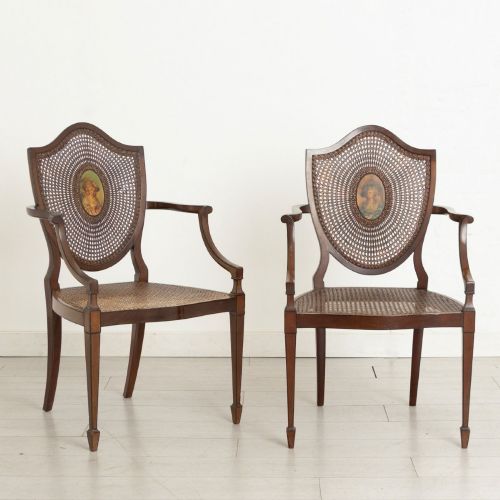
- A seating surface woven from split rattan or cane strips, providing flexible support within a wooden frame.
- Louis XV style
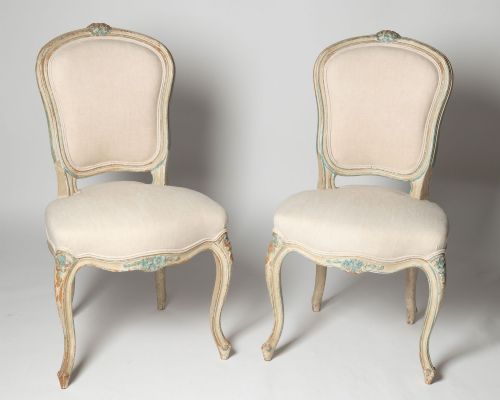
- A design aesthetic characterised by asymmetrical curves, cartouche motifs, and naturalistic floral carving.
- Rush seat
- A seating surface formed by twisting dried marsh rushes into a durable cord woven tightly across the chair frame.
Carved French Dining Chairs: Frequently Asked Questions
How do I care for antique carved wooden chairs?
Maintain timber frames by applying occasional appropriate wax polish to nourish the grain and prevent the wood from drying out. Keep upholstered and caned sections away from direct heat sources to protect natural fibres.
Avoid excessive moisture during cleaning, using only a soft dry cloth for regular dusting of intricate carved crevices.
Are these chairs suitable for daily dining use?
Many examples are structurally robust enough for regular dining when constructed from durable hardwoods like walnut or oak. Checking the stability of joints beneath the seat ensures safe daily service.
Pairs or smaller sets function well as occasional seating, while larger matching sets accommodate everyday family meals.
How can I tell different French furniture styles apart?
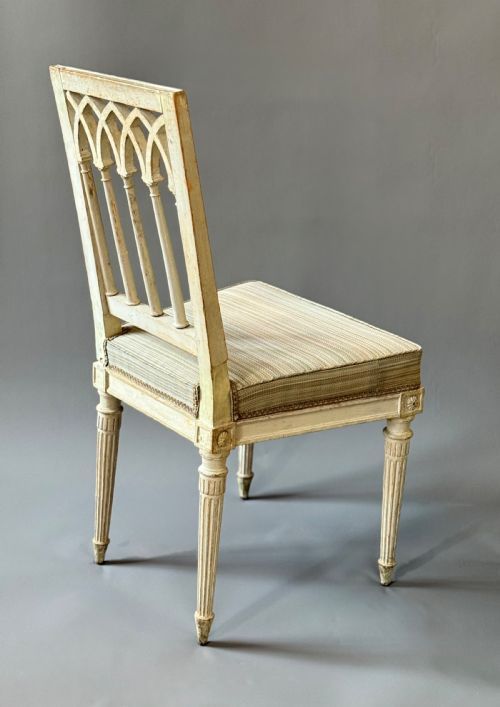
Louis XV pieces typically display flowing asymmetrical curves and organic leaf or floral carvings on cabriole legs. Louis XVI designs introduce geometric symmetry, straight fluted legs, and oval medallion backs.
Provincial and ladder back variants offer simpler regional interpretations with rustic rush or wooden seats.
What is the difference between side chairs and armchairs?
Side chairs are built without armrests, designed primarily to maximise seating space around a dining table. Armchairs include supportive side framing for enhanced comfort at the head of the table.
Both types frequently share identical carving motifs and leg styles within matching sets.