


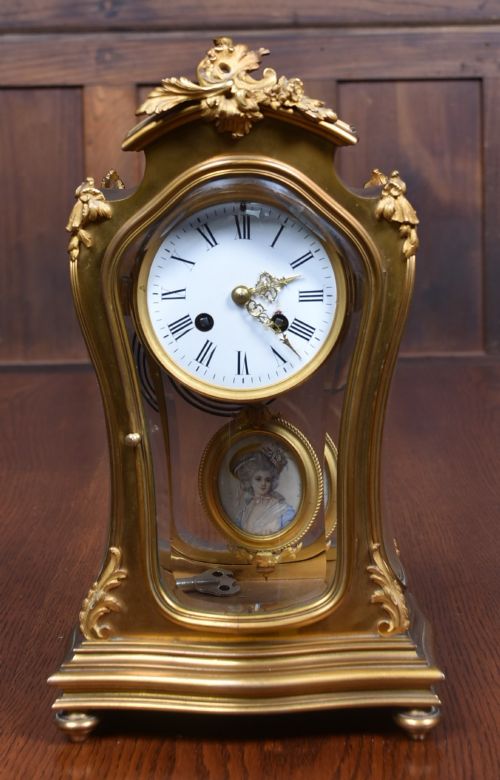
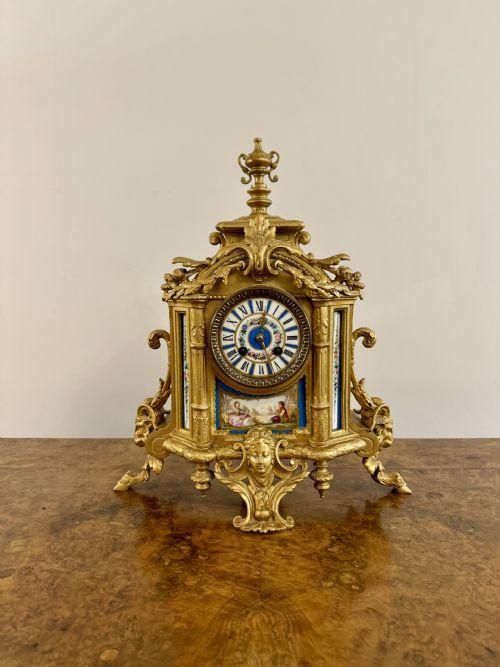
Gold Rococo Clock
A gold rococo clock brings together flowing asymmetrical ornament and bright metallic lustre, offering a striking centrepiece for a mantel or shelf.
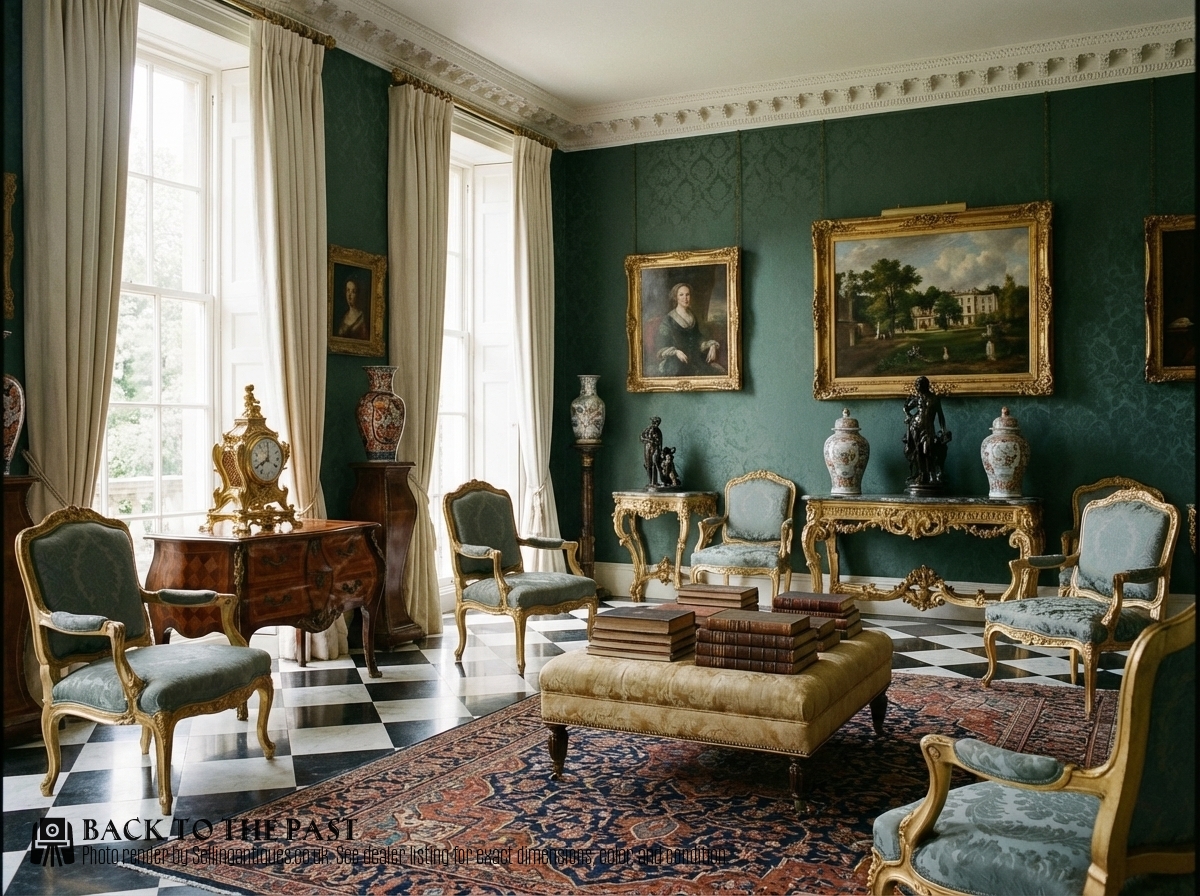
Gold Rococo Clock
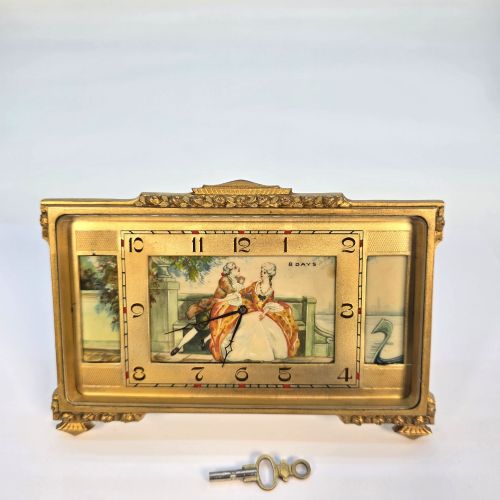
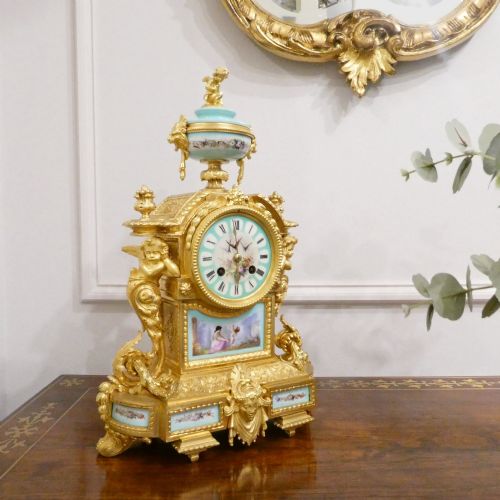
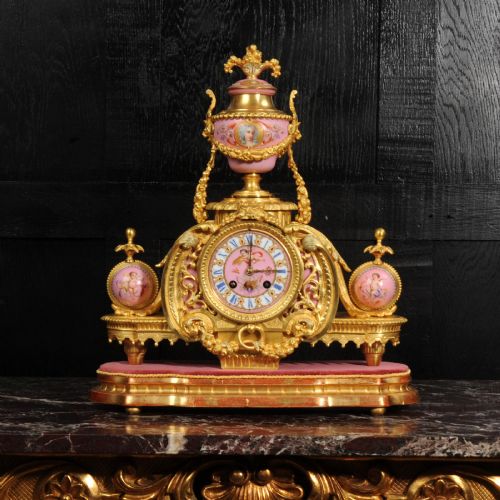
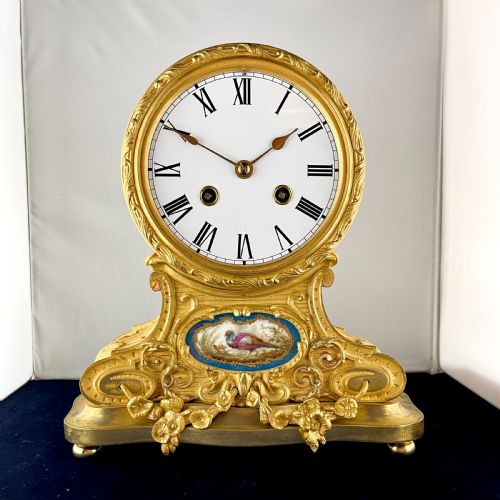
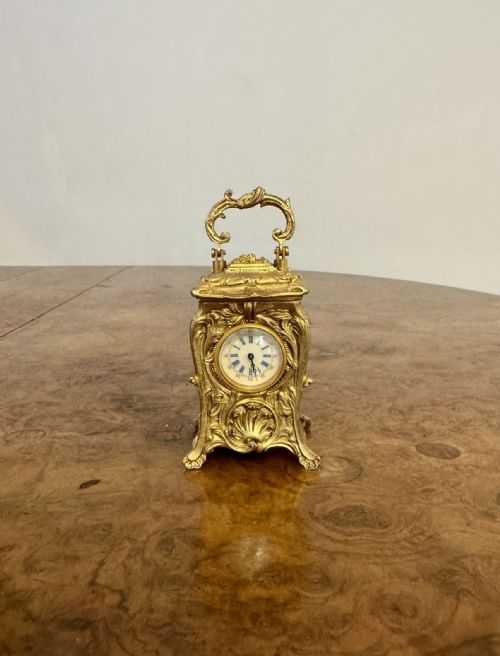
A gold rococo clock typically takes the form of a mantel clock or clock garniture set, drawing on French Rococo Revival styles from the nineteenth century. These pieces display elaborate scrolls, floral motifs and asymmetrical forms rooted in the Louis XV tradition.
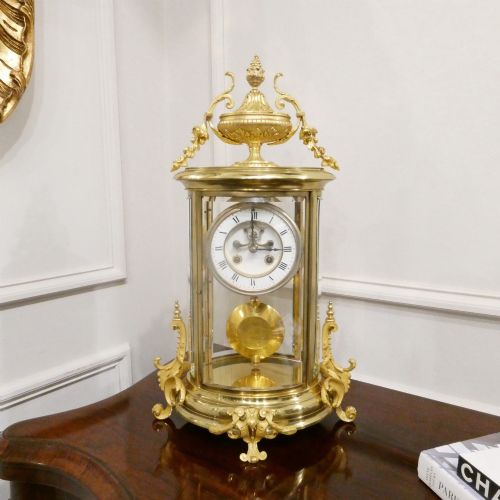
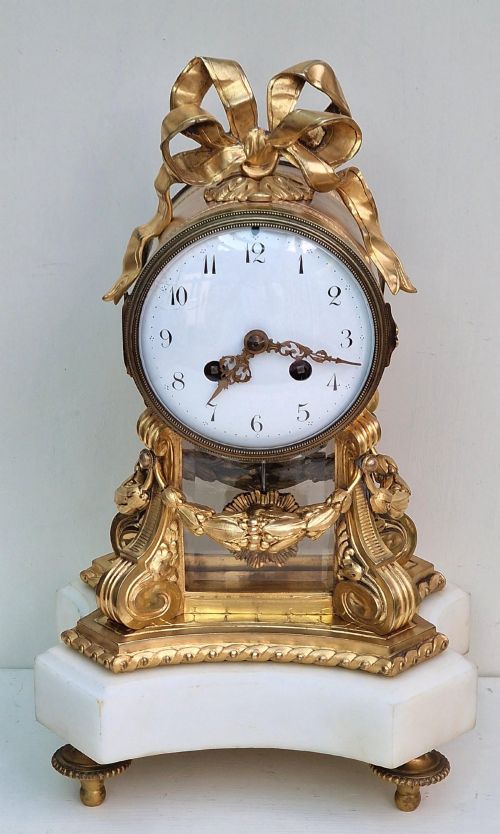
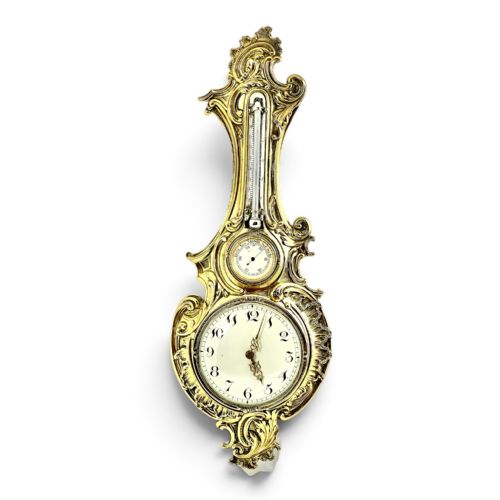
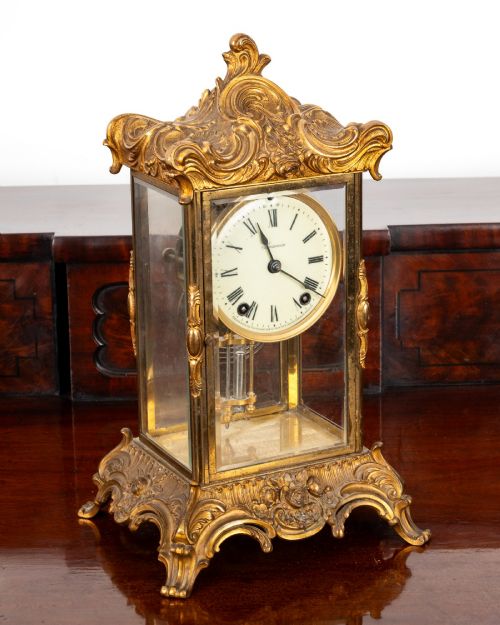
Most examples originate from French workshops and makers of the period, though English makers also produced similar designs. Alongside standard mantel clocks, variations include four glass models, desk clocks and wall clocks.
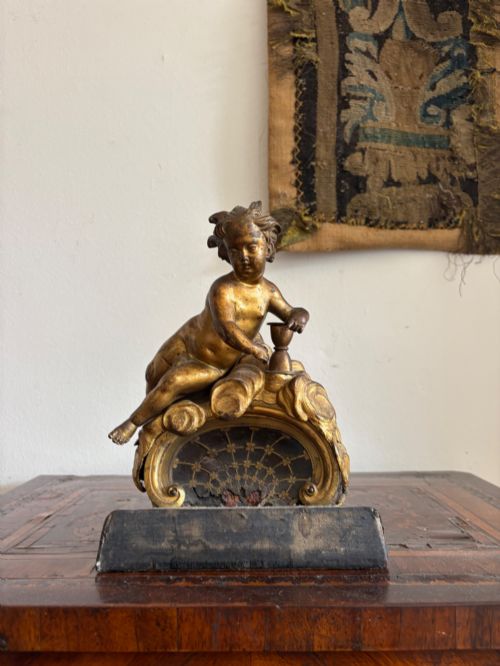
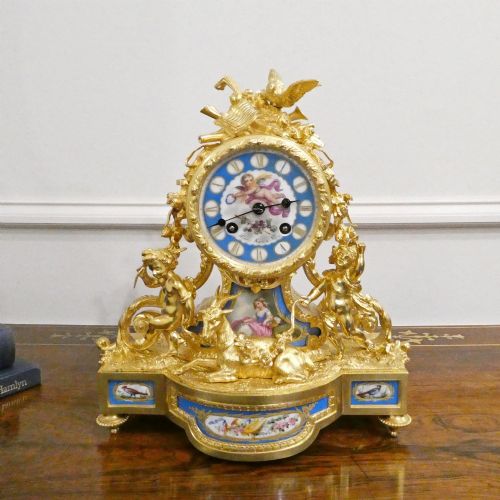
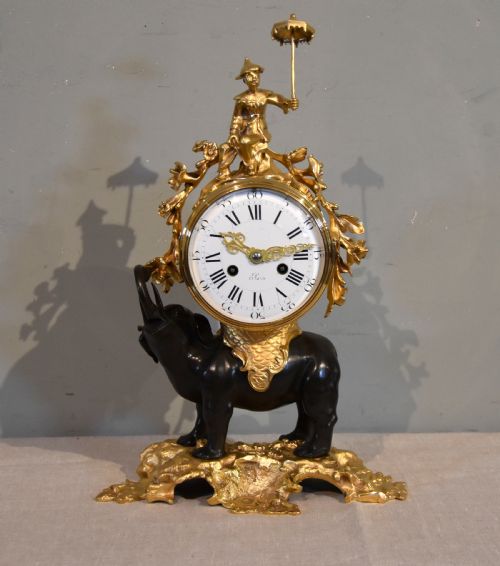
The aesthetic prioritises ornate visual impact, frequently incorporating figural elements such as putti, cherubs or animal forms alongside the clock face.
How they were made
These clocks rely heavily on metals such as gilt bronze, ormolu, brass and gilt brass, cast and chased to create intricate sculptural detail. Gilding techniques provide the characteristic bright metallic finish across the cases and mounts.
Many examples integrate delicate secondary materials including Sèvres porcelain panels, enamel dials, glass panels and white marble bases. The movements housed within were produced by specialist clockmakers, often signed on the dial or movement plate.
Elephants occasionally support the clock dial in whimsical nineteenth-century interpretations of the rococo style.
What varies in quality
Quality depends upon the crispness of the casting and the depth of the chasing in the bronze or ormolu work. Finer examples show sharp, well-defined scrollwork and careful hand-finishing rather than soft, mass-produced contours.
The integration of materials also dictates standing, such as the inclusion of hand-painted porcelain plaques or signed movements by notable makers. Complete clock garniture sets with matching candelabras represent a higher tier of production.
Achille Brocot·Samuel Marti·Henry Marc·Japy Frères·Leroy Paris·Leon Message·Jollet et Cie·Delettrez·John Barwise·Le Roy & Fils·Tiffany & Co
The Gold Rococo Clock Glossary
- Ormolu
- Gilt bronze produced by applying a mercury-gilding amalgam to a cast bronze base. This technique creates a durable and luminous golden surface characteristic of fine period pieces.
- Garniture
- A set of matching decorative objects, typically consisting of a clock flanked by matching candelabras or urns. These sets were designed to sit together on a mantelpiece.
- Four glass clock
- A mantel clock housed in a brass or gilt bronze frame with glass panels on all four sides. This construction allows the movement and pendulum to be viewed from multiple angles.
- Putto
- A representation of a plump, naked child, often winged, appearing as a decorative finial or mount on clock cases. They are a common motif in rococo and revival designs.
- Drumhead clock
- A clock featuring a circular dial housing shaped like a drum, mounted on a decorative base. This form appeared frequently during the nineteenth century.
Gold Rococo Clock: Frequently Asked Questions
How do I wind a mechanical clock?
Most antique clocks require a key inserted into the winding holes on the dial to tension the mainspring. Care must be taken not to overwind the mechanism.
Moving the hands should be done gently and strictly in a clockwise direction to avoid damaging the gear train.
Where should I place my clock?
These clocks need a stable, level surface such as a mantelpiece, heavy sideboard or bracket shelf. Vibrations from nearby doors or heavy traffic can disrupt the pendulum.
Direct sunlight and damp environments should be avoided to protect the gilded surfaces and delicate enamel dials.
How do I clean the gilt bronze?
Dusting should be performed regularly using a soft, dry brush to prevent dirt accumulation in the crevices of the rococo casting. Moisture and commercial chemical cleaners must be avoided.
Harsh substances can strip the original mercury gilding or ormolu finish from the bronze base.
Are these clocks accurate timekeepers?
Period mechanical clocks can gain or lose a small amount of time over the course of a week. Fine adjustments to the pendulum regulation nut usually help improve precision.
Professional servicing every few years ensures the vintage gear trains remain clean and functional.