
Gold Overmantel Wall Mirror
A gold overmantel wall mirror brings historic scale and reflective light to a room, drawing the eye with gilded ornament above a fireplace.
Gold Overmantel Wall Mirror
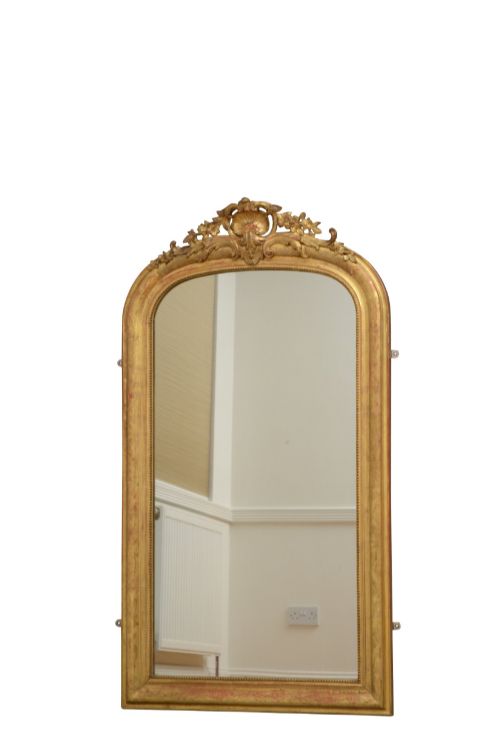
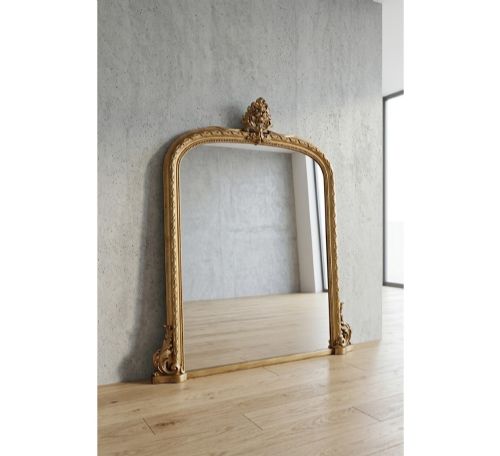
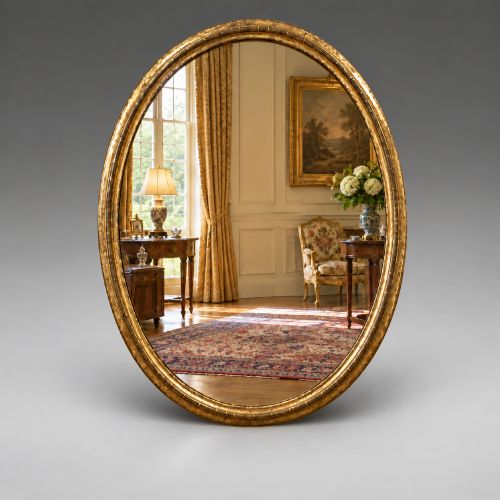
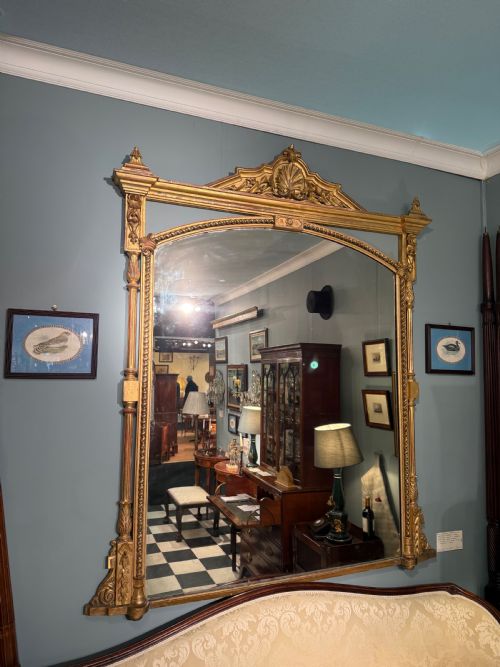
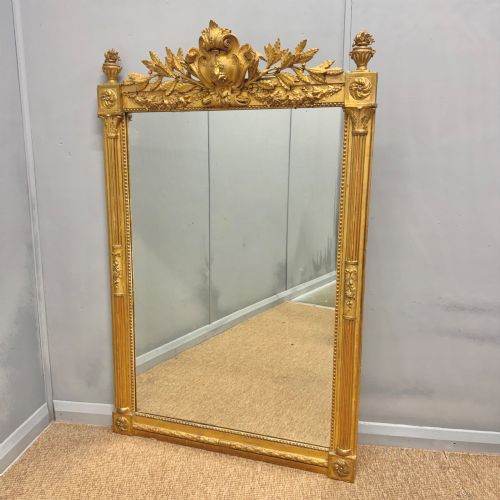
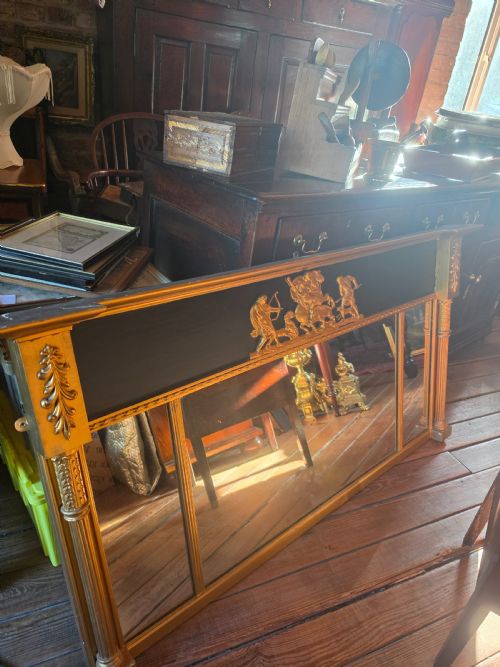
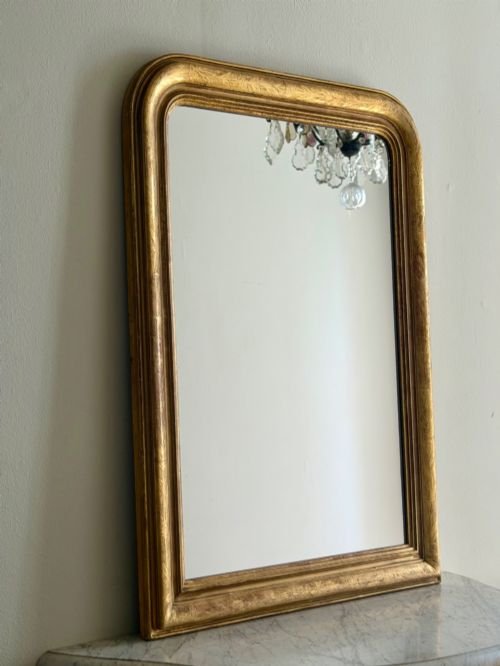
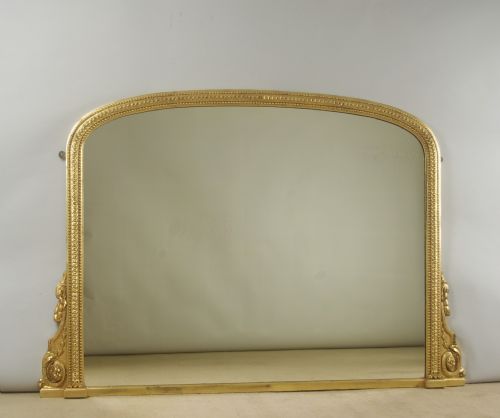
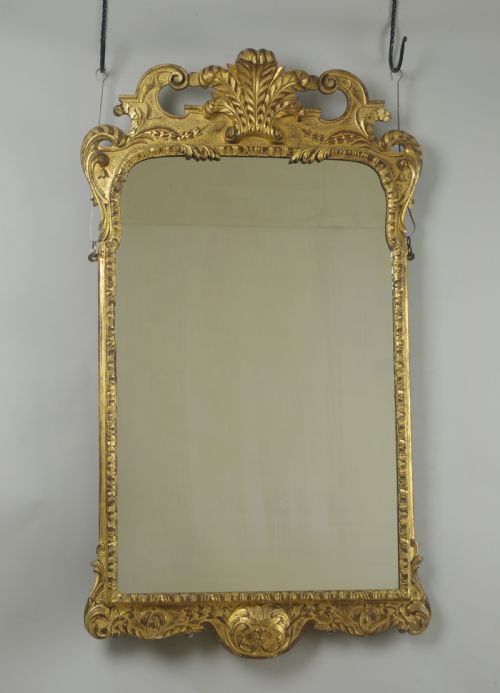
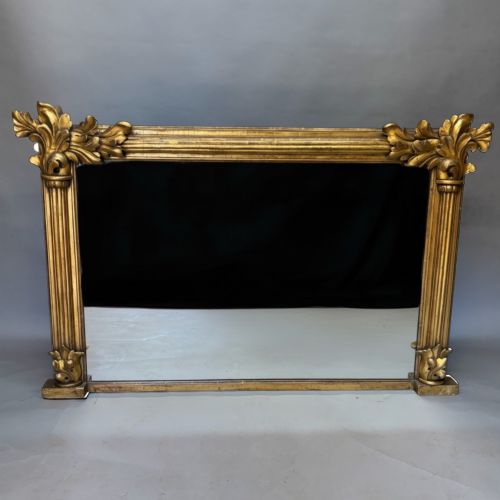
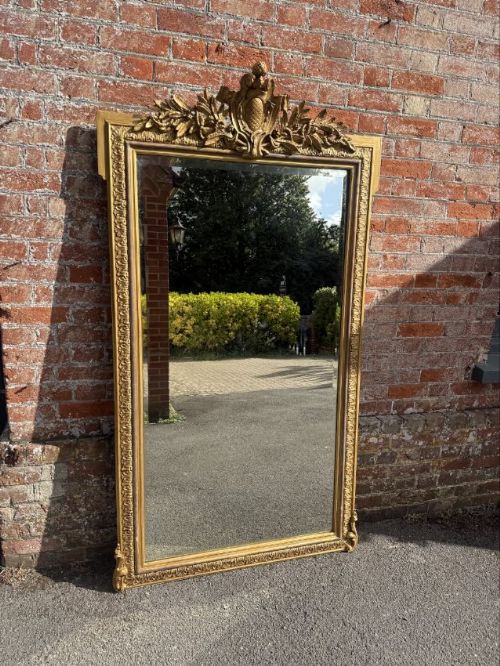
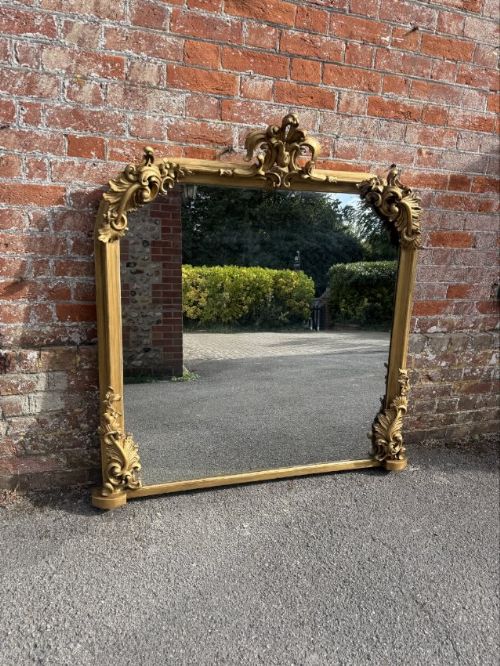
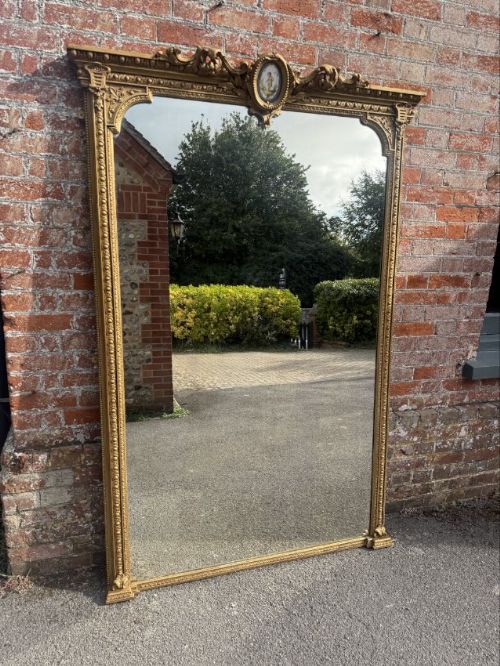
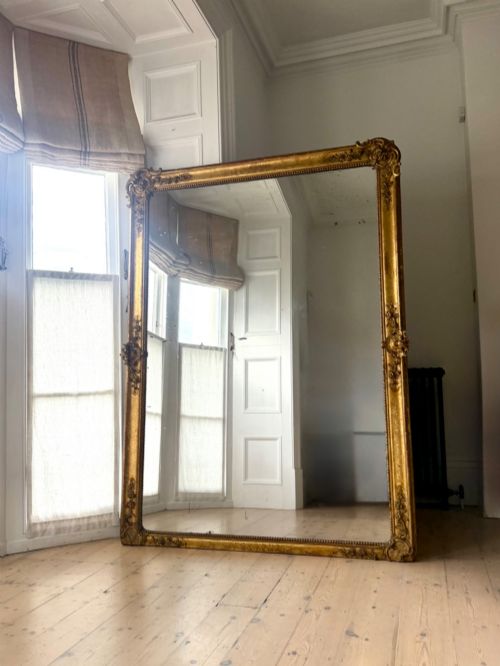
A gold overmantel wall mirror is a large decorative glass plate set within an ornate frame, designed specifically to hang on the wall above a fireplace mantelpiece. The pieces found here span the eighteenth, nineteenth and early twentieth centuries, reflecting diverse periods such as Regency, Victorian, Louis Philippe and Rococo Revival.
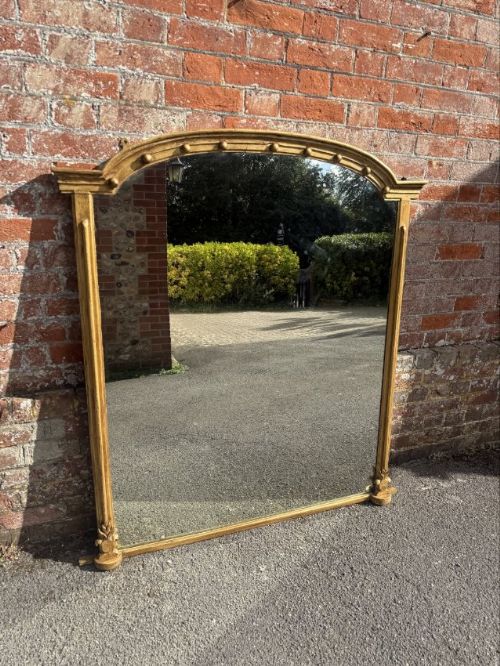
The version most commonly met on this page is the nineteenth-century English or French giltwood and gesso overmantel mirror, often featuring an arched or shaped top. These large formats were originally scaled to dominate the chimney breast, balancing the heavy proportions of period fireplaces while bouncing natural daylight around the interior.
How they were made
Frames were built primarily from carved wood, utilising timber substrates overlaid with composition and gesso to create intricate relief decoration. Artisans then applied thin layers of gold leaf or gilt finish across the moulded surfaces, sometimes combining this with painted highlights or dark ebonised details.
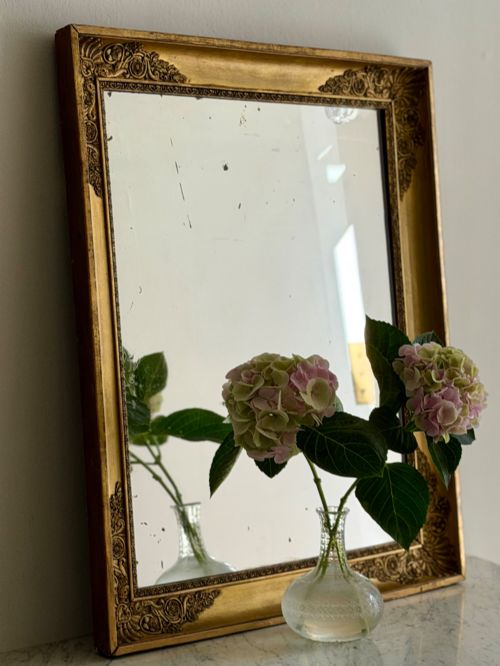
Mirror plates varied from early mercury glass showing natural foxing to later antique plates, often held within heavy frames designed to support significant vertical proportions and substantial weight.
What varies in quality
The distinction between standard decorative examples and the finest pieces lies in the crispness and depth of the hand-carved woodwork and gesso ornamentation. Superior examples display sharply defined acanthus leaves, scrollwork and rope-twist details without the softening effect of excessive later over-gilding.
Proportion and structural integrity also dictate standard. The best items retain their original gilded surfaces, original mirror plates with authentic ageing, and robust framing that has not suffered from poorly executed structural repairs.
The Gold Overmantel Wall Mirror Glossary
- Giltwood
- Wood that has been coated with gold leaf or a gold-coloured metallic finish. This surface treatment gives period mirrors their characteristic warm metallic lustre.
- Gesso
- A plaster-like mixture applied to wooden frame bases and carved into relief designs before gilding. It allows for intricate moulded ornamentation such as floral motifs and scrolls.
- Overmantel
- A large mirror or painting specifically scaled to fit the wall space directly above a mantelpiece. These pieces often feature arched or shaped tops to match architectural proportions.
- Pier glass
- A tall mirror designed to be hung on the narrow pier of wall between windows. Many share stylistic traits with overmantel mirrors of the same period.
- Foxed glass
- Mirror glass showing mottled dark spots and age-related oxidation. This natural ageing process is characteristic of antique mercury glass plates.
Gold Overmantel Wall Mirror: Frequently Asked Questions
Where should an overmantel mirror hang?
These mirrors were traditionally designed to sit directly above a fireplace mantelpiece, where their generous scale anchors the wall. They also function effectively on large expanse walls in principal reception rooms.
Because of their substantial weight and height, secure wall fixings into solid masonry or substantial studwork are essential for safe installation.
How do I identify a Victorian mirror?
Victorian examples often feature robust carved wood and gesso frames decorated with motifs like acanthus leaves and heavy scrollwork. Their proportions tend to be imposing and suited to nineteenth-century domestic architecture.
Construction methods from this era typically involve composite gesso mouldings over timber frames, occasionally paired with bevelled mirror plates.
What is a Louis Philippe mirror?
Louis Philippe mirrors originate from nineteenth-century France and are recognised by their understated elegance. They frequently feature simple rectangular or gently arched tops with subtle beaded or floral framing.
Unlike heavily ornate Rococo revival pieces, these maintain a restrained aesthetic that suits both traditional and contemporary interiors.
Are original mirror plates clear?
Original antique plates often display foxing, which manifests as dark speckling and soft cloudiness across the reflective surface. This occurs as the backing degrades naturally over generations.
Many collectors prize this characteristic ageing because it confirms the authenticity of the glass and provides a softer reflection than modern replacements.