




Gold Ormolu Clock Set
These gold ormolu clock sets bring heavy cast metal and polished stone together to anchor a mantelpiece with unmistakable presence.
Gold Ormolu Clock Set
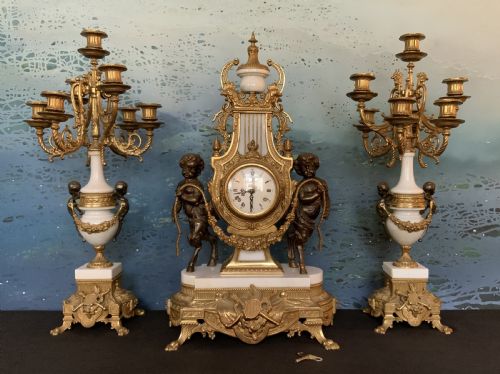
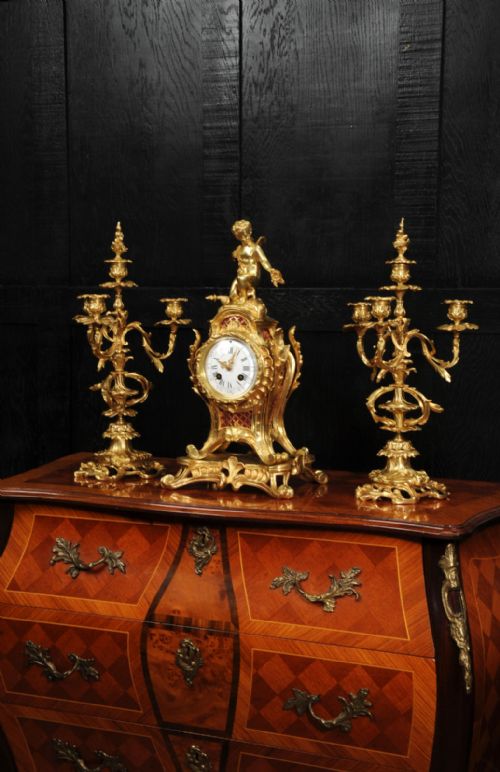
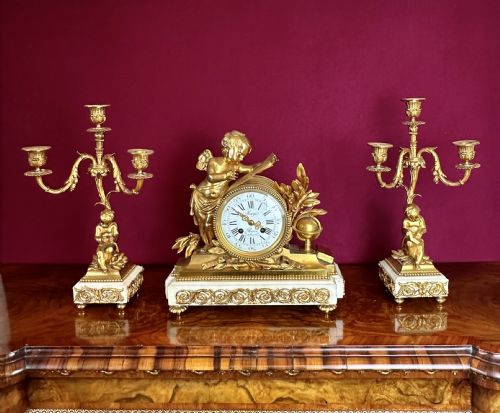
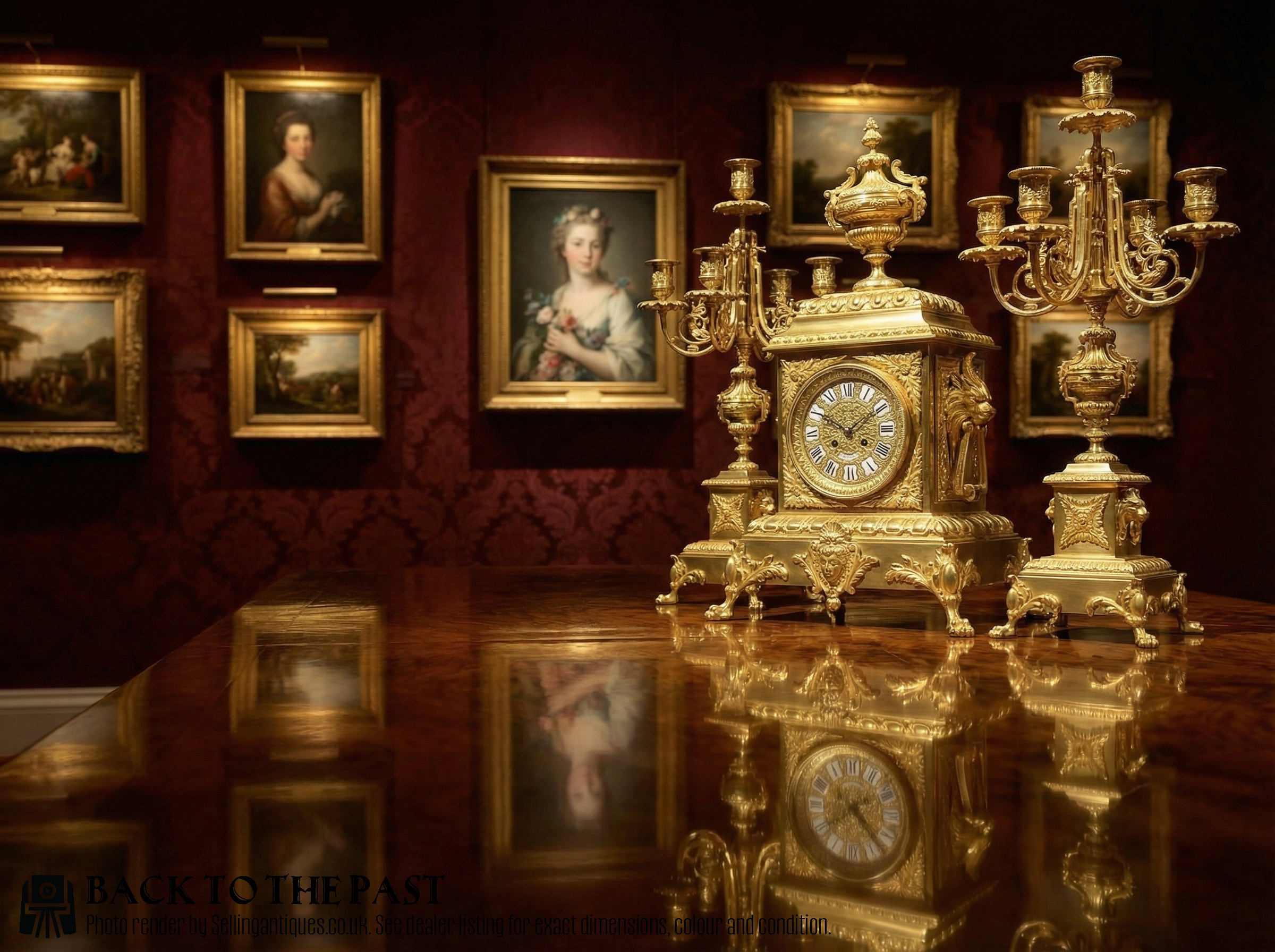
A gold ormolu clock set comprises a central mantel timepiece accompanied by matching sidepieces such as candelabra or urns, forming a unified decorative arrangement. When you examine a gold ormolu clock set on this page, you encounter grand three-piece and multi-piece configurations designed for nineteenth-century reception rooms.
The objects stem predominantly from the nineteenth century, including Victorian examples and specific decades like eighteen-eighty, eighteen-ninety, and nineteen-hundred. French workshops dominate the selection, bringing classical architectural forms and sculptural figures into domestic interiors.
Makers and foundries from Paris, such as those working in the Louis XVI and Louis XV revival styles, shaped the market for these decorative ensembles. Buyers find variations ranging from boudoir clocks to massive garnitures incorporating ten-light candelabra.
Materials and construction
Foundries cast bronze, brass, and gilt metal into elaborate frames, applying gold ormolu and patinated bronze finishes to create rich surface contrasts. Artisans combined these gilded metals with white marble and darker stone bases to support the weight of the movements.
Enamel dial plates, often bearing delicate numerals, sit behind glass panels alongside visible pendulums and eight-day mechanical movements. Craftsmen incorporated sculpted cherubs, figures, and floral motifs directly into the cast metal mounts of the clock bodies and matching garniture pieces.
Listings feature eighteenth and nineteenth-century revival styles including Louis XVI and Louis XV, executed in gilt bronze, ormolu, marble, and enamel.
Evaluating the standard of execution
The crispness of the chased detail in the ormolu and the weight of the bronze or marble foundation distinguish finer examples from simpler production. Superior sets display deeply sculpted figures and substantial stone bases that remain stable and true.
The reputation of the maker, whether a known Parisian foundry or an established movement manufacturer, elevates the standing of an individual set. Completeness of the garniture and the integration of matching sidepieces also determine the overall coherence of the grouping.
Henry Dasson·Raingo Fres Paris·Deniere Paris·Vincenti·Japy Freres·A.D Mougin
The Gold Ormolu Clock Set Glossary
- Ormolu
- A gilded bronze technique utilising finely ground gold mercury amalgam applied to cast brass or bronze. This process yields a warm, lasting metallic sheen characteristic of nineteenth-century decorative arts.
- Clock garniture
- A set consisting of a mantel clock accompanied by matching decorative sidepieces such as candelabra, vases, or urns. These objects were designed to be displayed together on a mantelpiece or sideboard.
- Candelabra
- Branched candlesticks that frequently form the matching sidepieces in a larger clock garniture. They share the metalwork and stylistic vocabulary of the central clock.
- Louis XVI Style
- A neoclassical design movement favouring symmetrical lines, classical architectural motifs, and restrained ornamentation. It appears frequently in nineteenth-century French bronze and marble work.
- Visible pendulum
- A movement design incorporating glass panels or open framing that allows the swinging pendulum to be seen from the front. This adds a kinetic element to the static sculpture of the clock case.
Gold Ormolu Clock Set: Frequently Asked Questions
How do I identify French nineteenth-century sets?
French nineteenth-century sets typically display cast bronze or gilt ormolu mounts combined with marble bases and enamel dials.
Stylistic cues draw heavily from Louis XVI and Rococo revivals, often bearing the stamped marks of Parisian makers or movement manufacturers on the works.
How do I maintain marble and ormolu?
Maintain marble and ormolu surfaces by dusting gently with a soft, dry cloth without applying harsh chemical polishes.
Aggressive cleaning agents can strip the delicate gilt finish from the bronze mounts or stain the polished stone foundation.
What do eight-day movements require?
Eight-day mechanical movements require periodic winding using a matching key to maintain accurate timekeeping.
Professional servicing ensures the internal gears and escapements continue to function smoothly over time.