




Gold Ormolu Cabinet
A gold ormolu cabinet brings architectural presence and gleaming metal mounts to a room, offering both display and storage.
Gold Ormolu Cabinet
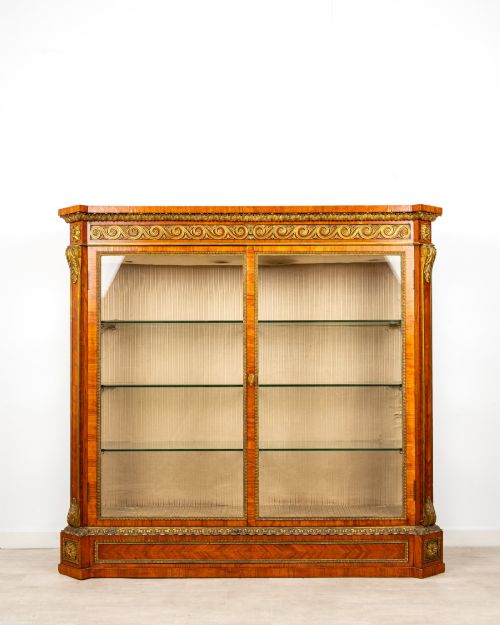
A gold ormolu cabinet encompasses a range of nineteenth-century furniture forms, most notably display cabinets, credenzas, pier cabinets, and side cabinets. These pieces emerge predominantly from French and Victorian traditions, reflecting revivalist tastes such as Louis XVI style, Napoleon III, and French Empire.
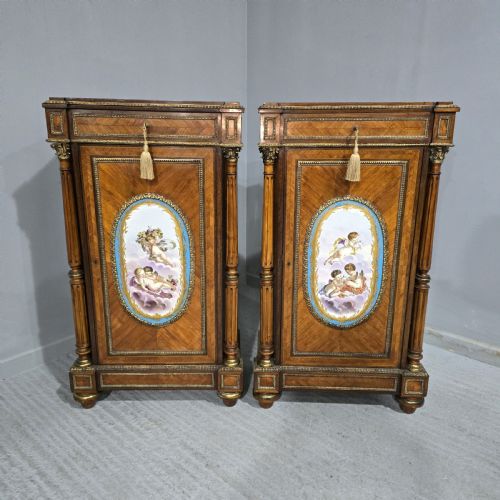
Buyers will most frequently encounter ebonised wood or kingwood carcasses enriched with gilt bronze or ormolu mounts, often paired with glass panels, marble tops, or porcelain plaques. The selection spans compact bedside tables to imposing vitrines and long credenzas designed for formal reception rooms.
How they were made
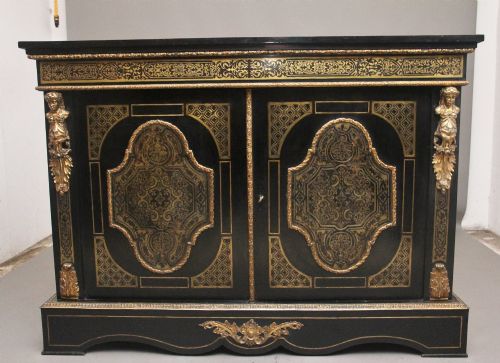
Cabinet makers utilised dense timbers including mahogany, walnut, and ebonised wood, frequently applying intricate marquetry or boulle work using tortoiseshell and brass inlay. Carcasses were shaped into serpentine or straight forms to receive elaborate surface decoration.
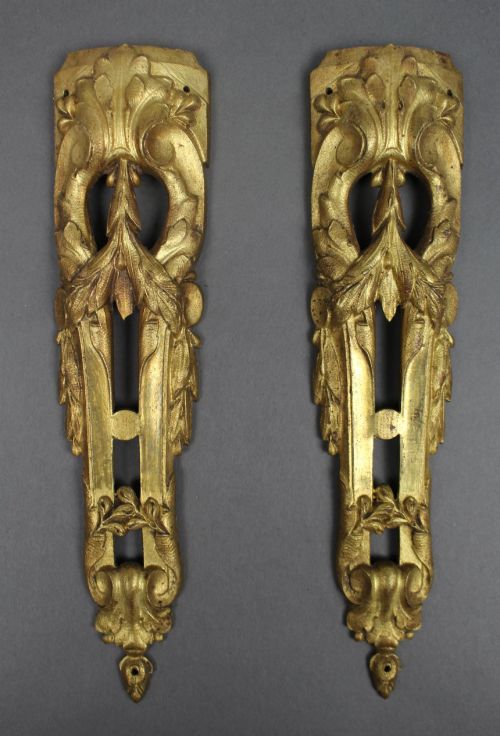
Gilt bronze and ormolu mounts were cast and hand-chased before being fire-gilded or chemically finished and secured to the timber frames. Porcelain plaques, Sèvres style panels, and veined marble tops were integrated into the structural design to complete the facade.
What varies in quality
The distinction between ordinary and exceptional pieces rests upon the crispness of the bronze chasing and the depth of the timber finish. Superior examples display finely articulated ormolu mounts that sit flush with the wood and integration of high-grade porcelain plaques or tortoiseshell work.
Proportion and structural integrity dictate the standing of a cabinet, where balanced serpentine lines and tightly fitted glass doors reflect master workshop standards. Provenance and attribution to known makers further elevate the stature of a piece within this category.
H. J. Hatfield & Sons·Francoise Linke·Edmond Poteau
The Gold Ormolu Cabinet Glossary
- Ormolu
- Gilded bronze used for decorative furniture mounts and ornaments. The technique involves applying a mercury and gold amalgam to cast bronze before heating.
- Boulle
- A form of marquetry developed by André-Charles Boulle, combining tortoiseshell and brass inlay. It creates a striking contrast of dark tortoiseshell and gleaming metal.
- Credenza
- A low cabinet or sideboard, frequently fitted with doors and glazed panels. Originating in Italy, it became a grand nineteenth-century fixture for displaying porcelain and silver.
- Vitrine
- A glass-fronted display cabinet designed for porcelain and objects of vertu. These pieces allow light to enter from multiple angles to highlight the contents.
- Marquetry
- Decorative veneer work arranged in pictorial or geometric patterns on furniture surfaces. Craftsmen assemble thin slices of various timbers and organic materials into intricate designs.
Gold Ormolu Cabinet: Frequently Asked Questions
What is an ormolu cabinet?
An ormolu cabinet is a nineteenth-century piece of furniture decorated with cast and gilt bronze mounts. These mounts accent the corners, borders, and panels of the wooden structure.
Such cabinets served as status symbols in grand drawing rooms. They provided secure display space for precious ceramics and decorative objects.
How do I identify French revival styles?
French revival styles mimic the furniture of royal courts like Louis XVI or the French Empire period. Look for symmetrical neoclassical lines, urn motifs, and crisp ormolu mounts.
Napoleon III pieces often feature ebonised wood and boullework. Understanding these design vocabularies helps date the furniture accurately.
Where should I place a credenza?
A credenza suits dining rooms, hallways, or spacious living areas against a blank wall. Its low profile allows paintings or mirrors to be hung directly above it.
Ensure the room has adequate clearance for the doors to swing open. The surface also provides space for lamps or decorative bronzes.
How do I care for ebonised wood?
Dust ebonised wood regularly with a soft, dry cloth to prevent particle buildup. Avoid harsh chemical cleaners and keep the timber away from direct sunlight.
Occasional application of microcrystalline wax helps protect the polished black finish. Maintaining stable indoor humidity prevents the wood from warping.