
Gold Marble Console Table
A gold marble console table brings classical grandeur to a hallway or drawing room through gilded carving and cool stone.
Gold Marble Console Table
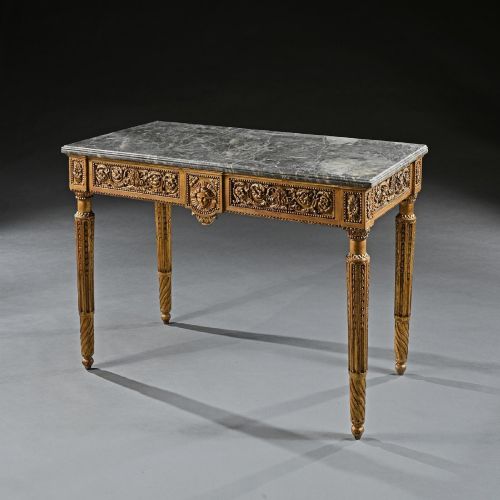
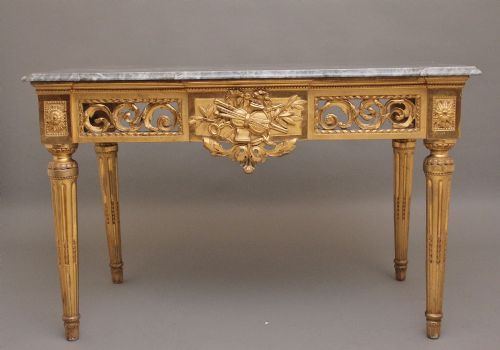
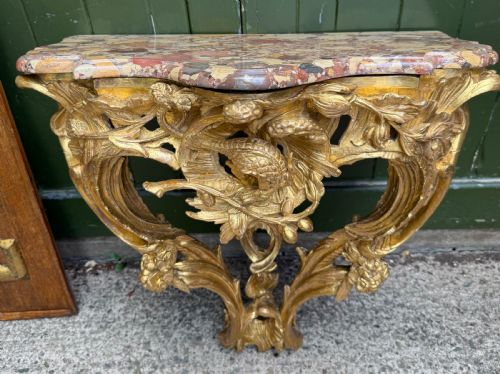
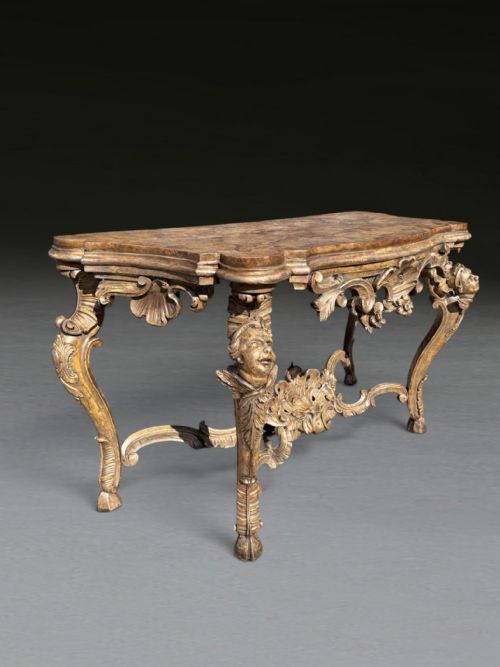
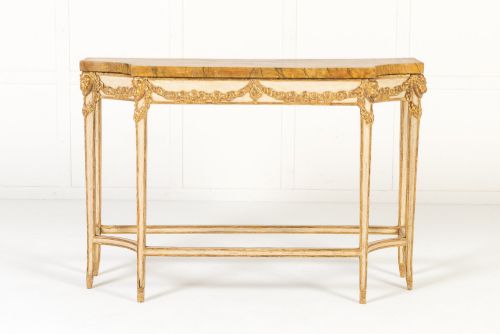
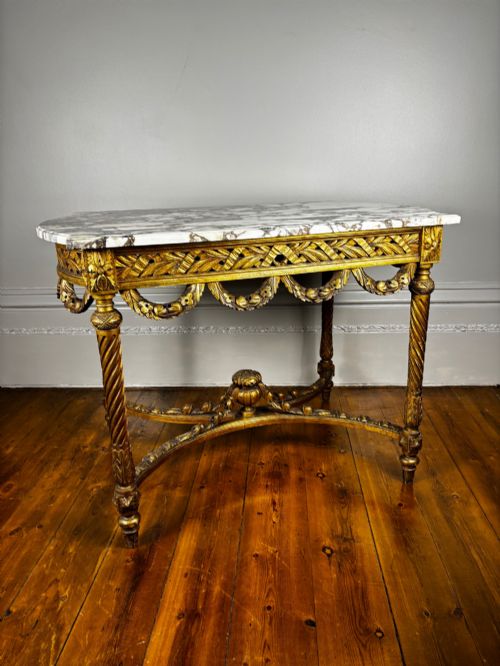
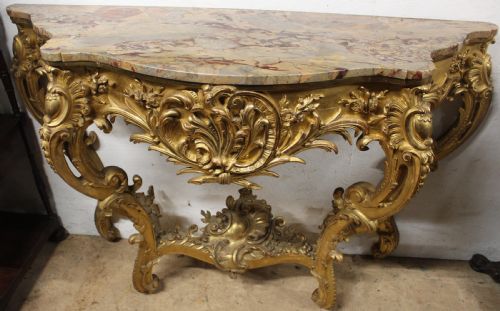
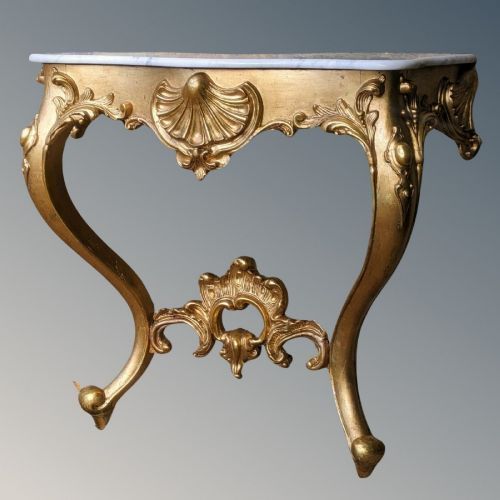
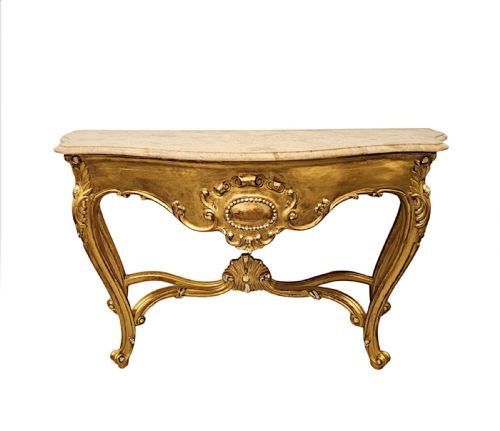
A gold marble console table is a wall-mounted or freestanding furniture piece designed to stand against a drawing room or hallway wall, carrying a heavy stone slab upon an elaborate gilded base. When you search for this phrase, you encounter heavy French and Italian examples from the eighteenth and nineteenth centuries alongside later revivals, displaying forms shaped by Rococo, Neoclassical and Baroque tastes.
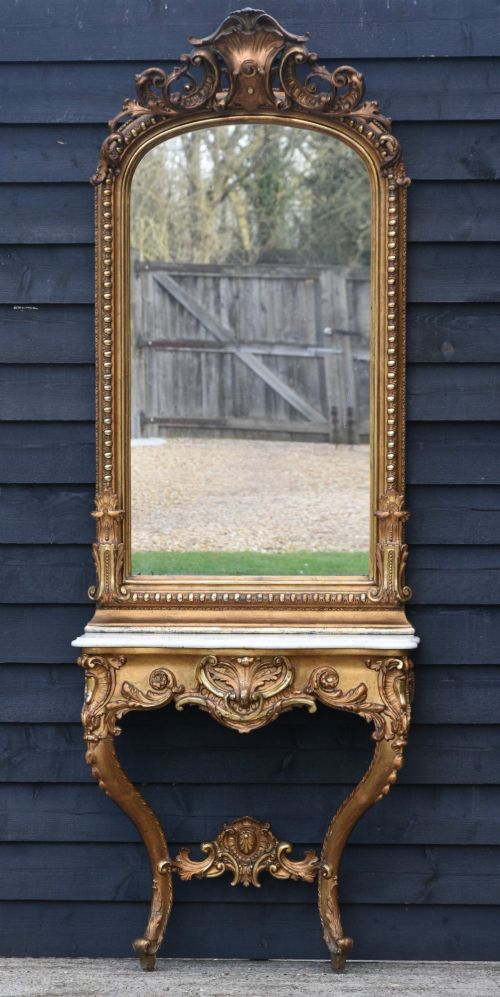
The versions most commonly met on this page combine carved wooden frames finished in gold leaf or gesso with inset marble or onyx tops. Many pieces arrive paired with matching pier mirrors, creating a unified architectural arrangement for a reception room.
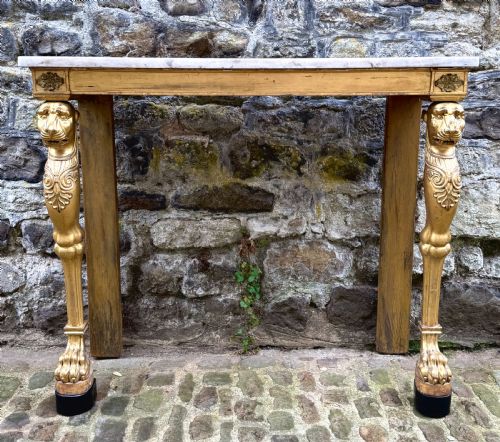
The evidence shows forms ranging from small demi-lune tables to monumental pairs supported by carved animal paws or swans, originating principally from French and Italian workshops.
Materials and construction
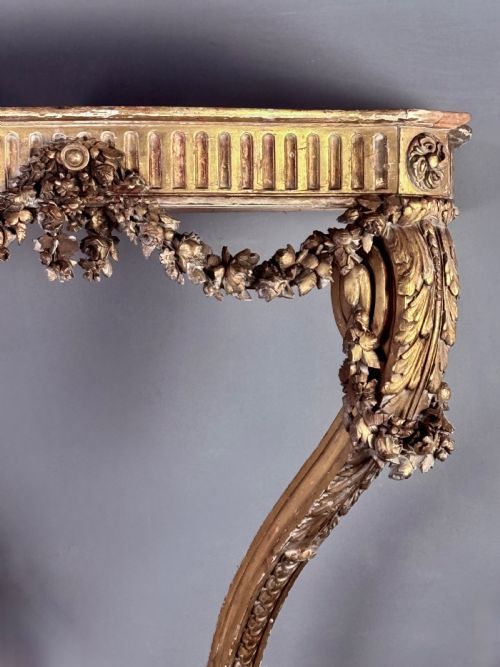
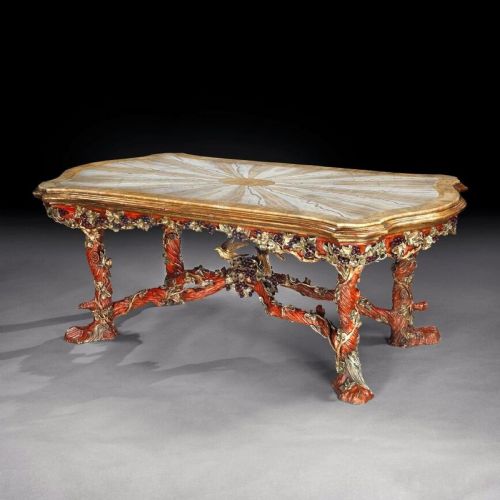
Giltwood and gesso form the structural skeleton of these tables, carved from softwoods before receiving layers of gold leaf or paint. Artisans shaped intricate floral scrolls, acanthus leaves and animal supports by hand.
The upper surface relies on heavy slabs of quarried stone, including Carrara, breccia, and figured breche d'alep marble, matched to the proportions of the carved wooden base.
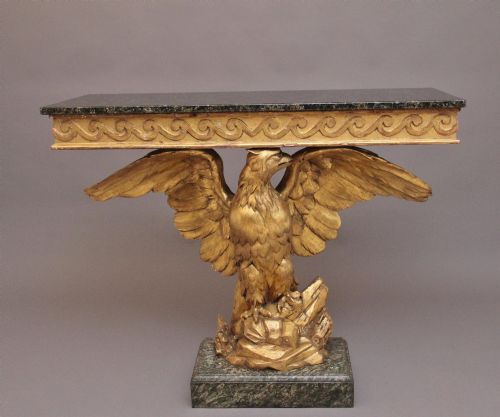
Carved wooden swans and lion paws hold up the marble slabs.
Distinctions in craftsmanship
The quality of a gold marble console table rests primarily on the depth and crispness of the wood carving. Skilled hands produced deep, undercut foliage and sharp anatomical details on figures and paws, whereas lesser pieces rely on shallow moulding and heavy plaster gesso.
The selection and finishing of the stone top further divide standard items from exceptional ones. Thick, richly figured marble slabs fitted precisely to the wooden rails indicate a higher standard of workshop production.
Felix-Alfred Ternisien·Amleto Bertoni
The Gold Marble Console Table Glossary
- Console table
- A table designed to stand against a wall, traditionally fixed with brackets or resting on front legs. These pieces anchor architectural wall spaces in formal rooms.
- Giltwood
- Timber coated with gold leaf or gold powder applied over a prepared gesso ground. This finish catches candlelight and natural illumination.
- Breccia marble
- A stone composed of angular fragments embedded in a fine-grained matrix. It provides strong natural patterns across the tabletop.
- Demi-lune
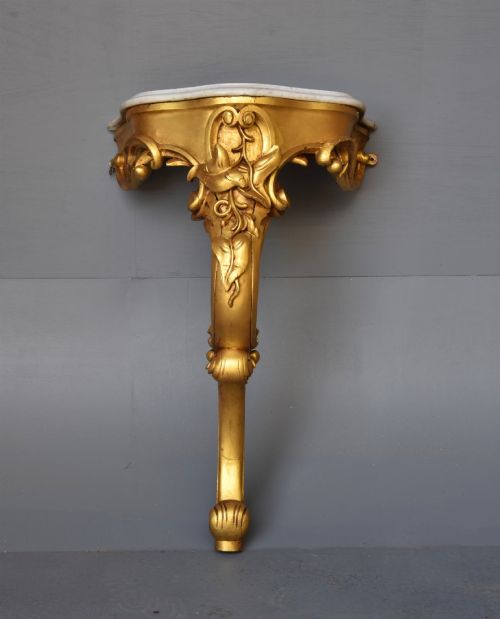
- Half-moon shape denoting tables with a curved front and a flat back designed to sit flush against a wall. This form softens narrow hallways.
- Pier mirror
- A large wall glass designed to hang directly above a console table. Together they form a paired decorative scheme.
Gold Marble Console Table: Frequently Asked Questions
Where should I place a gold marble console table?
These tables suit entrance halls, reception rooms or long corridors where their shallow depth preserves floor space while providing a surface for lamps or ornaments.
Because many were built to sit beneath large mirrors, positioning them against a main wall allows the combination to reflect light through the room.
How do I care for the marble top?
Marble requires gentle cleaning with a damp cloth and neutral soap, avoiding acidic substances that etch the polished stone surface. Using protective pads beneath objects prevents scratches on antique tops.
The underlying gilded wood frame benefits from dusting with a soft, dry brush to protect the delicate gold leaf layer.
Are these tables freestanding?
Traditional console tables often require fixing to the wall for stability because their front-heavy stone tops can tip forward without support. Later nineteenth and twentieth-century interpretations increasingly feature four sturdy legs that allow them to stand independently.
Examining the underside reveals whether brackets or wall ties formed part of the original design.
How do I distinguish eighteenth-century pieces from later revivals?
Eighteenth-century examples display hand-cut joinery, older pine or hardwood subframes, and tool marks left by period carvers. Revivals from the nineteenth and twentieth centuries often use more uniform machine-sawn timber and standardised construction methods.
Comparing the wear patterns on the gilding and the backing wood helps clarify the age of the piece.