



Gold Leaf Carved Figure
A gold leaf carved figure brings devotional presence and dramatic gilding into a room, spanning centuries of European and Asian workshops.
Gold Leaf Carved Figure
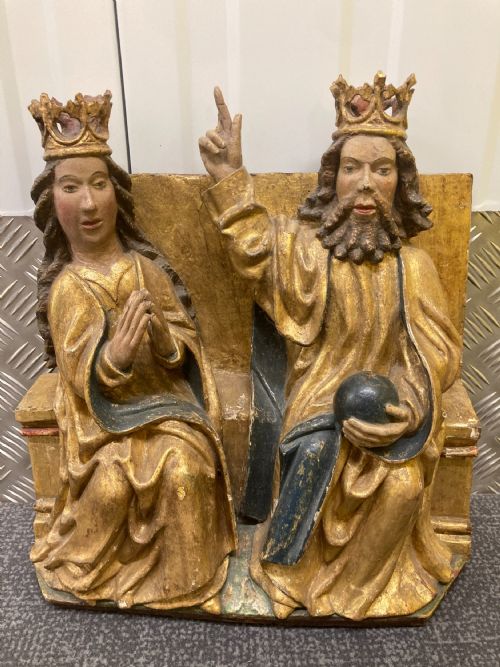
A gold leaf carved figure combines carved wooden sculpture with gilded surfaces, representing saints, deities, and decorative subjects. When you search for a gold leaf carved figure, you encounter works ranging from sixteenth-century religious carvings to nineteenth-century decorative pieces and revival objects.
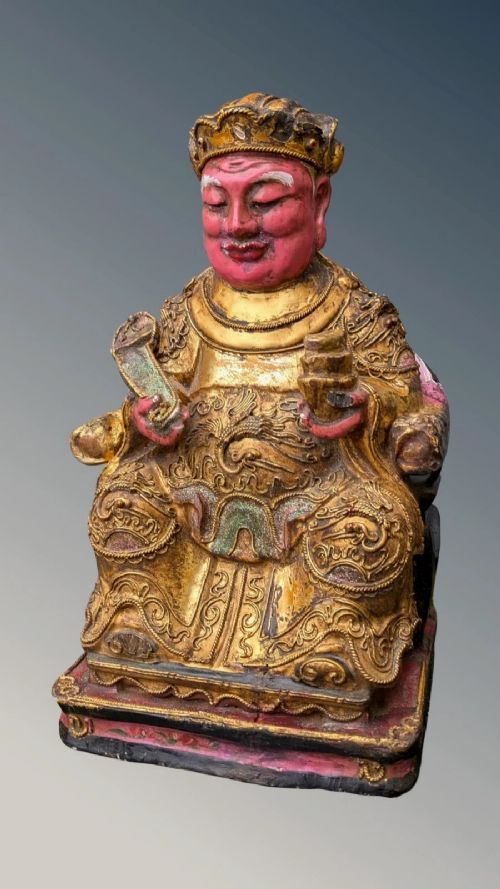
The material selection on this page demonstrates significant geographic breadth, featuring European church figures alongside Chinese deities and Burmese Buddhas. These pieces appear as standalone sculptures, architectural fragments, lamp bases, and candelabras, reflecting how older devotional carvings were later adapted for domestic interiors.
Materials and construction methods
Carvers typically shaped these figures from solid timber, utilising woods such as pine, oak, or exotic Asian hardwoods depending on the region of origin. Artisans then applied a preparation layer of gesso to the carved timber base to create a smooth surface for subsequent decoration.
A solitary carved wooden swan from the turn of the nineteenth century swims across the collection, proving that sculptors looked far beyond human saints.
Distinguishing quality across pieces
The refinement of the carving dictates the artistic merit, distinguishing fluid drapery folds and expressive facial modeling from stiffer, schematic execution. Master carvers achieved depth in hair, hands, and fabric that lesser workshops failed to capture.
The preservation of the original surface and gilding layer heavily influences the integrity of the piece. Surfaces retaining early or original polychrome paint alongside intact gold leaf command greater appreciation than those stripped, heavily restored, or aggressively cleaned.
The Gold Leaf Carved Figure Glossary
- Giltwood
- Wood that has been treated and covered with gold leaf or gold paint. This technique was widely utilised across Baroque and Renaissance furniture and sculpture.
- Polychrome
- Painted in several colours. This term describes sculpture or woodwork decorated with various pigment layers over gesso or wood.
- Gesso
- A plaster-like mixture used as a base coat on wood before applying gold leaf or paint. It provides a smooth, uniform ground for finer artistic detail.
- Shabti
- A small funerary figure placed in ancient Egyptian tombs to act as a servant for the deceased. Nineteenth-century examples often appeared during the Grand Tour revival.
- Parcel-gilt
- Partially gilded, leaving portions of the underlying wood, paint, or dark ground exposed. This method highlights specific architectural or sculptural details.
Gold Leaf Carved Figure: Frequently Asked Questions
How do I date a carved figure?
Dating relies on stylistic markers, tool marks, and the ageing of the underlying wood and gesso layers. Renaissance and Baroque pieces display different facial proportions and drapery handling compared to nineteenth-century revival works.
Examining the reverse of the sculpture and the preparation layers underneath the gold leaf reveals workshop practices specific to particular centuries and regions.
Were these figures always religious?
Many early European pieces originated as altarpieces, church figures, or devotional groups representing saints and biblical figures. Asian examples similarly served religious functions within temples and household shrines.
By the nineteenth century, makers also produced secular figures, blackamoor torchieres, and decorative objects purely for interior display.
How should I clean gilded wood?
Giltwood and gold leaf surfaces require extremely gentle maintenance because the metallic layer is exceptionally thin and vulnerable to abrasion. Dusting should be done lightly with a soft, dry brush without applying liquid cleaners.
Moisture and modern chemical solvents can easily lift gesso and gold leaf from the wooden substrate, permanently damaging the historic surface.
What is the Grand Tour context?
The Grand Tour refers to the traditional travels undertaken by European gentry through France and Italy to study classical and Renaissance art. Travellers frequently acquired souvenirs, including Egyptian revival figures and architectural fragments.
These collected objects were subsequently brought home to furnish libraries and cabinets of curiosity across Britain and Europe.