


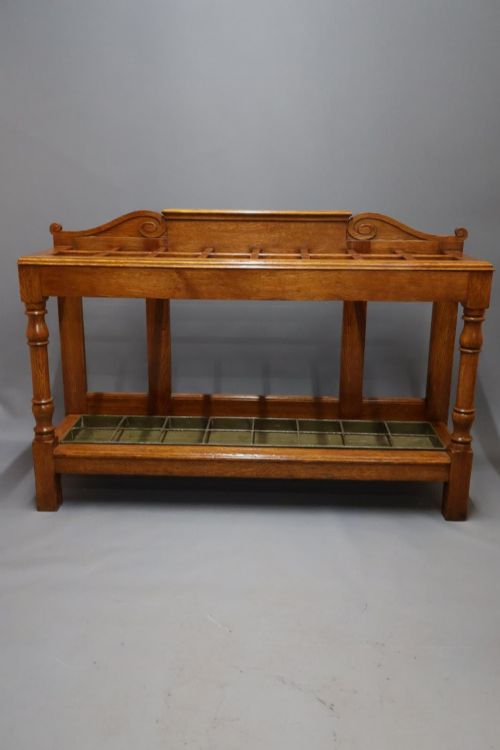
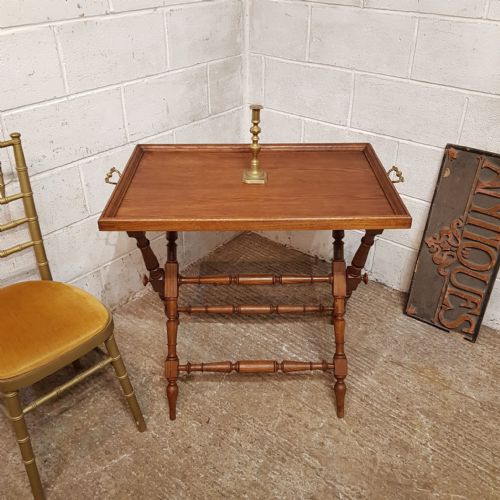
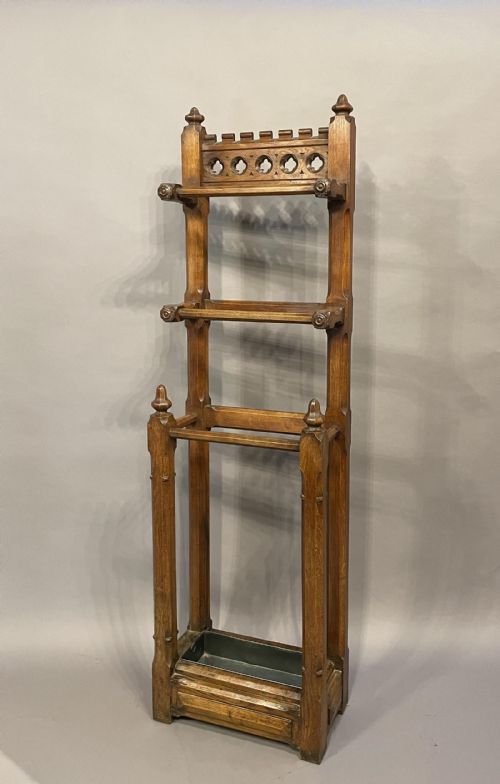


Carved Wooden Tray Stand
A carved wooden tray stand is a functional antique piece built to hold portable trays, combining robust framing with detailed ornamentation.
Carved Wooden Tray Stand
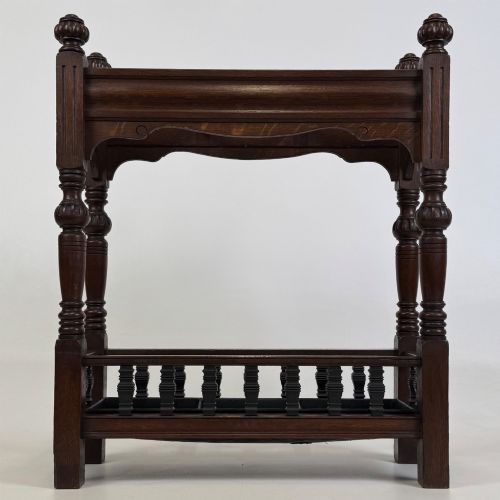
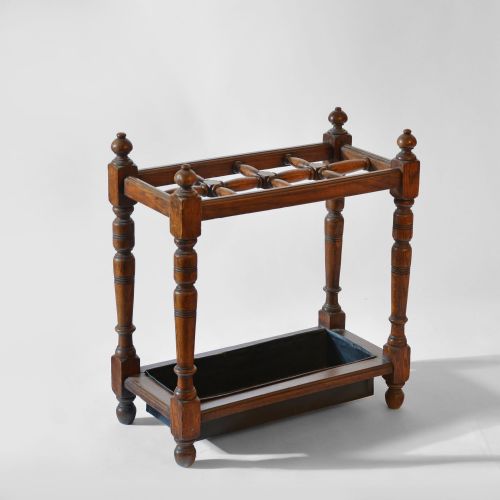
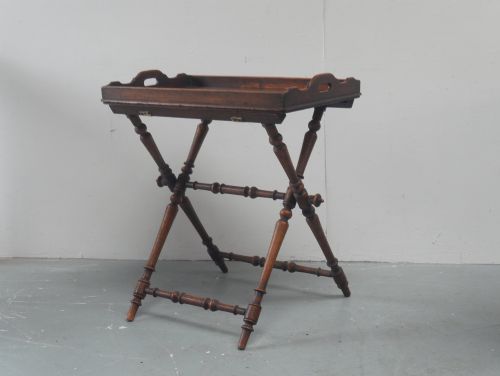
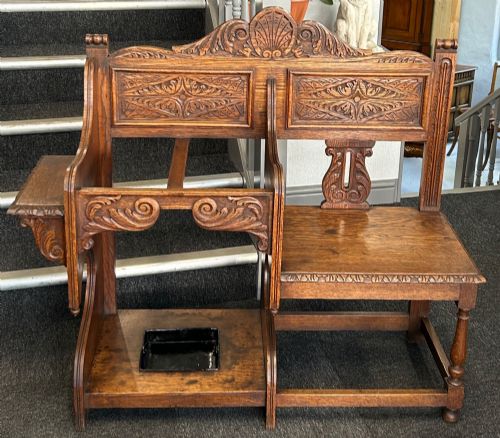
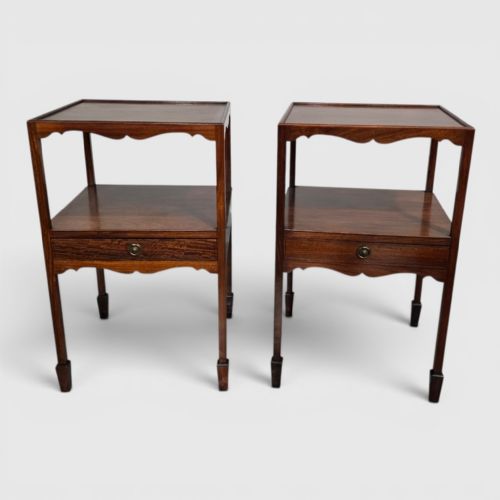
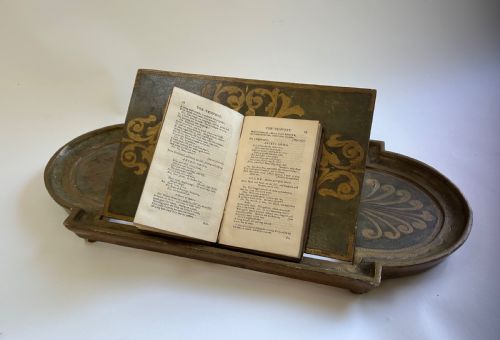
A carved wooden tray stand bridges the gap between portable serving equipment and stable furniture, appearing across the nineteenth century and into the Edwardian period. These pieces frequently manifest as folding tray tables or butler's trays paired with dedicated wooden supports.
The selection on this page draws heavily from Victorian and Edwardian examples, alongside pieces bearing Gothic Revival, Black Forest, or Jacobean Revival stylistic influences. Buyers encounter solid oak and mahogany constructions designed to serve domestic spaces with practical elegance.
Materials and construction methods
Craftsmen utilised durable hardwoods like oak, mahogany, and walnut to build the foundational frames and folding supports of these items. These woods provided the necessary structural integrity to hold heavy serving trays and frequent handling.
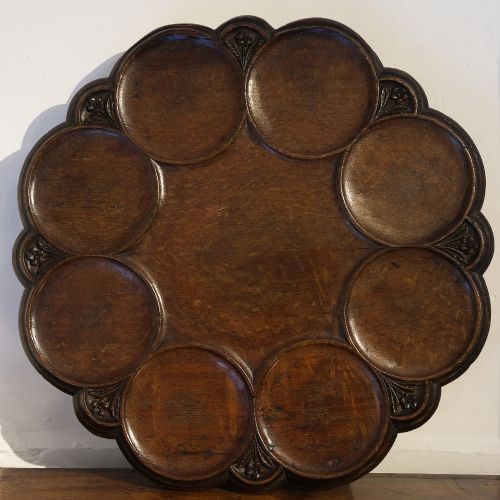
Decoration relied on hand carving applied directly to the solid timber surfaces or folding edges. Joinery techniques ensured that folding stands remained stable when open while collapsing flat for storage when required.
Listings feature oak and mahogany woods predominantly across nineteenth-century and Edwardian periods.
Evaluating the standard of workmanship
Quality rests in the crispness of the hand carving and the selection of timber figures within the wood. Superior examples demonstrate careful attention to the joints of the folding mechanism and the grain alignment across the tray and its base.
Lesser versions show mechanical stiffness in the folding stands and simpler, less defined surface carving. The integration between the detachable tray and its supporting stand reveals the maker's original intent and execution level.
The Carved Wooden Tray Stand Glossary
- Butler's tray
- A portable wooden tray with hinged or panelled sides, designed to lift off its folding stand for serving.
- Gothic Revival
- A nineteenth-century design style incorporating pointed arches, trefoils, and heavy architectural motifs.
- Folding stand
- A collapsible wooden support designed to hold trays or table tops securely when expanded.
- Jacobean Revival
- A later stylistic movement mimicking seventeenth-century English furniture through dark finishes and geometric panel carving.
Carved Wooden Tray Stand: Frequently Asked Questions
How do I use a tray stand today?
These stands serve well as flexible side tables or drinks stations in living spaces and dining rooms.
The removable tray top allows for easy transport of items from the kitchen to the room while the stand remains in place.
Are the trays detachable from the stands?
Many traditional butler's tray configurations feature a loose tray resting securely on top of folding wooden legs.
Some variations integrate the tray more permanently into the base frame or use hinged joints.
How do I date an oak tray stand?
Dating relies on observing the timber grain, the style of the hand carving, and the construction of the joints.
Victorian and Edwardian pieces show specific regional furniture traits matching the revival styles popular during those decades.
Can these stands fold away for storage?
Most antique tray stands utilise a scissor-action folding frame designed to collapse flat when not in use.
This practical feature made them useful for nineteenth-century households needing versatile and movable furniture.