



Venetian Decorative Figure
These Venetian decorative figure carvings bring dramatic theatrical presence and rich historic colour to any interior scheme.
Venetian Decorative Figure
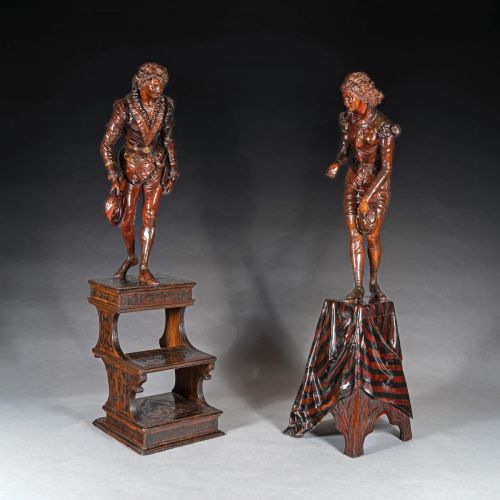
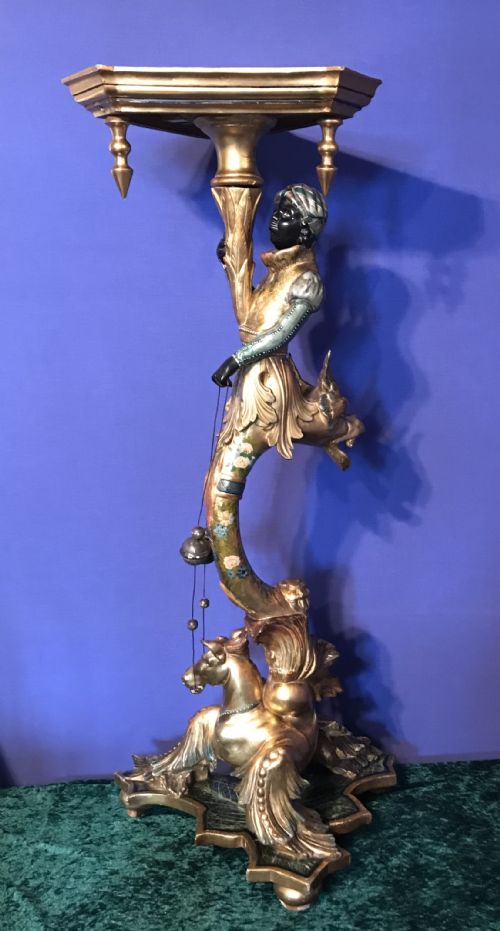
When you search for a venetian decorative figure, you encounter carved wooden sculptures, stands, pedestals, and candlesticks originating from nineteenth-century Italy. The selection frequently showcases historicist interpretations of blackamoor figures, gondoliers, and young women designed for display in grand interiors.
Most examples date from the Victorian era and the early twentieth century, spanning periods such as eighteen-fifty, eighteen-seventy, and nineteen-ten. Forms range from practical floor lamps and waiters to sculptural figures mounted on original stands.
Makers and styles draw heavily upon Venetian Baroque and Italian Renaissance traditions, manifesting as elaborate decorative pieces rendered in rich pigments and metallic leaf.
How they were made
Carved wood forms the structural foundation of these pieces, shaped from walnut or other timbers before receiving detailed surface decoration. Artisans applied layers of gesso to smooth the carved contours prior to painting or gilding.
The evidence records pieces spanning the Victorian period alongside specific dates from eighteen-fifty to nineteen-ten, utilising carved wood, polychrome paint, and gold leaf.
What varies in quality
The sophistication of the wood carving dictates the success of the sculpture, separating fluid, lifelike anatomy from stiffer, generic forms. Finer pieces demonstrate intricate detailing in drapery, facial expression, and posture.
The preservation of original surface finishes determines desirability, with untouched polychrome paint and genuine gold leaf holding greater visual impact than later overpainting. Surviving original stands and pedestals elevate the completeness of the ensemble.
Valentino Besarel
The Venetian Decorative Figure Glossary
- Polychrome paint
- Decoration executed in multiple colours, frequently seen on historic wood carvings to render garments and skin tones with realism. This technique defines the vibrant appearance of nineteenth-century Italian works.
- Gesso
- A plaster-like mixture applied to a wooden substrate to provide a smooth surface for gilding or painting. It allows crisp detail work on sculptural forms.
- Parcel-gilt
- Partially gilded, where only specific decorative elements receive gold leaf while other areas show paint or wood. This highlights particular details of the carving.
- Torchere
- A tall ornamental stand or candlestick designed to hold a light source. In this context, it often doubles as a sculptural figure supporting a tray or platform.
- Ebonised
- Timber treated to resemble ebony through staining or painting. This dark finish provides sharp contrast against gilt highlights.
Venetian Decorative Figure: Frequently Asked Questions
What rooms suit a venetian decorative figure?
These sculptures suit hallways, drawing rooms, or entrance spaces where their theatrical height and decorative presence can be fully appreciated. They function effectively as standalone display objects or paired flanking elements.
Their substantial forms command attention, making them ideal focal points in traditional or eclectic interiors. Placing them away from direct sunlight helps preserve the historic painted and gilt surfaces.
How are these figures cleaned safely?
Dusting gently with a soft, dry brush removes surface particles without disturbing delicate gesso or paint layers. Moisture and chemical cleaning agents should be avoided entirely to protect historic finishes.
Professional conservation advice is recommended for any deeper maintenance or stabilization of antique wooden surfaces. Regular gentle care keeps the polychrome and gilt details intact.
How do I identify nineteenth century pieces?
Examination of the wood grain, tool marks, and the ageing of the gesso beneath the paint reveals the age of the construction. Nineteenth-century examples often utilise traditional joinery methods combined with period-specific pigment formulations.
Stylistic cues such as Venetian Baroque revival motifs and Victorian interpretations provide further chronological context. Comparing the handling of the carving with documented period pieces confirms authenticity.
Did these figures serve a practical purpose?
Many examples combined sculpture with utility, functioning as torchieres, candlesticks, or waiters holding trays for guests. This dual function made them both artistic statements and functional furniture for grand nineteenth-century homes.
Some pieces were created purely as decorative statues or pedestal-mounted figures designed to elevate interior displays. The inclusion of trays or candle sconces indicates the specific utilitarian role intended for the design.