



Gold Leaf Brooch
A gold leaf brooch brings together precious metal and natural form, offering a wearable piece of botanical history from the Victorian era onwards.
Gold Leaf Brooch
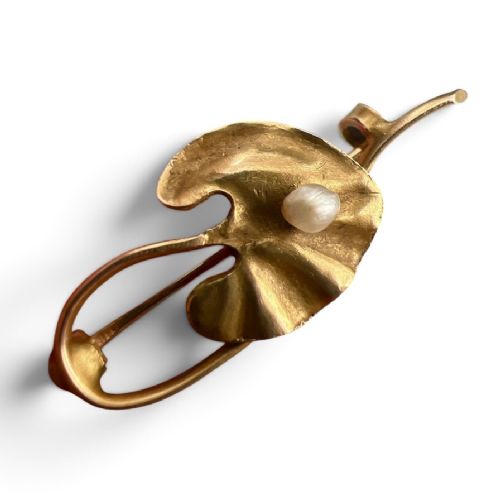
A gold leaf brooch takes its inspiration directly from nature, adopting the shapes of foliage, clover, and botanical motifs. These pieces span multiple decades, appearing frequently in Victorian, Edwardian, and mid-century designs.
How they were made
Goldsmiths utilised yellow gold, rose gold, white gold, and silver gilt to form the structural elements of these brooches, employing casting and hand-working techniques to achieve realistic leaf venation. Gemstones including diamonds, sapphires, rubies, emeralds, pearls, opals, and turquoise were then flush-set, claw-set, or bead-set into the precious metal.
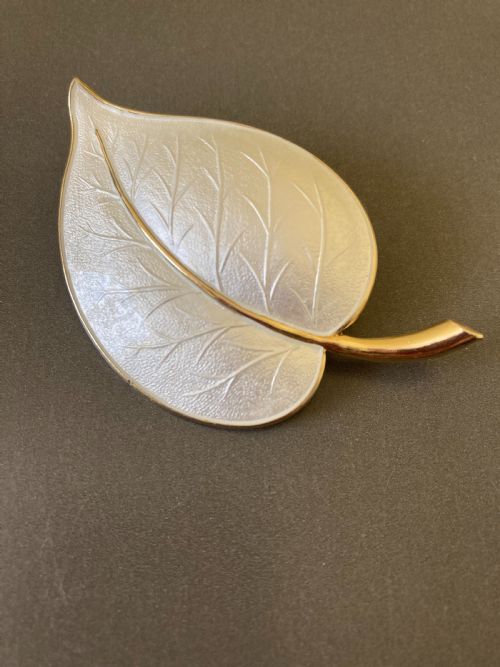
Makers integrated pin stems, safety catches, and sometimes pendant loops, allowing certain pieces to function as both brooches and pendants. Enamel work also appears on specific Scandinavian examples, adding colour alongside traditional metal fabrication.
Materials recorded in these listings include diamond, silver, gold, pearl, sapphire, ruby, opal, turquoise, and peridot set across multiple gold purities.
What varies in quality
The standard of a piece rests on the delicacy of the metalwork and the naturalism of the leaf shaping, where finer examples display individually textured veins and convincing curvature. The choice and matching of set stones, such as pearls, rubies, or diamonds, further distinguish standard production from exceptional jeweller output.
The integration of hallmarks, maker stamps, or specific assay office marks provides clear evidence of origin and metal purity, elevating pieces that retain their original fastenings and fitted boxes.
Aksel Holmsen
The Gold Leaf Brooch Glossary
- Silver gilt
- Silver that has been coated with a thin layer of gold on its surface. This technique provides the rich appearance of gold while utilising a silver base, seen in mid-century Scandinavian pieces.
- Assay mark
- A stamp or series of stamps applied to precious metals to guarantee their purity. These marks often indicate the testing office, such as Chester, and help date the item.
- Foliate motif
- A decorative design shaped like leaves or foliage. It defines the botanical aesthetic central to these brooches across various decades.
Gold Leaf Brooch: Frequently Asked Questions
What periods do these brooches come from?
The available pieces originate primarily from the Victorian and Edwardian eras, extending through the early twentieth century into the 1950s and 1960s.
Each period brings distinct stylistic choices, moving from detailed nineteenth-century floral and foliate motifs to mid-century Scandinavian interpretations.
Can a brooch also be worn as a pendant?
Certain designs include integrated loops or bail attachments alongside the pin mechanism. This dual functionality allowed Victorian and Edwardian wearers to suspend the piece from a chain as well as pin it to garments.
How do I care for antique gold jewellery?
Precious metals and set gemstones require gentle cleaning with a soft cloth to remove everyday oils and dust. Submerging items with delicate stones or pearls in liquid cleaners should be avoided to protect the settings.
Store each piece separately in a lined box to prevent scratching against other items.