



Diamond Floral Pin
A diamond floral pin captures botanical grace in precious metals and gemstones, offering wearable elegance that transforms any lapel.
Diamond Floral Pin
A diamond floral pin is a piece of jewellery designed to mimic flowers, foliage, and natural sprays using cut stones. These jewels serve primarily as brooches, and many double as pendants to offer multiple ways of wearing them. The most common versions seen here date from the 19th century and the Victorian era through to the mid-20th century, encompassing styles such as Art Deco and Art Nouveau.
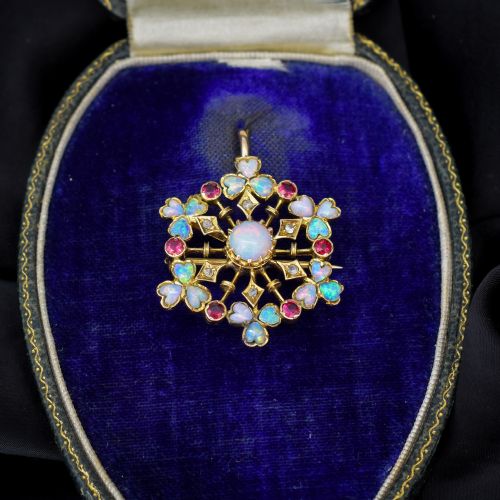
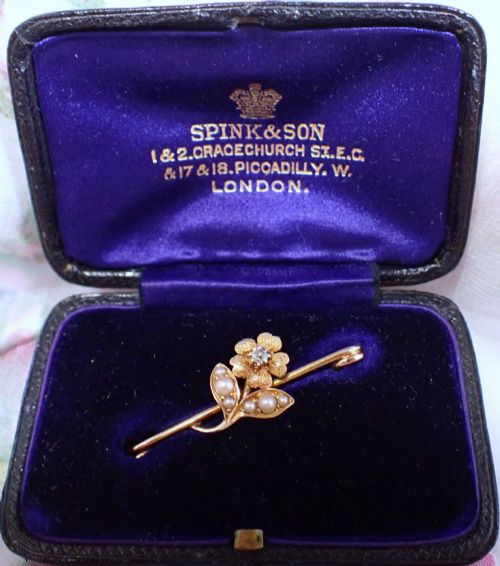
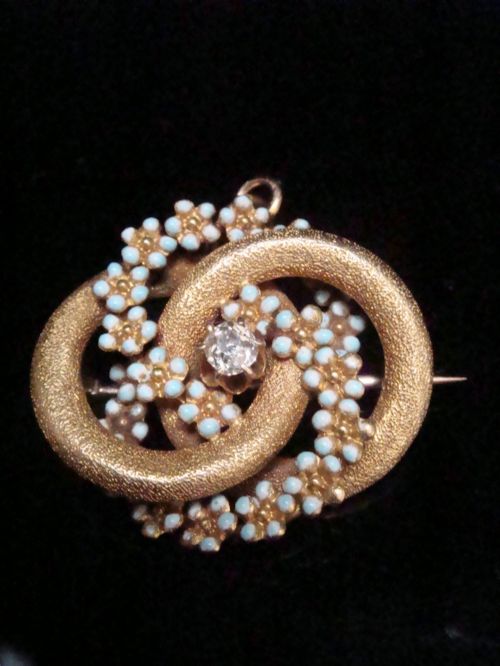
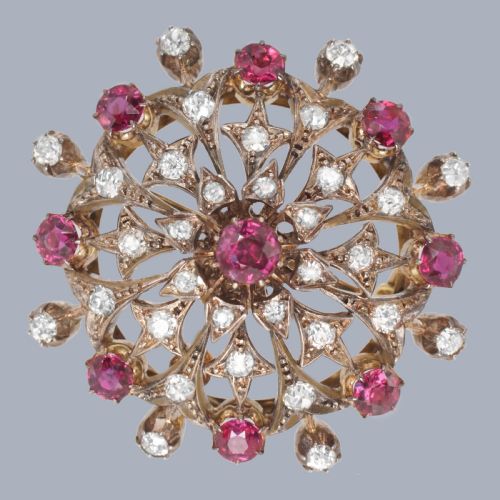
The forms range from simple single-stem floral bar brooches to elaborate multi-stone floral sprays set with rubies, sapphires, and emeralds. Makers during the Victorian period favoured naturalistic motifs like forget-me-nots and flower bouquets, utilising yellow gold alongside silver-topped settings. Later Art Deco and 1930s pieces introduce platinum and white gold, often focusing on geometric symmetry combined with organic floral layouts.
Materials and Techniques
Makers constructed these pins using a combination of precious metals, predominantly 15ct and 18ct gold, alongside platinum and silver. During the 19th century, jewellers frequently used silver-topped gold to mount diamonds, as silver provided a bright, white background that enhanced the sparkle of the stones without tarnish showing on the reverse. Enamel work also appears, notably plique-à-jour techniques in Art Nouveau pieces to create translucent, stained-glass petals.
Gemstones such as rubies, sapphires, emeralds, pearls, and opals accent the central diamond clusters to depict petals and flower centres. Jewellers secured these stones using claw settings, grain settings, and closed-back settings in earlier periods, shifting towards fine platinum wirework and pierced galleries in the 1930s to maximise light reflection through the diamonds.
The archive and current listings span from the mid-19th century up to the 1950s, covering Victorian, Edwardian, Art Nouveau, and Art Deco styles.
Assessing Quality
Quality in a diamond floral pin rests on the harmony of the design and the integration of the stones. Superior examples display a naturalistic flow in the stems and leaves, where the metalwork mimics the organic irregularity of real plants rather than appearing stiff or formulaic. The selection of matching gemstones and the precision of the stone setting dictate the overall refinement of the piece.
Gubelin
The Diamond Floral Pin Glossary
- Bar brooch
- A narrow horizontal pin, often featuring a central floral or gemstone cluster mounted directly on the metal bar.
- Plique-à-jour
- An enamelling technique where enamel is applied in cells without a backing, allowing light to shine through the translucent material like stained glass.
- Silver-topped gold
- A manufacturing method where a thin layer of silver is soldered to a gold backing, common in 19th-century diamond jewellery to present a bright white face.
- Forget-me-knot
- A sentimental motif combining floral elements and tied ribbons, popular in Victorian jewellery to symbolise enduring memory and affection.
- Floral spray
- A brooch design depicting a cluster of cut flowers and leaves arranged as if freshly gathered from a garden.
Diamond Floral Pin: Frequently Asked Questions
How do I wear a diamond floral pin?
These pieces function primarily as brooches, secured to coat lapels, heavy scarves, or structured dresses using the pin stem on the reverse. Several examples also incorporate hidden loops or bails, allowing them to be suspended from a chain and worn as a pendant.
When pinning to delicate fabrics, support the material from behind with a small backing piece to prevent the weight of the gold and diamonds from pulling the cloth.
What periods do these floral pins come from?
The selection spans from the mid-19th century through the Victorian era, the Art Nouveau and Art Deco periods, up to the mid-20th century. Victorian pieces often use yellow gold and naturalistic motifs, while 1930s examples lean towards platinum settings and structured sprays.
Looking at the metal choices and gemstone cuts helps determine the era, as platinum and white gold dominate the 1930s items whereas 15ct and 18ct yellow gold define the earlier Victorian work.
Are coloured gemstones common in floral pins?
Coloured stones frequently appear alongside diamonds to represent petals, leaves, and flower centres. Rubies, sapphires, emeralds, pearls, and opals are regularly integrated into the floral designs to create contrast and naturalistic colour.
These coloured gems work in tandem with the diamonds, sometimes forming specific botanical themes like ruby-accented roses or sapphire-centred forget-me-nots.