



Antique Floral Lapel Pin
These antique floral lapel pin pieces offer miniature botanical treasures in precious metals, bringing delicate blooms to a lapel.
Antique Floral Lapel Pin
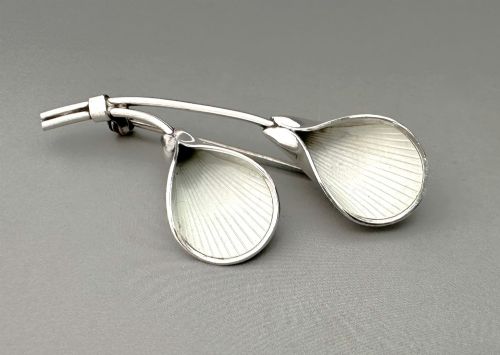
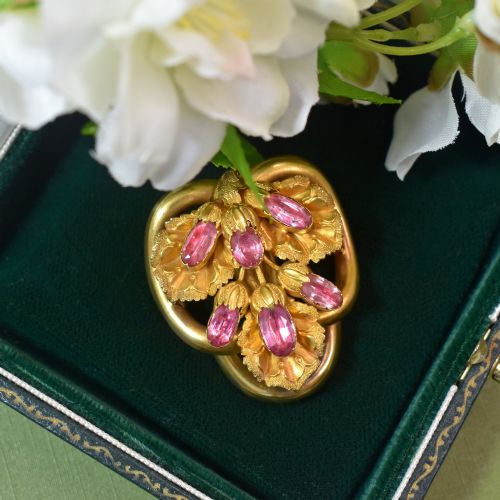
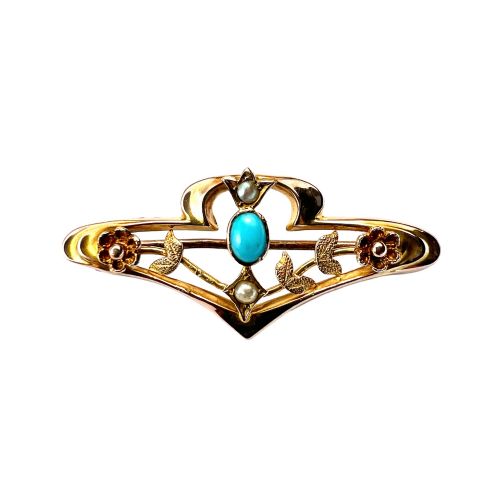
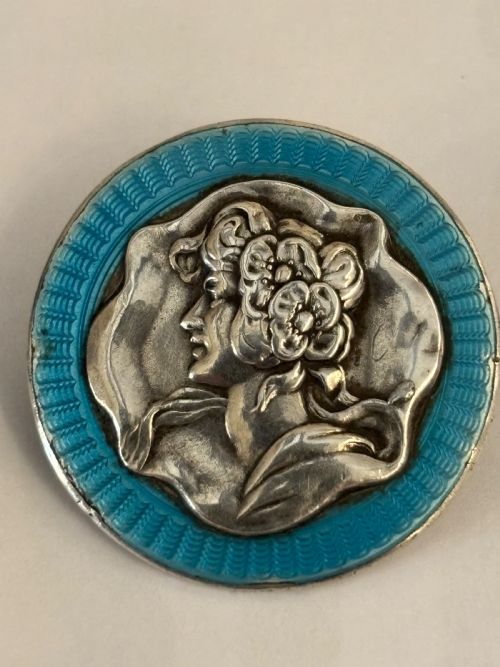
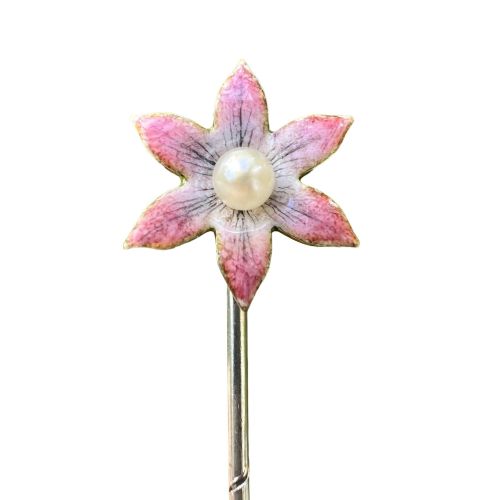
An antique floral lapel pin is a small decorative fastening designed to be worn on a coat or jacket lapel, taking the form of botanical motifs. The listings on this page span several distinct periods including the Victorian, Edwardian, and Art Nouveau eras, alongside mid-century Scandinavian pieces. Buyers will frequently encounter silver and gold settings shaped into petals and leaves, often accented with enamel or gemstones.
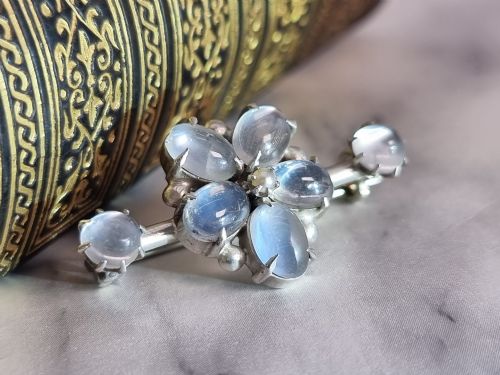
The forms on offer range from delicate stick pins to small brooches serving the same function on heavier cloth. Pieces often feature specific blooms such as pansies, alongside stylised flower heads characteristic of the Arts and Crafts movement. Materials combine precious metals with stones like turquoise, moonstone, and diamond to render the natural subject in durable form.
Materials and construction
Metals used across these pieces include sterling silver, silver gilt, and various grades of gold ranging from 9ct to 22ct. Goldsmiths shaped these metals into intricate wirework and cast mounts to support the botanical designs. Gemstones such as pearls, diamonds, amethysts, and foil-backed topaz are securely bezel-set or flush-set into the floral centres and petals.
Enamelling techniques play a significant role in bringing colour to the metal petals, utilising methods such as guilloche and translucent plique-a-jour. Vitreous enamel is fused to the metal base under high heat to create vibrant, lasting shades that mimic natural flora. Stones like moonstone and turquoise are cut en cabochon to catch the light softly against the polished or gilt surfaces.
Assessing quality and craftsmanship
Quality in these pieces rests upon the precision of the metalwork and the fineness of the enamelling. Superior examples display clean solder joints, secure stone settings, and even distribution of enamel across complex curved surfaces without cracking. The artistic interpretation of the botanical subject also dictates value, with fluid, hand-wrought lines distinguishing better pieces from heavier, mass-produced items.
The Antique Floral Lapel Pin Glossary
- Guilloche
- An engined-turned decorative technique producing precise, intricate patterns beneath a translucent layer of enamel. This method was widely utilised during the Edwardian period to add depth to silver flower petals.
- Plique-a-jour
- An enamelling technique where the enamel is applied without a backing metal, resembling miniature stained glass. Light passes directly through the transparent coloured cells of the floral design.
- Silver gilt
- Sterling silver that has been coated with a thin layer of gold, providing the warmth of gold with a silver base. This treatment appears frequently on mid-century botanical brooches.
- Cabochon
- A gemstone shaped and polished with a smooth, convex domed surface rather than faceted edges. Moonstones and turquoise are typically cut in this manner to showcase their natural lustre.
Antique Floral Lapel Pin: Frequently Asked Questions
How do I wear a floral lapel pin?
These pieces secure through heavy cloth using either a pin stem with a safety catch or a long stick pin secured with a clutch. Place the pin through the lapel buttonhole or directly through the fabric of the jacket.
Ensure the weight of the metal and stones matches the thickness of the cloth to prevent sagging. Heavier gold and diamond pieces suit structured wool coats, whilst lighter silver and enamel designs sit well on silk or cotton.
How do I tell Edwardian pieces apart from Victorian ones?
Victorian pieces often feature heavier gold weights, deeper settings, and stones like amethyst or foil-backed topaz with closed backs. The mood tends to be solemn or sentimentally ornate.
Edwardian and Art Nouveau designs introduce lighter platinum and silver mountings, vibrant enamels, and flowing botanical lines inspired by nature. Gemstones in these later pieces are frequently brighter and more whimsical, focusing on light and floral movement.
Are these pins suitable for daily wear?
While these items were constructed to be worn, their antique nature requires some care during daily use. Enamel surfaces and softer stones like pearls or moonstones can chip or scratch if struck against hard objects.
Store them in dedicated boxes away from other jewellery to prevent scratching. Remove them before participating in vigorous physical activity or housework.
How should I clean antique enamel and silver?
Clean silver components gently using a soft microfibre cloth designed for jewellery. Avoid harsh chemical dips, as these will strip patination and damage fragile enamelled surfaces or softer gems.
Keep enamel away from hot water and ultrasonic cleaners, which can cause the glass to crack within its metal cells. A damp cotton bud is usually sufficient to remove surface dust.