


Antique Botanical Jewellery
Antique botanical jewellery captures living flora in precious metals, translating leaves, flowers and clover into enduring wearable art.
Antique Botanical Jewellery
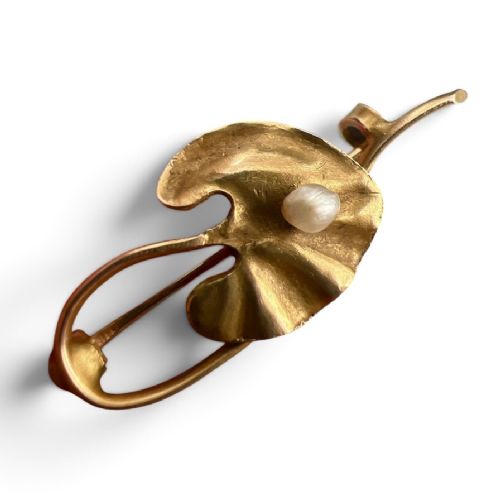
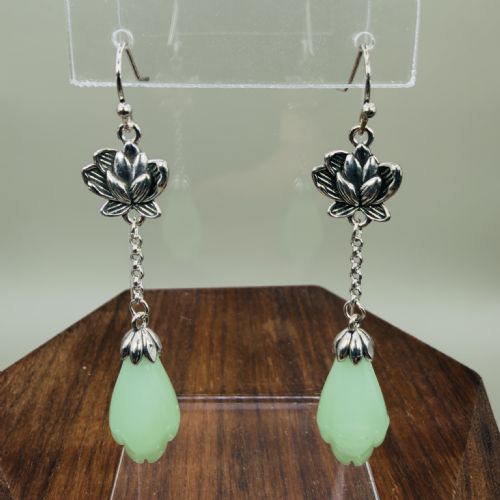
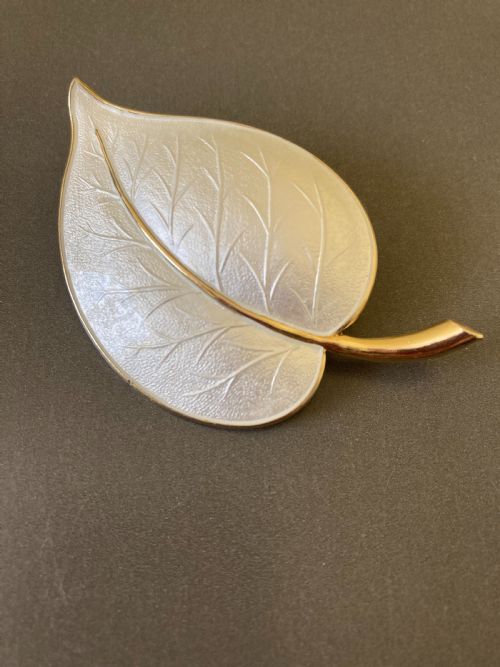
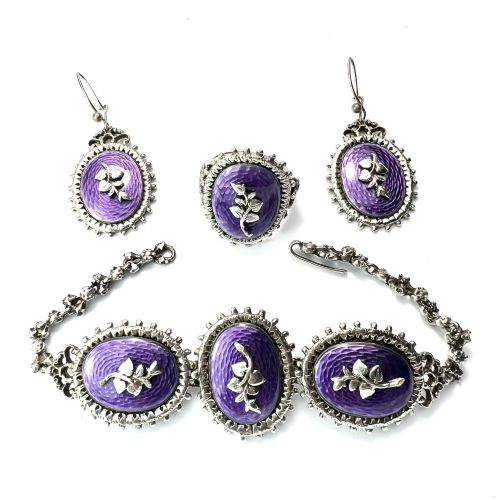
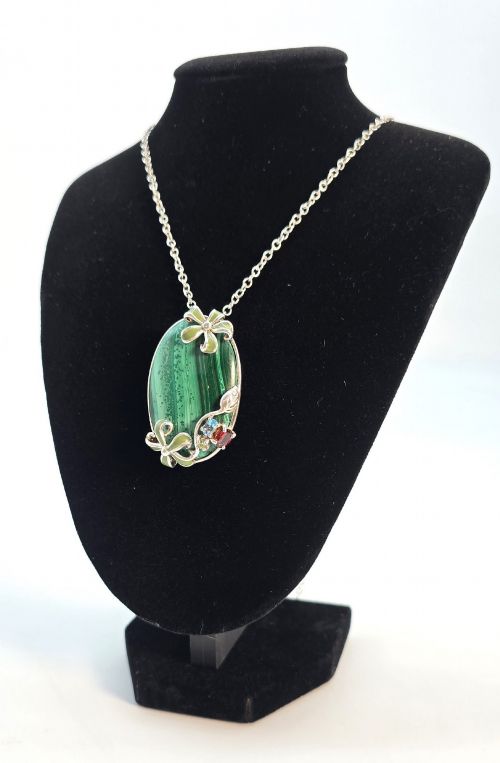
Antique botanical jewellery encompasses pieces shaped as leaves, flowers, clovers, acorns and thistles, rendered in gold and silver. These ornaments draw directly from nature, capturing the delicate curves of foliage and petals in durable media.
The pieces appearing on this page span several distinct eras, with strong representation from the Victorian, Edwardian and Art Nouveau periods. Brooches, earrings, rings and pendants dominate the selection, often incorporating natural motifs directly into their structural forms.
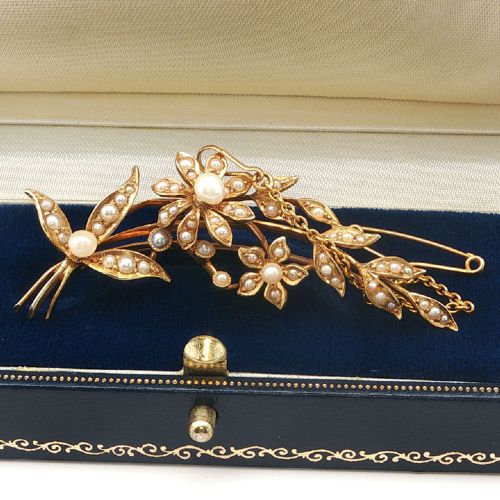
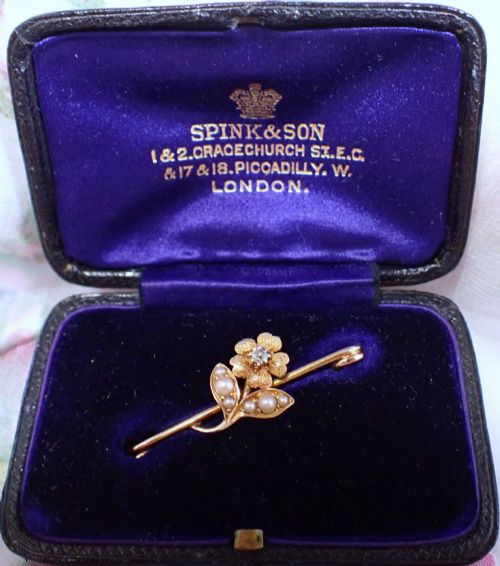
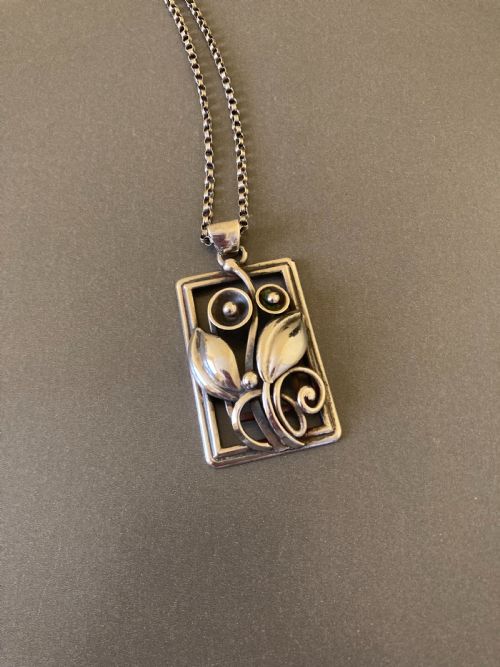
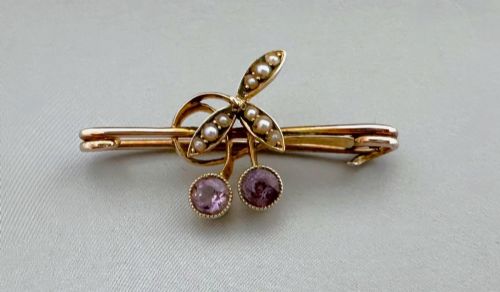
Moulded leaf sprays and flower clusters appear frequently, frequently paired with small pearls or diamonds to highlight structural details like stamens or dew drops. Buyers encounter everything from simple silver ivy drops to intricate gold flower brooches set with precious stones.
How they were made
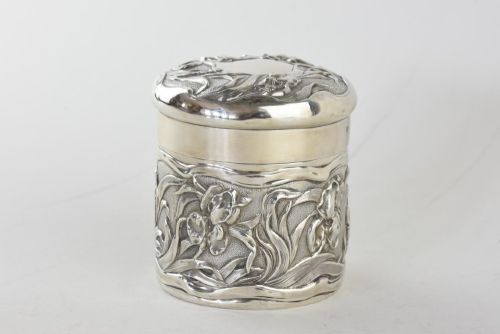
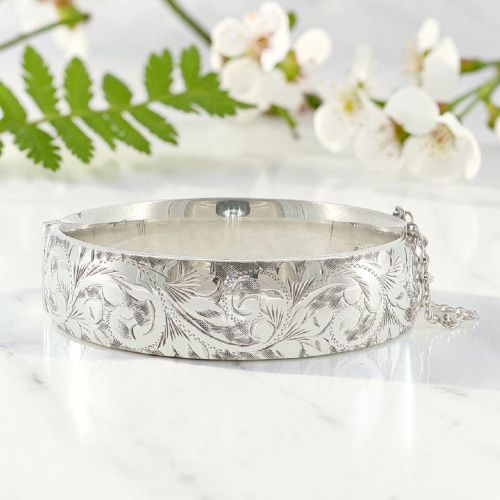
Goldsmiths and silversmiths shaped these botanical pieces using 9ct gold, 18ct gold, sterling silver and occasionally platinum. Metals were cast, hand-engraved or repoussé-decorated to create the textured veins of leaves and the soft contours of petals.
Enamelling techniques, notably translucent plique-à-jour which resembles stained glass without a backing, brought vibrant colour to flower petals and insect wings. Master jewellers set small diamonds, rubies, opals and pearls flush into the metal or raised them on delicate claws to mimic natural seed heads.
Stamping and piercing allowed workshops to produce lightweight yet complex floral silhouettes, particularly during the Edwardian era when delicate garland styles gained favour. Soldering joined individual leaf and stem components into coherent three-dimensional sprays.
One Edwardian brooch depicts a mischievous flower fairy nestled among plique-à-jour enamel leaves.
What varies in quality
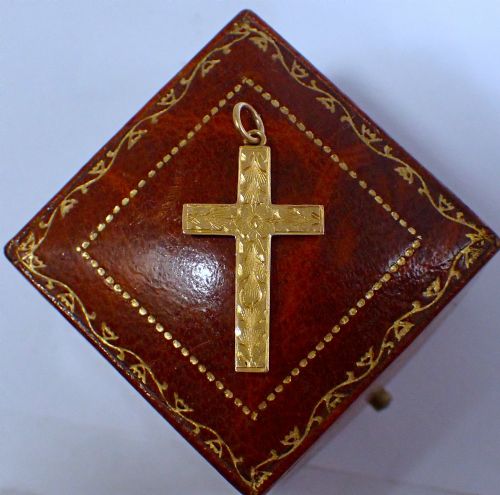
The standard of hand-engraving separates ordinary production from superior examples, visible in the crispness of leaf veins and the naturalistic asymmetry of stems. Master artisans carved metal with deep, varied strokes that catch the light, whereas lesser pieces rely on shallow machine stamping.
Gemstone selection and setting precision dictate the upper tier of these ornaments, requiring matched stones securely held without excessive claw metal obscuring the work. Enamel preservation also matters greatly, as damaged or chipped plique-à-jour diminishes the integrity of floral translucency.
The weight and gauge of the gold or silver foundation determine durability and tactile presence, distinguishing substantial pieces from hollow stampings. Heavier mountings support intricate multi-layered leaf designs that retain their structural rigidity over decades of wear.
Goldsmiths and Silversmiths Company·Harold Arthur Lazarus·Meyle and Mayer
The Antique Botanical Jewellery Glossary
- Plique-a-jour
- An enamelling technique where enamel is applied within a cellular framework without a backing, allowing light to shine through transparent coloured areas. This method creates realistic, luminous flower petals and insect wings.
- Repousse
- A metalworking technique where the artisan hammers the metal from the reverse side to form a raised design in relief. It gives botanical pieces like silver boxes and brooches their three-dimensional texture.
- Dormeuse
- A type of earring designed to be comfortable enough to wear while sleeping, often featuring a secure lever-back closure. In botanical pieces, these frequently take the form of small leaf or flower drops.
- Mark
- A stamped symbol or set of initials on precious metal indicating the maker, assay office and standard of purity. These stamps help date and attribute Victorian and Edwardian jewellery.
- Aesthetic Movement
- A late nineteenth century design style that emphasised visual beauty and natural forms over narrative content. Pieces from this period focus heavily on stylised flora and fauna.
Antique Botanical Jewellery: Frequently Asked Questions
What periods do these pieces come from?
The inventory spans the Victorian, Edwardian and Art Nouveau eras, alongside mid-century and later twentieth-century examples.
Victorian and Edwardian items dominate the selection, showcasing traditional floral motifs executed in yellow gold and silver.
How should I clean antique silver jewellery?
Gentle washing with warm soapy water and a soft brush removes everyday oils and dust without harming fragile stones.
Avoid harsh chemical dips, especially on pieces with enamel or pearls, which suffer permanent damage from abrasive substances.
Are these items suitable for daily wear?
Sturdy rings and brooches withstand regular use if handled with reasonable care, though delicate drop earrings require mindful storage.
Pieces featuring pearls or plique-à-jour enamel need extra caution to prevent impact fractures or moisture degradation.
How do I identify Art Nouveau botanical pieces?
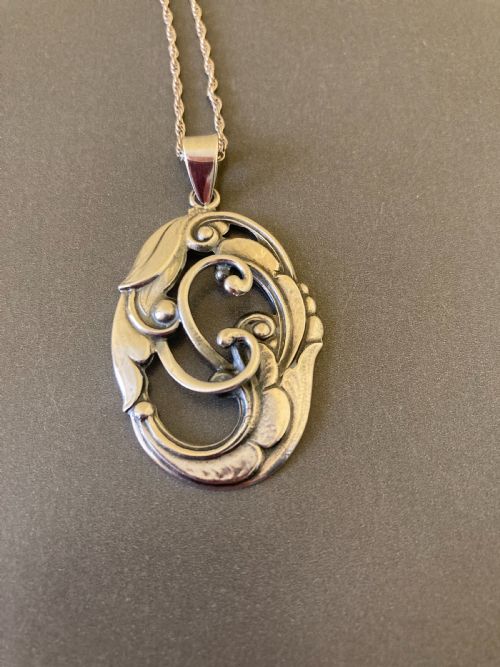
Art Nouveau designs feature flowing, asymmetrical lines inspired by natural plant growth, avoiding rigid symmetry.
Look for whip-lash curves, mistletoe leaves and translucent enamels that capture organic forms typical of the 1900 period.