


Gold Lacquered Box
A gold lacquered box brings together intricate surface work and practical storage, spanning diverse periods from the eighteenth century to the twentieth.
Gold Lacquered Box
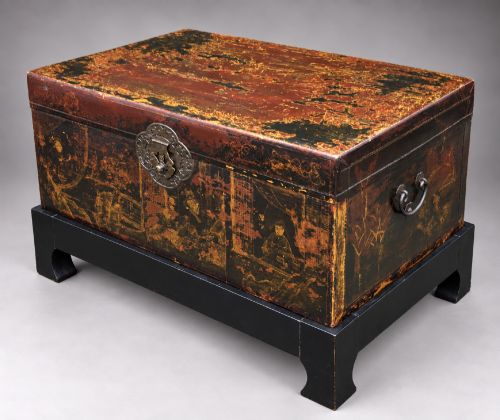
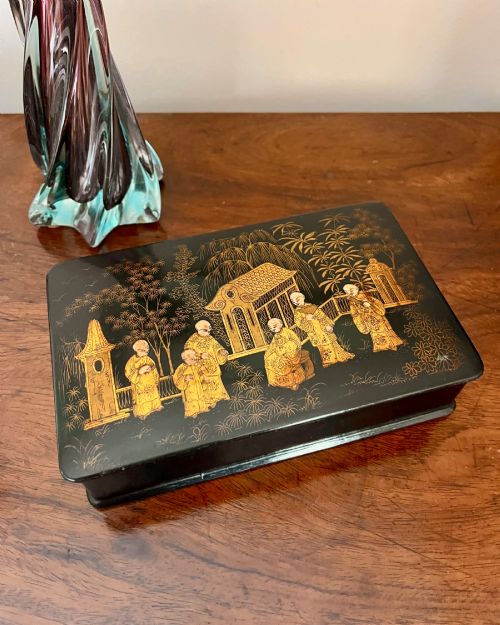
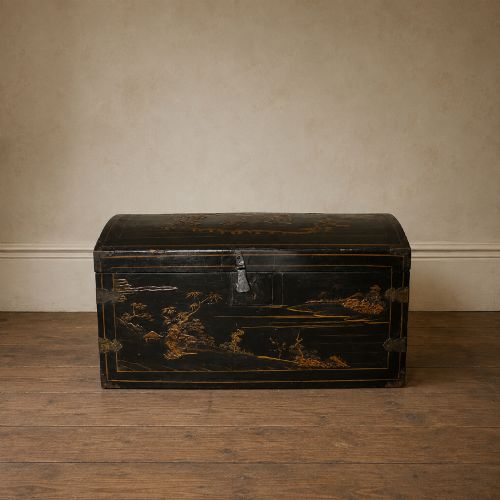
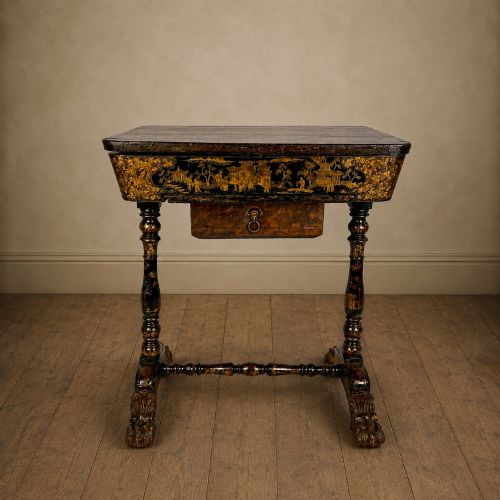
A gold lacquered box encompasses a broad range of vessels designed for keepsakes, jewellery, tea, or documents, appearing in forms from small incense containers to large blanket chests. The pieces originate from diverse workshops in Japan, China, Russia, Kashmir, and England, reflecting distinct regional tastes and export traditions.
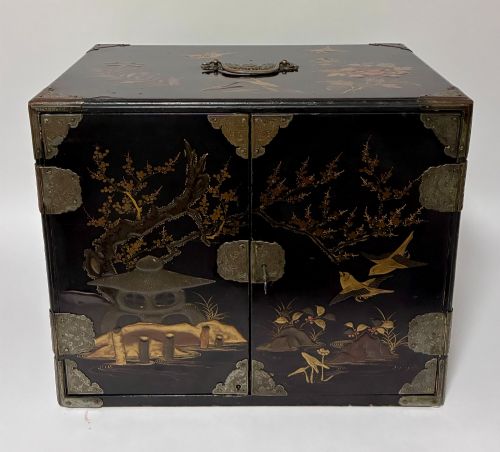
The version most commonly met on this page is the Japanese export box or table cabinet from the nineteenth or early twentieth century, often decorated with gilt motifs on a dark ground. Alongside these, buyers find Regency penwork pieces, Chinese export chests, and Russian papier-mâché boxes.
How They Were Made
Articles are constructed primarily from wood, boxwood, or papier-mâché, providing a stable foundation for the complex surface treatments applied by artisans. Layers of lacquer build the smooth body, upon which gold leaf or gilt decoration is meticulously hand-painted, often depicting traditional landscapes, flora, or fauna.
Hardware such as brass hinges, locks, and handles frequently accompany the timber and metal structures, while select examples incorporate bone or ivory details for structural contrast.
Listings span eight distinct periods, from the eighteenth century through the Edwardian era.
What Varies in Quality
The standard of a piece rests heavily on the depth and precision of the surface decoration, distinguishing between brisk commercial output and meticulous studio work. The finesse of the gold leaf application, the complexity of the hand-painted motifs, and the preservation of the underlying lacquer layers define the upper tier of the range.
Construction integrity also dictates worth, separating robustly joined table cabinets and dovetailed coffers from more fragile items where the timber or papier-mâché core has suffered movement or surface degradation over time.
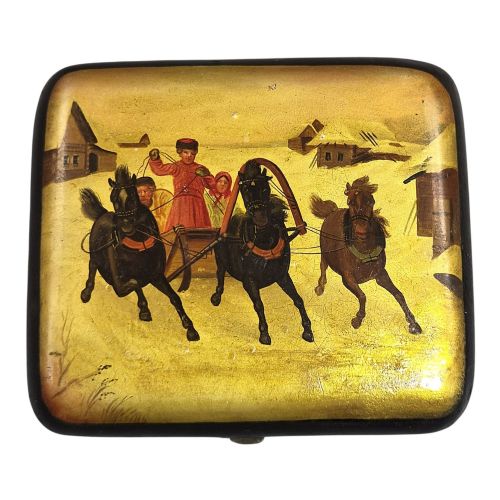
Vishnyakov Workshop
The Gold Lacquered Box Glossary
- Kodansu
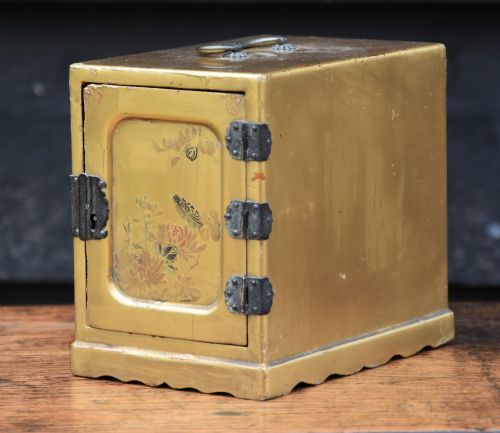
- A small Japanese table cabinet featuring multiple internal drawers, typically finished with lacquer and metal fittings. These miniature chests were used for storing documents, seals, or personal valuables.
- Inro
- A traditional multi-tiered Japanese case used for carrying small items, suspended from a sash. They are frequently decorated with intricate lacquer and gold leaf.
- Chinoiserie
- A European stylistic interpretation of Chinese and East Asian artistic traditions, prominent in furniture and decorative objects during the eighteenth and nineteenth centuries. It relies heavily on painted landscapes and gilt motifs.
- Penwork
- A decorative technique utilising fine ink drawings on wood, often enhanced with tinted washes and varnished to resemble more costly inlays. Regency pieces frequently employ this method.
- Papier-mâché
- A composite material consisting of paper pieces or pulp reinforced with glue or resin, moulded and dried into a rigid form. Russian workshops utilised this extensively for hand-painted boxes and cases.
Gold Lacquered Box: Frequently Asked Questions
How do I care for a lacquer box?
Keep the piece away from direct sunlight and fluctuating humidity to prevent the lacquer from drying or cracking. Dust gently with a dry, soft cloth without applying modern polishes or cleaning agents.
Place the box on a stable surface where it will not experience heavy handling, preserving both the structural joinery and the delicate surface decoration.
What were these boxes originally used for?
These vessels served numerous domestic and ceremonial functions, holding everything from dry tea leaves and sewing implements to documents and personal correspondence. Larger examples functioned as storage coffers or writing desks for daily administrative tasks.
Specialised forms like incense containers and inro held aromatic materials or personal seals, reflecting the specific daily rituals of their period of origin.
How can I tell a Japanese piece from a Chinese export piece?
Japanese items from the Meiji period often display distinct motifs such as cranes or natural landscapes executed in gold lacquer on boxwood or dark lacquer grounds. Chinese export pieces frequently incorporate characteristic architectural elements, court figures, and dense floral borders typical of Canton trade production.
Examining the underlying construction timber and the specific tone of the gilt decoration helps clarify the regional workshop origin.
Are Regency penwork boxes made of lacquer?
Regency penwork boxes use fine ink drawing and varnished wooden surfaces rather than traditional Asian lacquer resin, though they achieve a similarly dark, polished finish. Artisans drew intricate designs directly onto light wood before sealing them with clear protective coats.
These English pieces often mimic the exotic aesthetic of contemporary Asian imports while employing entirely domestic materials and techniques.