


Gold Lacquer Chest
A gold lacquer chest brings the rich depth of orientalism and export craftsmanship into a room.
Gold Lacquer Chest
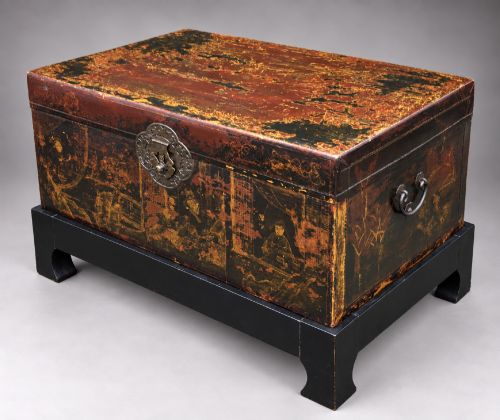
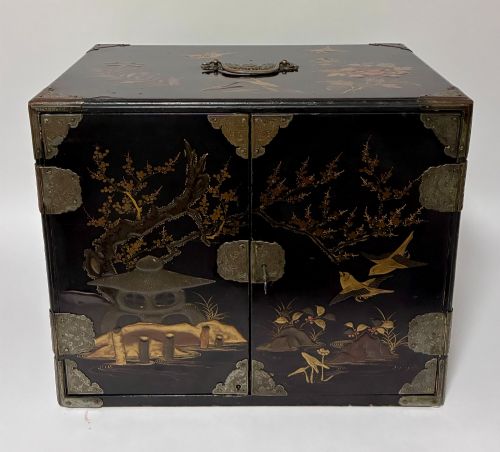
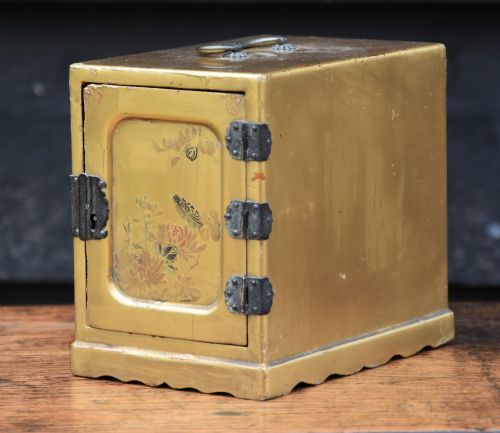
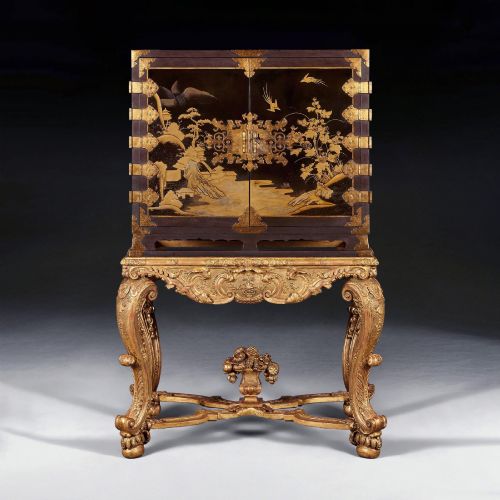
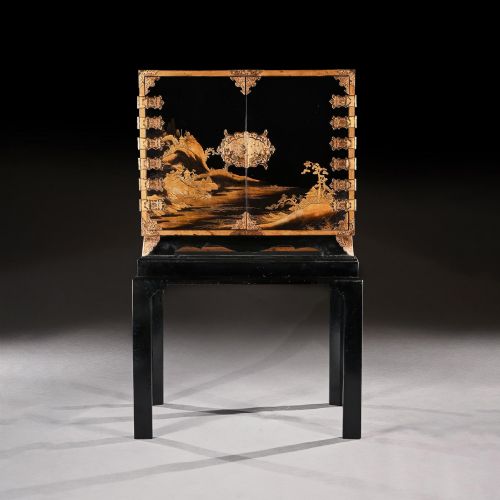
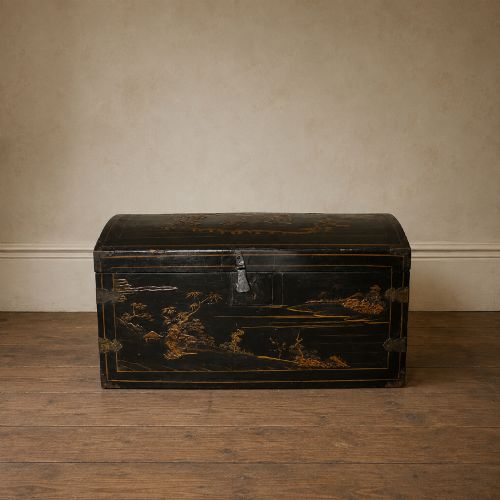
A gold lacquer chest encompasses a diverse array of table cabinets, tea caddies, blanket boxes, and larger pieces on stands produced across various centuries. When searching for a gold lacquer chest, buyers frequently encounter portable table cabinets and smaller coffers designed for jewellery or correspondence.
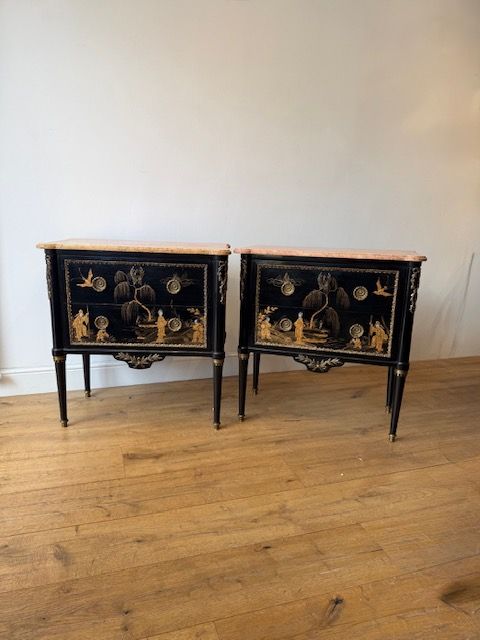
The objects originate from multiple stylistic traditions including Japanese Meiji and Edo periods, Chinese Export, and European interpretations such as Regency penwork and Chinoiserie. Pieces on stands elevate compact coffers into prominent furniture items within an interior scheme.
Origins stretch from East Asian workshops to English and Anglo-Indian makers adapting oriental motifs during the Georgian and Regency eras. The selection bridges intimate tea caddies and substantial blanket boxes sharing surface gilding.
What varies in quality
The finesse of the surface decoration and the depth of the gilding determine the distinction between standard production and exceptional examples. Hand-painted pictorial scenes display greater brushwork control and narrative complexity than repetitive stencilled motifs.
The integrity of the wooden carcass and the survival of original stands or brass hardware heavily influence desirability. European adaptations and English penwork pieces derive their merit from the precision of the draughtsmanship and the preservation of the original finish.
Object forms include table cabinets, tea caddies, blanket boxes, coffers, jewellery boxes, and bureau bookcases across diverse regional styles.
The Gold Lacquer Chest Glossary
- Lacquer
- A durable resin finish applied to wooden objects, providing a smooth, glossy protective surface that accepts metallic leaf and paint. It forms the primary medium for these chests and cabinets.
- Chinoiserie
- European artistic styles reflecting Chinese and East Asian motifs, popular in furniture decoration from the seventeenth century onwards. This aesthetic appears on numerous chests and stands on this page.
- Kodansu
- A traditional Japanese small cabinet featuring multiple internal drawers for storing valuables or documents. These portable pieces often exhibit detailed gold lacquer work.
- Penwork
- A decorative technique utilising fine ink drawings on wood to simulate oriental lacquer or geometric patterns. It is particularly characteristic of Regency-era English tea caddies and cabinets.
- Cofer
- A large strongbox or chest traditionally used for storing travel garments or valuables. Examples often rest on matching stands.
Gold Lacquer Chest: Frequently Asked Questions
What is a gold lacquer chest used for?
These chests and cabinets serve primarily as decorative storage for small personal items, documents, or tea.
Larger versions like blanket boxes accommodate textiles while table cabinets organise correspondence.
How do I care for a lacquer surface?
Protect the finish by keeping pieces away from direct sunlight and maintaining stable room humidity.
Dust gently with a soft dry cloth and avoid chemical polishes.
Are these pieces Japanese or Chinese?
The inventory includes items from both Japanese and Chinese export traditions alongside European Chinoiserie.
Specific periods like the Meiji or Edo eras indicate Japanese origins.
What does on stand mean?
Many smaller chests and cabinets pair with a dedicated base or stand to display them at a convenient height.
Stands range from period giltwood frames to matching lacquered supports.
What is a tea caddy?
A tea caddy is a small box designed to store loose tea leaves securely under lock and key.
Regency examples often feature penwork decoration.