


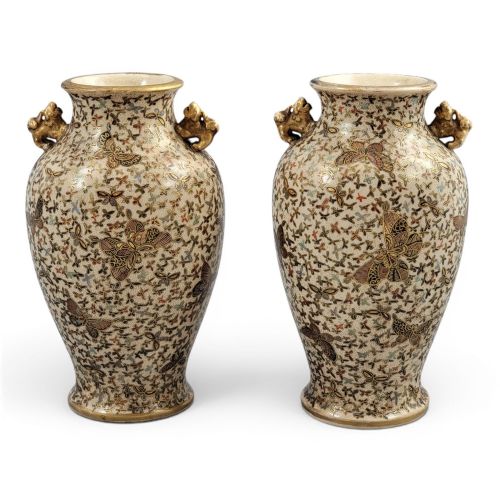


Gold Japanese Ceramic Vases
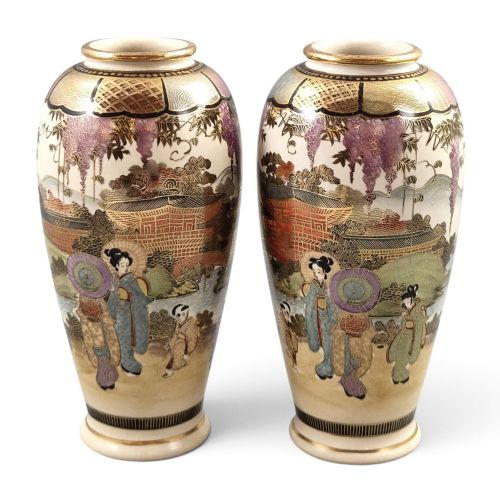
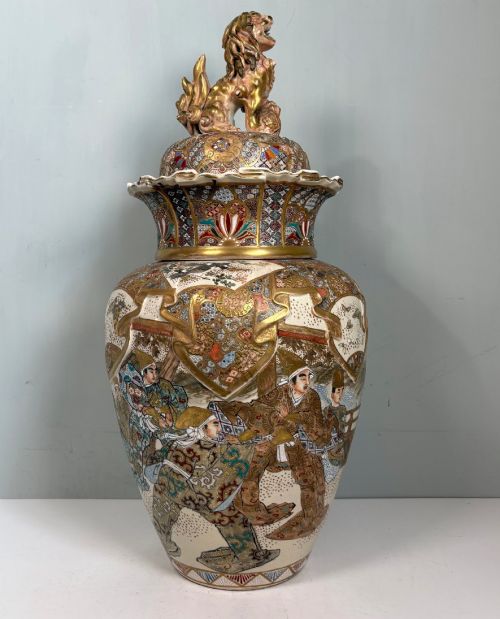
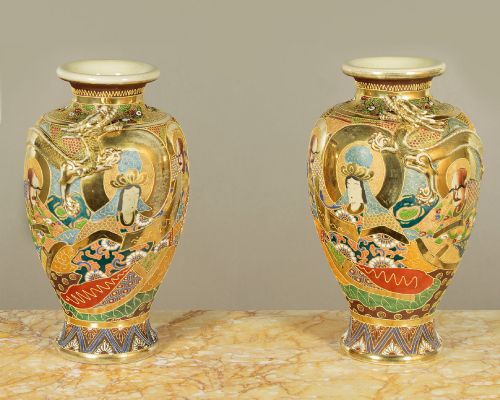
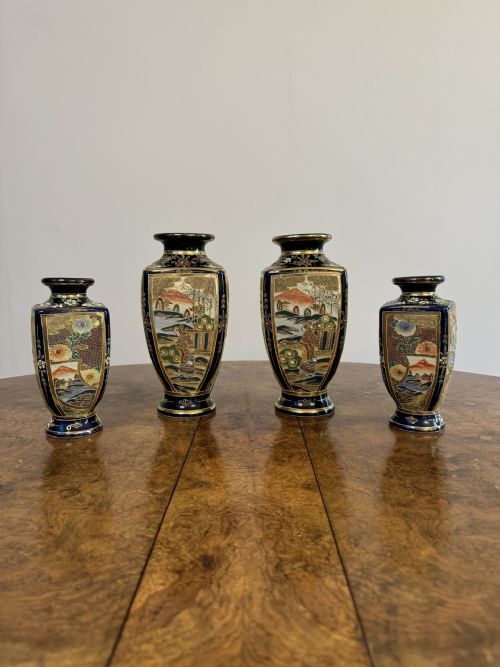
Gold japanese ceramic vases bring together intricate earthenware forms and rich gilding, offering collectors detailed scenes from the Meiji and Showa periods.
Gold Japanese Ceramic Vases
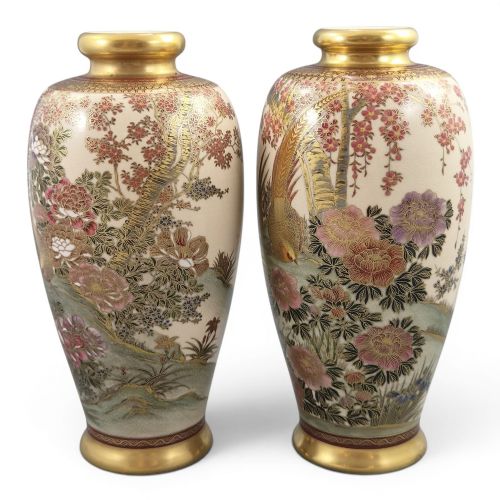
Gold japanese ceramic vases encompass earthenware and porcelain vessels produced during the Meiji, Taisho, and Showa periods, alongside select Victorian British interpretations. You will frequently encounter Satsuma and Kutani wares shaped as baluster vases, garnitures, and cylindrical vessels.
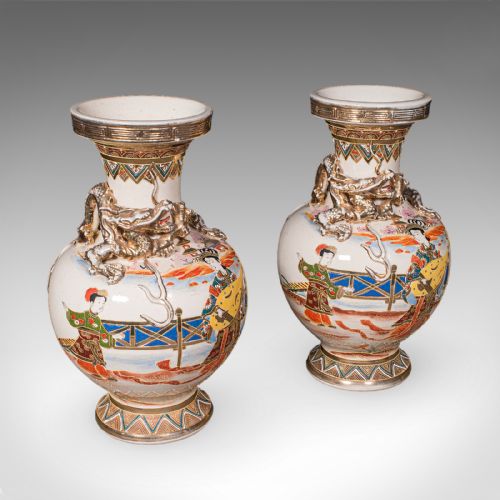
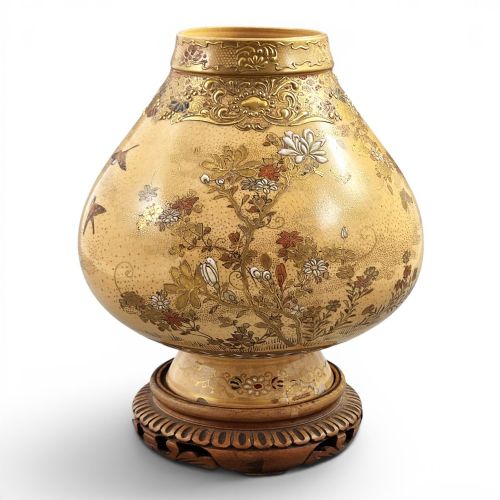
The decorative schemes span figurative panels depicting arhats and family scenes, alongside botanical motifs like wisteria and butterflies. Makers applied heavy gold leaf, gilt, and enamel highlights over earthenware bodies to create visually dense surfaces.
Materials and production techniques
Ceramic bodies of earthenware and porcelain form the foundation, shaped into baluster, hexagonal, and globular silhouettes. Kiln-fired clay receives painted enamel designs and cobalt underglazes before finishing touches are applied.
Gilding techniques utilise gold leaf and gilt applications to build intricate patterns, sometimes incorporating raised moriage relief work. Artisans in Kyoto, Kobe, and Kaga employed these methods to achieve detailed pictorial panels.
Listings feature 19th-century and early 20th-century periods, including Meiji, Showa, and Edwardian eras.
Factors of quality and execution
Execution of the painted figural scenes and botanical panels separates standard production from exhibition pieces. Finer examples display meticulous brushwork in the facial expressions of arhats and the delicate rendering of butterfly wings.
The density and purity of the gold leaf or gilt embellishment contribute significantly to the visual impact. Heavy moriage relief work and cobalt depth provide a tactile and textural richness found in workshop-signed pieces.
Shozan·Manpei·Kinkōzan·Hotoda·Chosei·Nanzan·Seiko-en Chokei·Hakusan·Kinrin·Hattori
The Gold Japanese Ceramic Vases Glossary
- Satsuma
- Earthenware pottery originating from Satsuma Province, characterised by a crackled ivory glaze and detailed enamel and gilt decoration. These wares became prominent for export during the Meiji period.
- Kutani
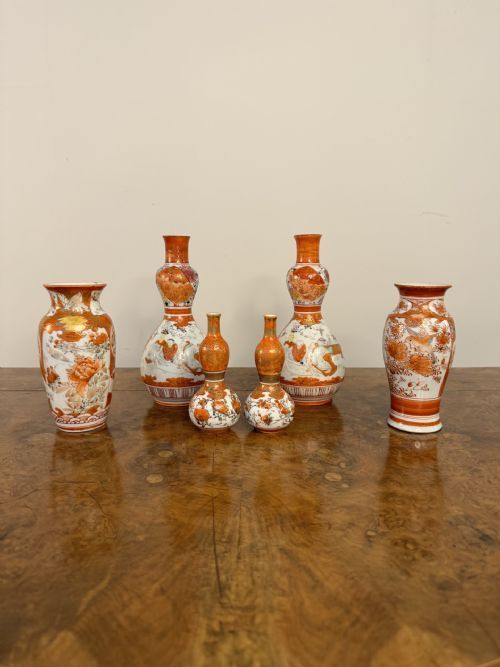
- Japanese porcelain or pottery traditionally produced in Kaga province, known for vibrant colour palettes including iron red and extensive gold highlights. Kutani vases often feature pictorial scenes or geometric borders.
- Moriage
- A ceramic decorating technique where slip is piped onto the surface like cake icing to create raised relief designs before glazing and gilding. This method adds significant texture to the vessel body.
- Baluster
- A vase form with a rounded body that tapers toward the base and flares at the neck, resembling an architectural baluster. Many Satsuma and Kutani pieces utilise this traditional silhouette.
- Mon
- A Japanese heraldic badge or crest used to identify families or clans, frequently found painted in gold on Satsuma ceramics associated with the Shimazu clan.
Gold Japanese Ceramic Vases: Frequently Asked Questions
What is Satsuma ware?
Satsuma ware is a type of Japanese earthenware featuring a pale, finely crackled glaze decorated with polychrome enamels and gold. It gained widespread popularity during the Meiji period for export markets.
Artisans used these ceramics as canvases for dense narratives depicting deities, historical figures, and courtly scenes enhanced by heavy gilding.
How do I spot Kutani ceramics?
Kutani ceramics are distinguished by their bold colour schemes, which frequently pair deep iron reds and greens with comprehensive gold ornamentation. These pieces often take the form of cylindrical or shaped vases.
The workshops in Kaga province produced both everyday vessels and high-end decorative objects featuring intricate natural and figural motifs.
What does moriage mean on a vase?
Moriage refers to raised clay ornamentation applied by hand to the ceramic surface before firing and gilding. It creates a tactile, three-dimensional effect that catches the light.
Collectors often look for heavy moriage framing delicate landscape panels or emphasising the robes of painted figures.
How should I display antique Japanese vases?
Display these vases away from direct sunlight to protect the delicate enamel pigments and gold leaf from fading over time. Placing them on stable, flat surfaces ensures their heavy earthenware bodies remain secure.
Because many feature wrap-around panels or detailed back scenes, positioning them where light illuminates the gilt highlights enhances their visual depth.