


Gold Inlaid Cabinet
A gold inlaid cabinet brings striking contrast and rich detail to a room, offering both display space and decorative presence.
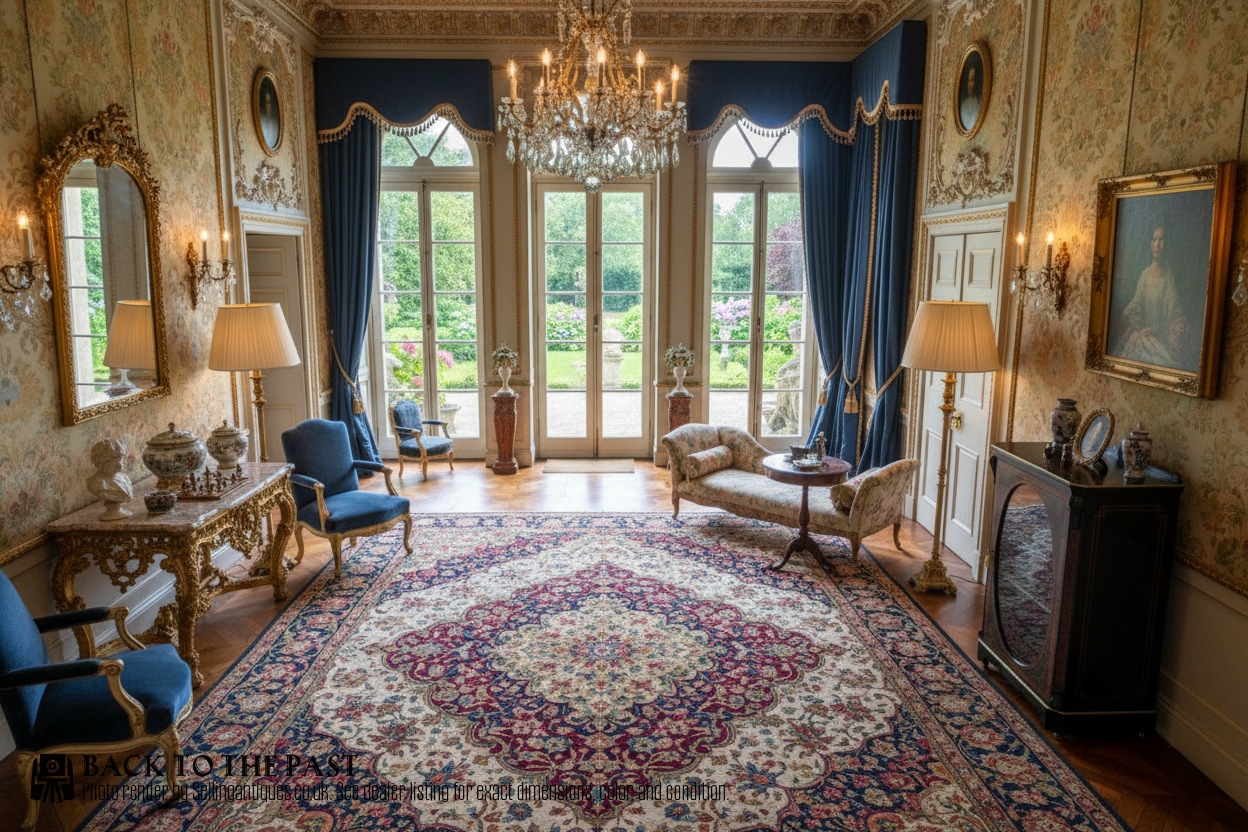
Gold Inlaid Cabinet
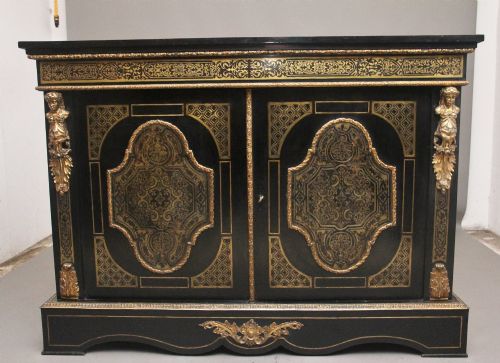
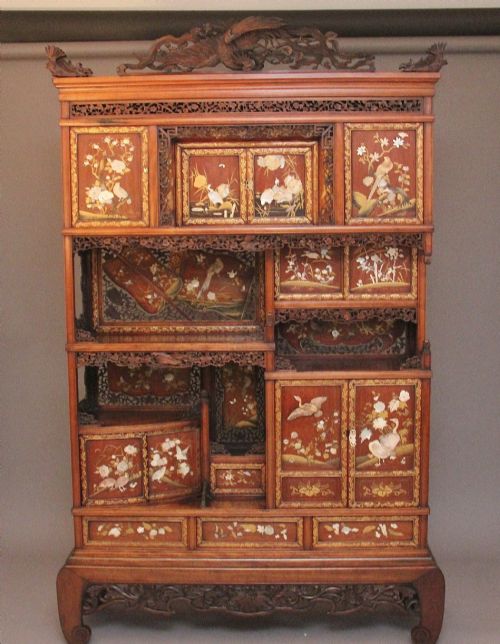
Buyers seeking a gold inlaid cabinet encounter a distinct range of nineteenth-century furniture, including Victorian, Napoleon III, and Japanese Meiji period examples.
The selection centres on display cabinets, side cabinets, pier cabinets, and credenzas, alongside occasional tables and sewing tables.
These pieces combine rich timbers and dark surfaces with intricate metallic inlay, providing functional storage and focal points for interiors.
How they were made
Craftsmen utilised ebonised wood, walnut, ebony, and hardwood as the primary foundations for these cabinets and tables.
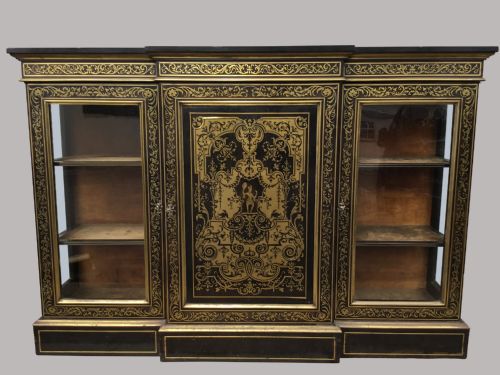
Surface decoration relies on brass, ormolu, tortoiseshell, and gilt bronze, often executed in boulle work or marquetry patterns.
Glazed doors, serpentine fronts, and mounts of ormolu are integrated into the construction to frame the inlaid details.
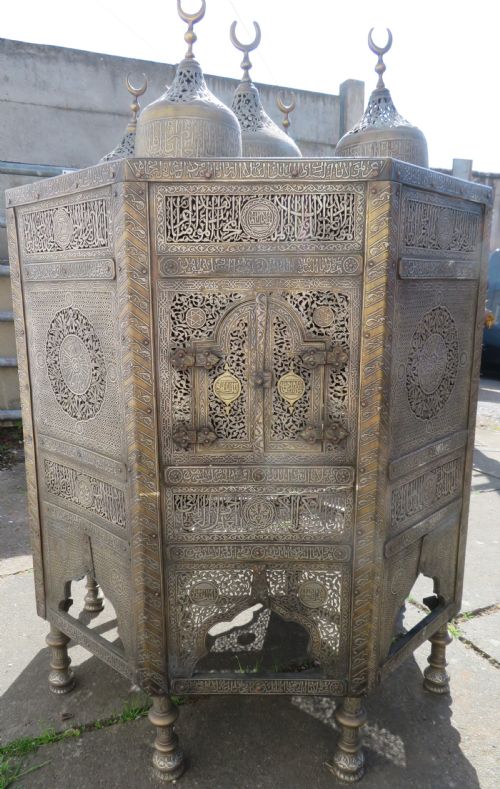
A Cairoware Quran stand occasionally joins the lineup alongside French side cabinets and Japanese display pieces.
What varies in quality
The refinement of the metallic inlay and the precision of the marquetry define the upper tier of these pieces.
Quality rests in the harmony between the primary timber, such as figured walnut or ebonised wood, and the applied bronze or brass.
The complexity of the form, from breakfront side cabinets to serpentine credenzas and Shibayama work, dictates the distinction.
The Gold Inlaid Cabinet Glossary
- Boulle
- A form of marquetry using brass and tortoiseshell inlaid into wood, developed in France and widely utilised in nineteenth-century cabinets.
- Ormolu
- Gilt bronze mounts applied to furniture edges and corners, providing structural enrichment and decorative contrast.
- Marquetry
- The art of applying pieces of veneer to a structure to form decorative patterns, seen across walnut and exotic timbers.
- Pier cabinet
- A low cabinet designed specifically to stand against the wall space between windows.
- Shibayama
- A Japanese craft technique involving the inlay of precious materials like shell and ivory into wood surfaces.
Gold Inlaid Cabinet: Frequently Asked Questions
What is a gold inlaid cabinet?
A gold inlaid cabinet is a nineteenth-century piece of furniture, such as a pier cabinet, credenza, or display cabinet, featuring metallic inlay work.
These items utilise woods like walnut or ebonised timber combined with brass, ormolu, or gilt bronze to create decorative surfaces.
How do I date a gold inlaid cabinet?
Dating relies on identifying stylistic markers, periods such as Victorian or Napoleon III, and materials like tortoiseshell or ormolu.
Construction methods and specific design movements, including the Aesthetic Movement and Japanese Meiji period, help narrow the timeframe.
Where were these cabinets placed?
They were designed for principal reception rooms, parlours, and drawing rooms to display precious objects and ceramics.
Specific forms like pier cabinets stood between windows, while side cabinets and credenzas anchored larger wall spaces.
What is boulle work?
Boulle is a precise marquetry technique combining brass and tortoiseshell, named after the French cabinetmaker Andre-Charles Boulle.
Nineteenth-century makers revived this method to adorn ebonised side cabinets, credenzas, and tables with shimmering metallic patterns.