
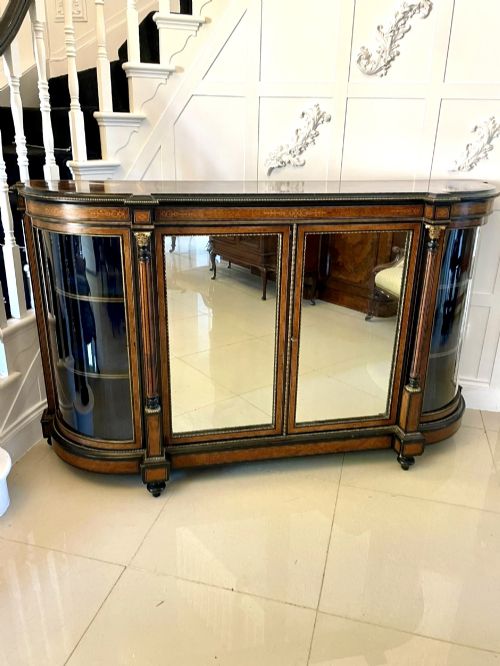
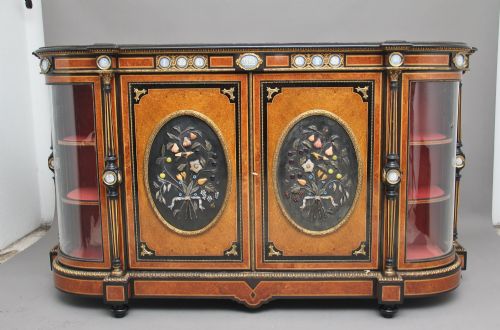
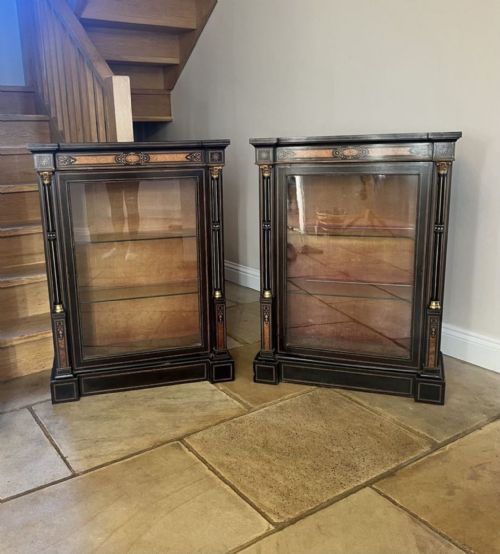
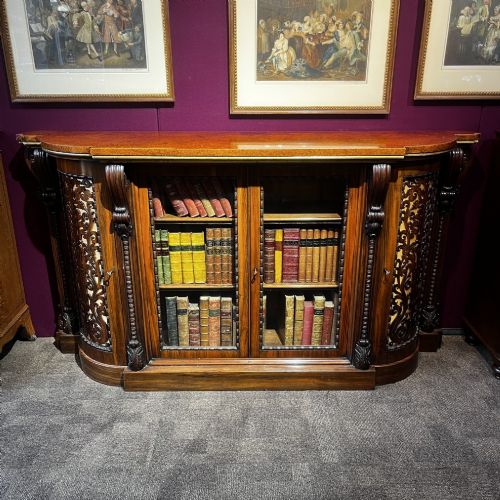
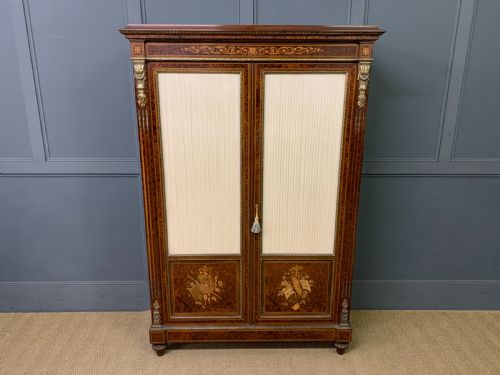
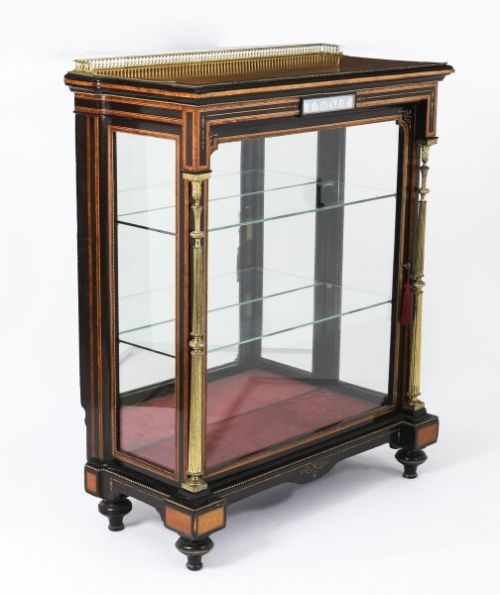


Amboyna Glazed Cabinet
An amboyna glazed cabinet is a figured display piece finished in exotic burl timber and glass, bringing rich grain and warm tone to a refined interior.
Amboyna Glazed Cabinet
An amboyna glazed cabinet brings together the figured warmth of amboyna timber and glazed doors designed for the display of treasured objects. When you search for an amboyna glazed cabinet, you encounter pieces spanning the Victorian era and the broader nineteenth century, reflecting the tastes of collectors who prized exotic veneers.
The forms on this page range from pier display cabinets and side cabinets to grand breakfront bookcases and credenzas. Many examples combine amboyna with ebonised wood or burr walnut, creating striking contrast through dark borders and rich central panels.
Originating predominantly from Victorian workshops, these pieces often incorporate inlaid details and brass mounts. The style encompasses Early Victorian craftsmanship, later nineteenth-century French designs, and Aesthetic Movement sensibilities.
Materials and construction
Makers utilised amboyna veneer over a stable secondary timber, slicing the burr to reveal intricate, swirling grain patterns. This precious veneer was typically applied to the primary display surfaces and door panels.
Contrust was achieved by pairing the light, golden-brown amboyna with ebonised wood, creating dark framing that accentuates the grain. Ormolu mounts, brass stringing, and pietra dura inlays frequently complete the decorative scheme.
Glass panels were set into doors framed to protect the interior while offering clear visibility for books or porcelain. Cabinet makers combined these glazed sections with substantial timber carcasses built to support heavy collections.
Materials recorded on this page include amboyna veneer, glass, brass, ebonised wood, ormolu, burr walnut, and pietra dura.
Markers of distinction
The tier of a piece depends heavily on the selection and matching of the amboyna veneer. Superior cabinets display dense, symmetrical burr patterns that flow harmoniously across the doors and facade.
Construction rigour separates standard items from the finest examples. Look at the precision of the brass inlay, the depth of the ebonised finish, and the integration of ormolu mounts rather than surface decoration alone.
The integrity of the glazed doors and the crispness of any carved or inlaid details indicate the maker's skill. Finer pieces maintain balanced proportions across complex breakfront or credenza forms.
The Amboyna Glazed Cabinet Glossary
- Amboyna
- A highly prized exotic wood derived from the Pterocarpus indicus tree, known for its dense, mottled burr grain. It is typically applied as a veneer rather than used as solid timber.
- Ebonised
- Timber treated to imitate ebony, usually through staining or painting. This dark finish provides sharp visual contrast against lighter amboyna panels.
- Credenza
- A low cabinet or sideboard often featuring glazed central doors and curved side compartments. These forms served both display and storage functions in nineteenth-century interiors.
- Ormolu
- Gilt bronze mounts cast and chased to adorn furniture. These metallic elements add architectural definition to the cabinet corners and friezes.
- Pier Cabinet
- A narrow display cabinet designed to fit wall spaces between windows. They frequently incorporate glazed doors to showcase porcelain within compact rooms.
- Pietra Dura
- An inlay technique using cut and fitted polished coloured stones to create pictorial designs. This painstaking work appears on select high-status pieces.
Amboyna Glazed Cabinet: Frequently Asked Questions
What is an amboyna glazed cabinet?
An amboyna glazed cabinet is a nineteenth-century display piece featuring glass doors and figured amboyna veneer. These cabinets were designed to showcase precious collections while displaying the rich, swirling grain of exotic timber.
They appear in forms ranging from narrow pier cabinets to large breakfront bookcases and credenzas. The combination of glass and exotic wood defines their primary purpose as both furniture and vitrine.
How do I date these cabinets?
Dating relies on stylistic clues, construction methods, and materials associated with the Victorian period and the wider nineteenth century. Aesthetic Movement examples often display specific linear inlay and ebonised contrasts typical of the late nineteenth century.
Earlier Victorian pieces may show heavier architectural proportions and different combinations of burr walnut or Gonçalo Alves alongside amboyna. Examining the secondary timbers and internal construction provides further chronological context.
Where were these cabinets placed?
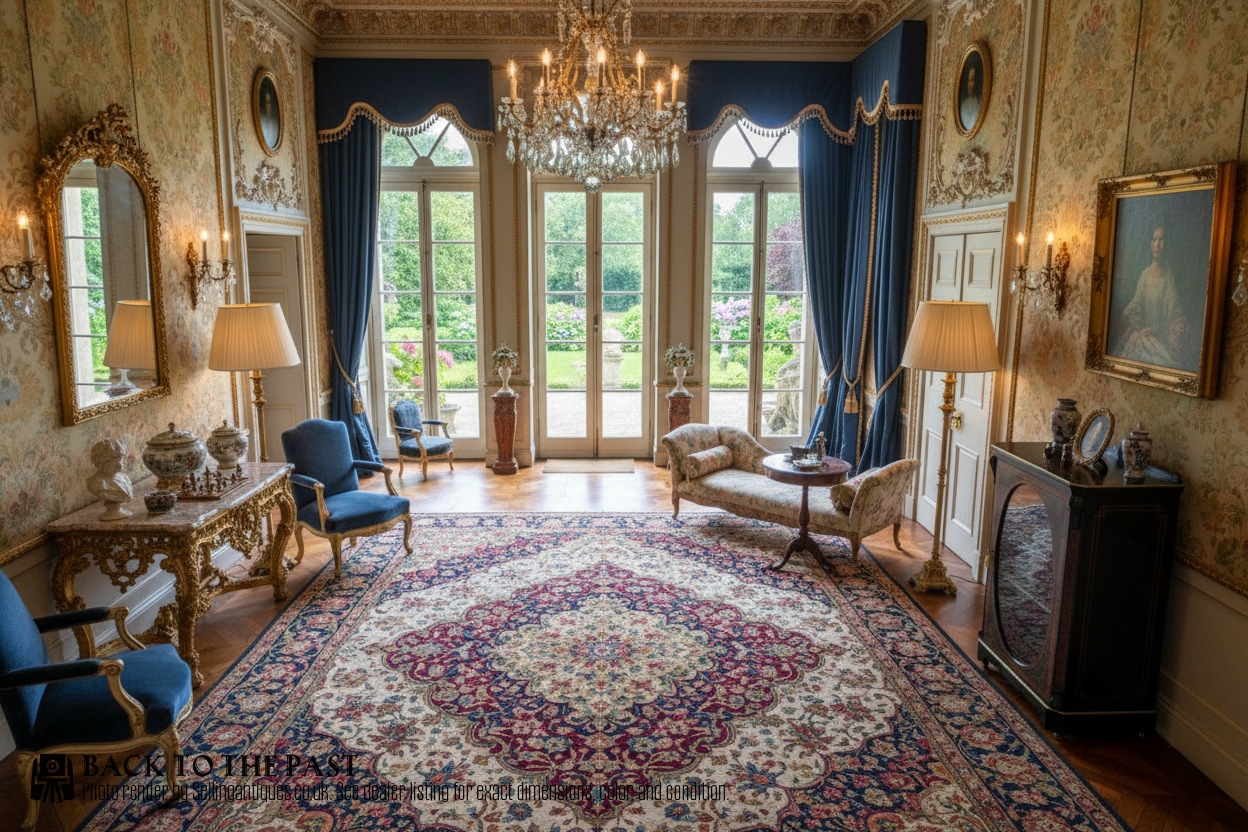
These pieces occupied principal reception rooms, drawing rooms, and libraries in nineteenth-century homes. Their glazed doors protected delicate ceramics, books, and curiosities from dust while displaying them to guests.
Pier cabinets specifically stood against wall spaces between windows, maximising light diffusion across the amboyna veneer. Larger credenzas and bookcases anchored major wall surfaces in formal living spaces.
How should I care for amboyna veneer?
Amboyna veneer requires stable environmental conditions away from direct sunlight and excessive heat fluctuations. Consistent indoor humidity prevents the veneer from lifting or cracking over time.
Gentle dusting with a soft, dry cloth maintains the surface without stripping the polish. Avoid modern chemical sprays and instead consult a conservator for periodic maintenance of antique finishes.